Jul 14, 2026
Content
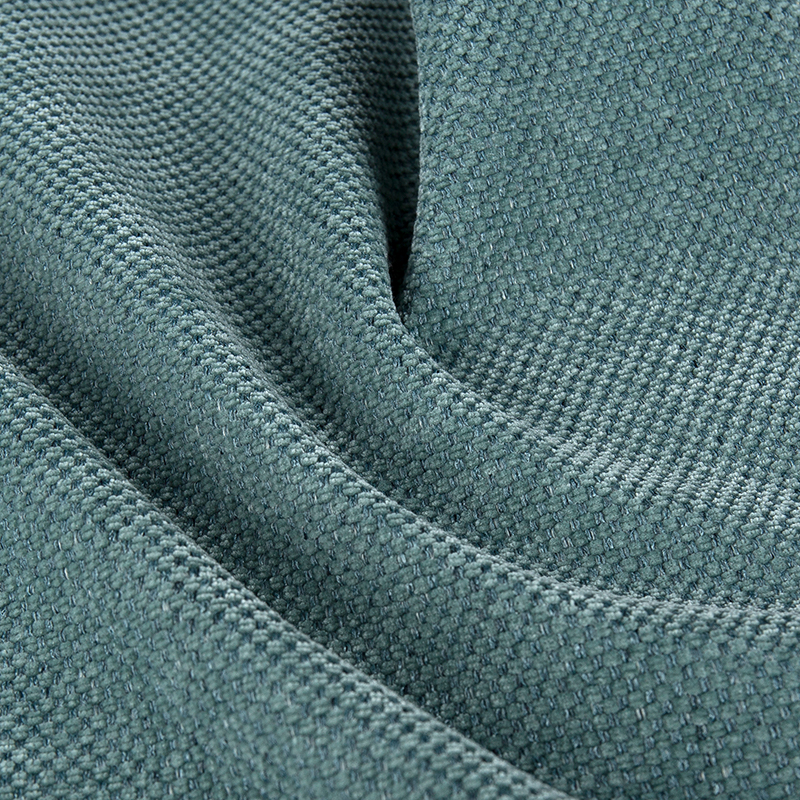
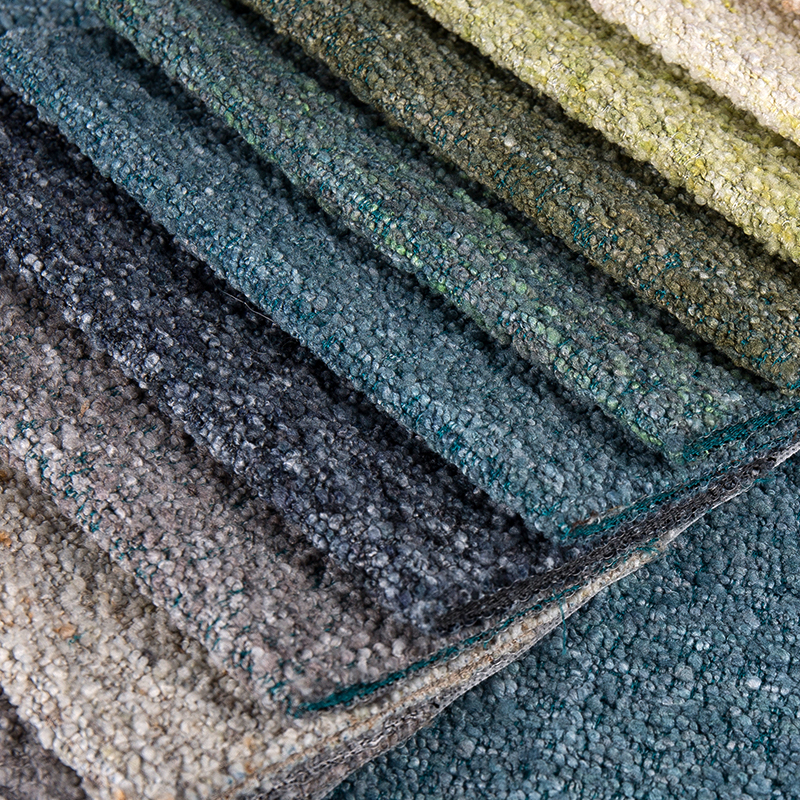
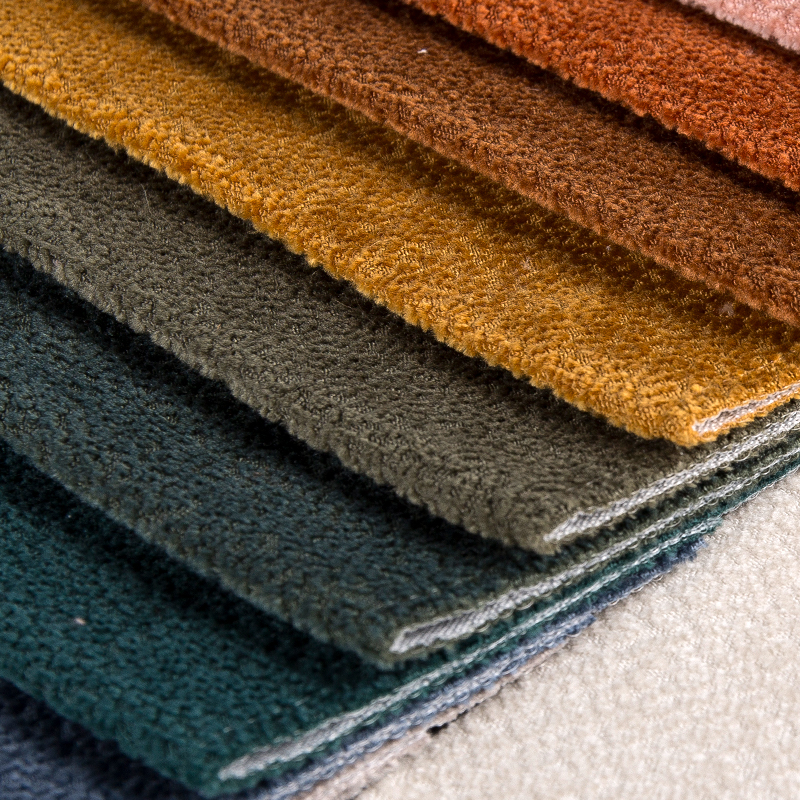
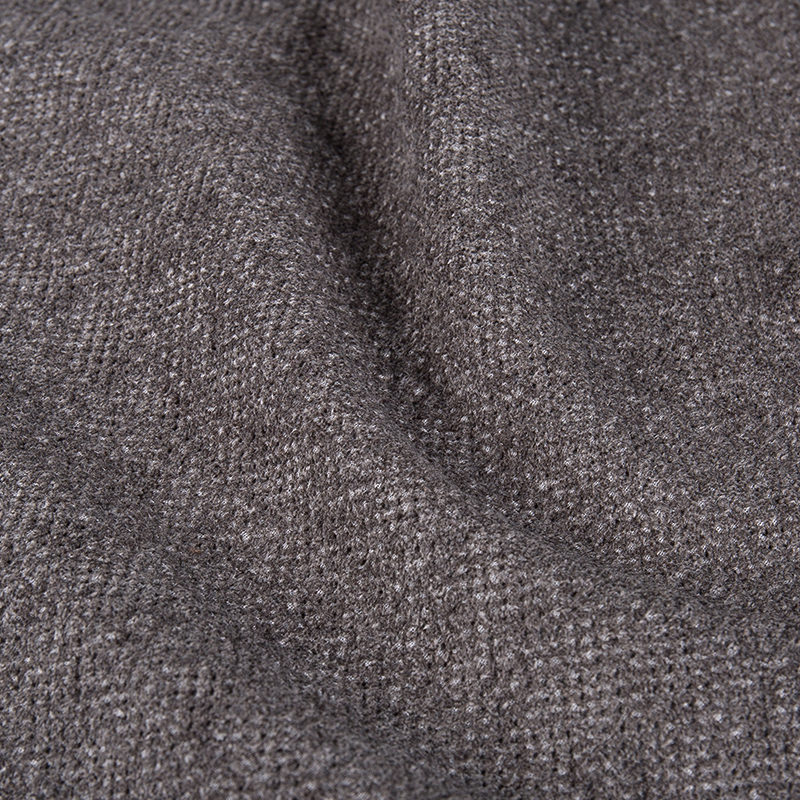
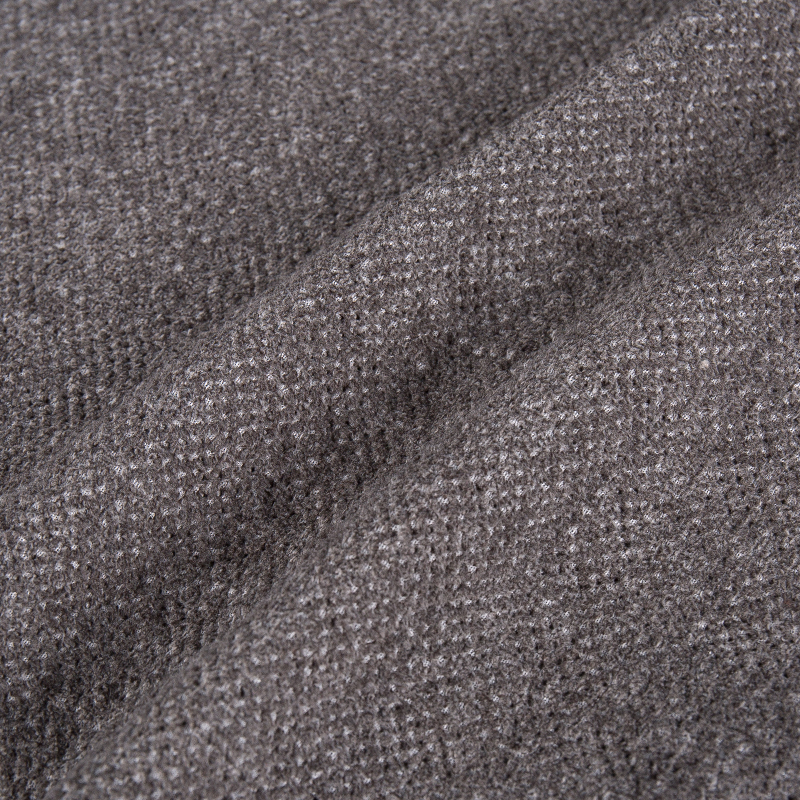
Run your hand across a bubble chenille panel and you will notice something regular fabrics do not have: a raised, slightly irregular surface that looks almost hand-woven, even when it comes off a fully automated loom. That effect comes from how the chenille yarn itself is built. Short fibers are wrapped around a core thread until they stand out at right angles, then that fuzzy yarn is woven into the base cloth in a pattern that lets small clusters of pile bunch together instead of lying perfectly flat.
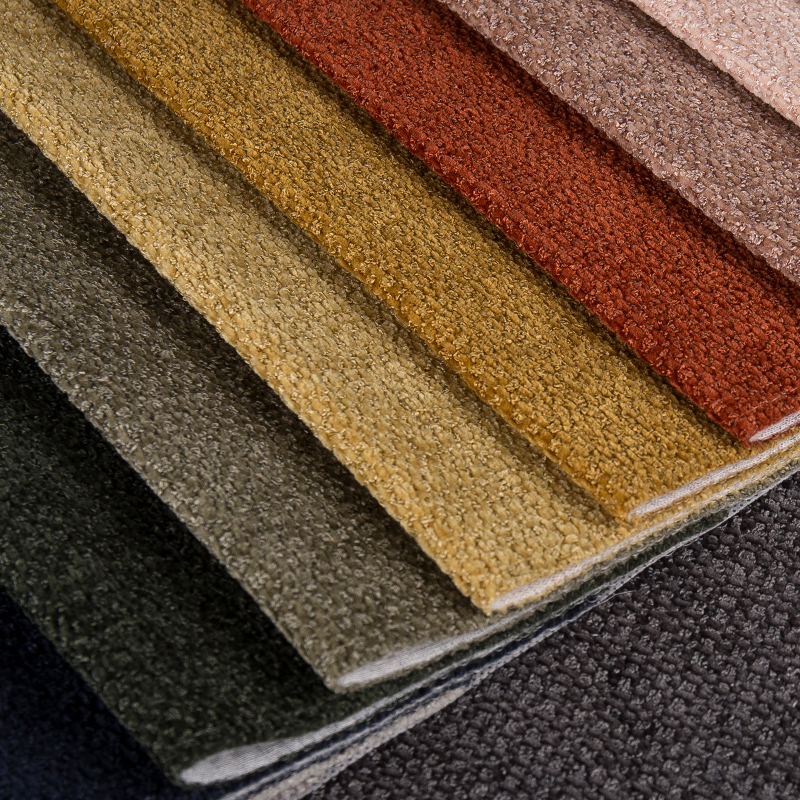
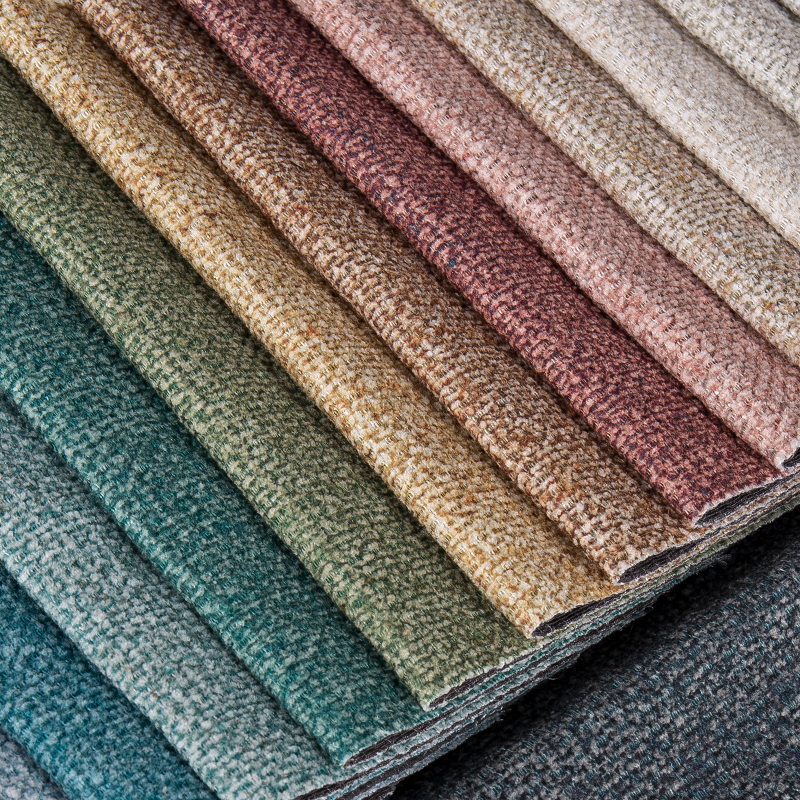
The result is a surface with gentle, rounded "bubbles" rather than a uniform pile height. Light catches each bump differently, which is why bubble chenille often looks like it shifts in tone depending on the angle you view it from. Buyers sourcing for sofa collections usually compare this directly against a standard bubble chenille sofa fabric, which keeps that raised, uneven texture consistent across every roll rather than only on a sample swatch.
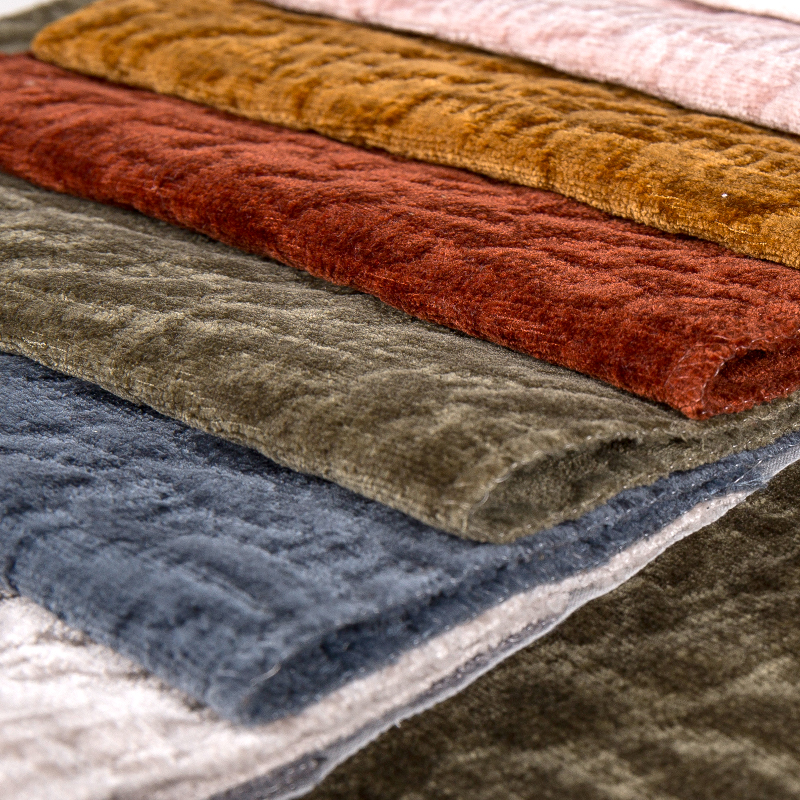
Most bubble chenille produced for furniture today is 100% polyester. Polyester takes dye evenly, resists fading under sunlight better than natural fibers, and holds its shape after repeated sitting and cleaning, which matters for a fabric that will spend years on a living room sofa. Some mills blend in a small percentage of nylon or acrylic to add sheen or firm up the pile, but pure polyester remains the dominant choice for cost and consistency.
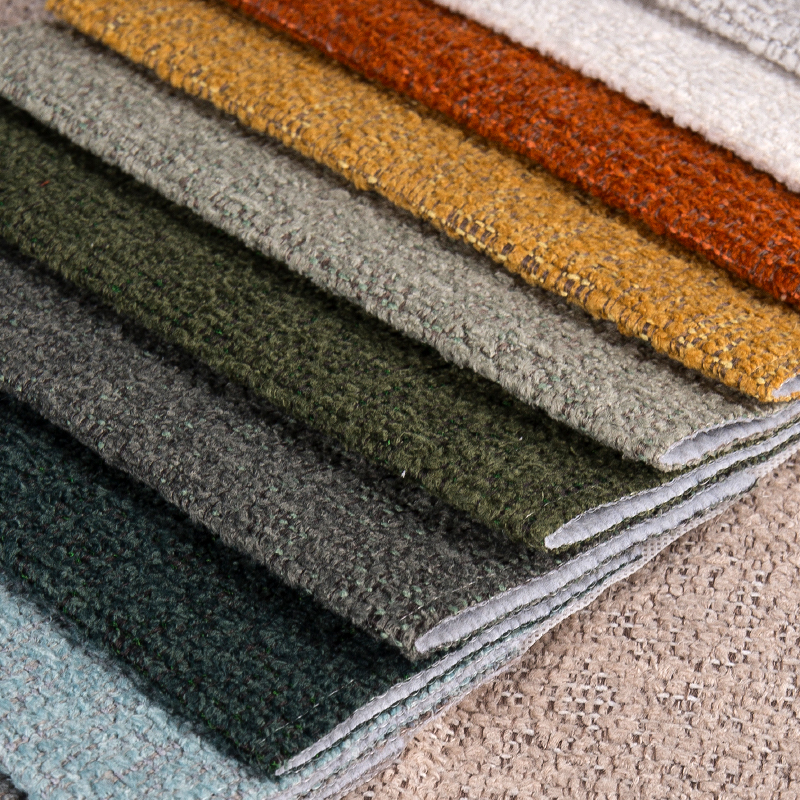
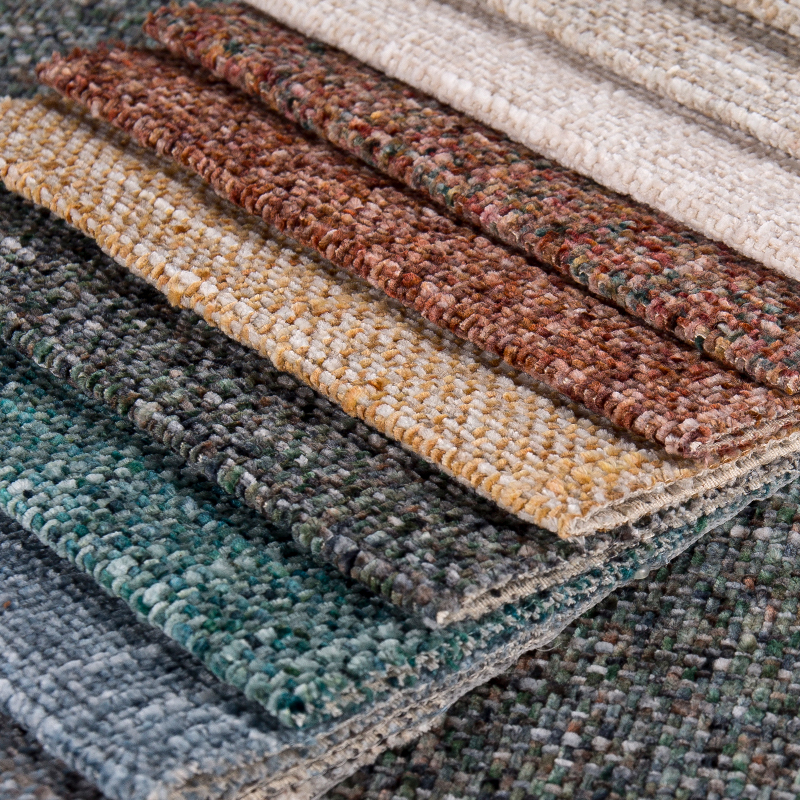
Construction-wise, the base cloth is typically a plain or twill weave, dense enough to anchor the chenille yarn without letting it shed. The pile itself is woven rather than tufted, which is part of why bubble chenille resists flattening better than some knitted alternatives. Buyers who want an even bumpier, more pronounced loop texture sometimes look at a related option like small boucle chenille sofa fabric, which shares the same nubby philosophy but leans further into a tighter, looped surface.
Before placing a bulk order, a handful of numbers tell you more than any product photo. Width determines how efficiently the fabric can be cut for cushions and backrests, weight affects both durability and shipping cost, and tolerance tells you how much variation to expect roll to roll. A typical bubble chenille sofa fabric on the market runs close to the following:
| Parameter | Typical Value |
|---|---|
| Width | 140 cm |
| Weight | Around 520 g/sm |
| Tolerance | +/- 3% |
| Fiber Content | 100% Polyester |
Weight is worth paying attention to. A heavier fabric in this range gives cushions a fuller, more substantial hand feel and tends to hide seat compression lines better than a lighter chenille would.
Chenille in general earns its reputation for durability because the pile fibers are locked into the weave rather than glued or flocked on, so they do not peel away with normal use. Bubble chenille inherits that same resilience, and the raised texture has a practical side benefit: it hides light soiling and minor surface wear better than a flat, smooth fabric would.
Polyester chenille also holds up reasonably well against everyday spills, since the fiber itself does not absorb liquid as readily as cotton. That said, it is not inherently stain-proof, so many manufacturers apply a finishing treatment for extra protection. Households with pets or children tend to ask the most detailed questions here, and a closer look at how chenille upholstery fabric holds up under pet use and high-traffic conditions is a useful reference point when specifying fabric for family-oriented furniture lines.
Sofas and sectionals are the obvious home for bubble chenille, but the texture works equally well on accent chairs, ottomans, and headboards, where the raised surface adds visual interest to a piece that might otherwise look flat under studio lighting. Because the fabric has enough body to hold its shape, it also performs well on tightly upholstered arms and rolled backrests without pulling thin at the seams.
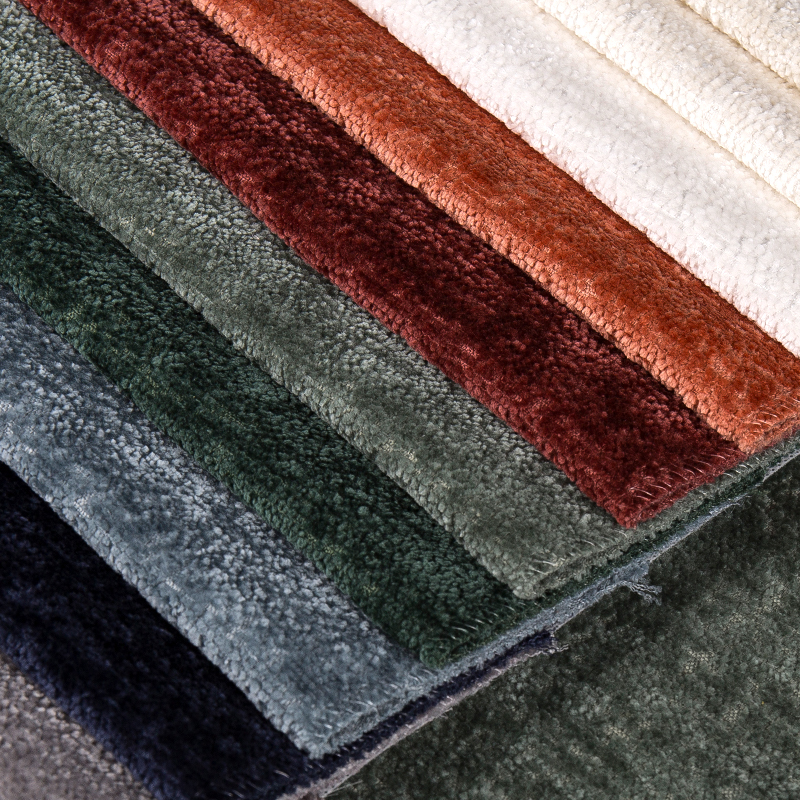
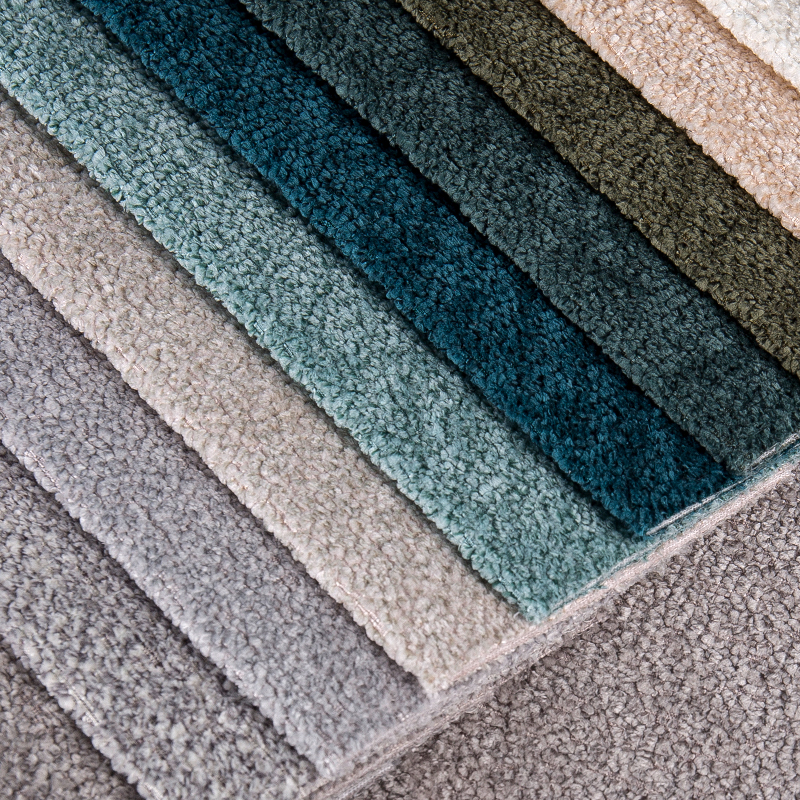
For furniture lines that want variety within a single texture family, bubble chenille pairs naturally with softer, smoother companions such as cashmere-look chenille sofa fabric, letting a collection offer both a textured statement piece and a plush, minimal alternative from the same supplier.
Sourcing bubble chenille for a production run is different from buying a few yards for a single project. Ask for a physical swatch card rather than digital photos, since the bubble texture and light-catching effect rarely translate accurately on screen. Confirm the weight and width tolerance in writing, and request a colorfastness or rub test result if the fabric is going into commercial or high-traffic settings.
It is also worth checking whether the supplier holds recognized certifications. Mills working with European furniture brands, for example, often carry OEKO-TEX and GRS certification, which signal both chemical safety compliance and the use of verified recycled content where applicable. Before finalizing an order, reviewing a structured resource on how to choose the right chenille sofa fabric can help narrow down weight, finish, and color options before samples are requested, saving a round trip on shipping and lead time.
Related Products

Contact us
Address
Hangfu Road 106#, Chongfu Town, Tongxiang City, Zhejiang, China
Phone
+86-15067379939
linachen@climbingtex.com / zac@climbingtex.com
lianniu@climbingtex.com
Fax/Tel
+86-573-88385698
products
QR CODE
 Home Textile Manufacturers
Sofa Fabric Factory
Home Textile Manufacturers
Sofa Fabric Factory
 English
 Español
 عربى
عربى