Sep 28, 2026
A furniture buyer in Manchester approves a pale grey sofa swatch in March. By the following winter, the same fabric shows crush marks along the seat cushion, a dull sheen where forearms rest, and pilling near the seams. The swatch beside it, visually almost identical, still looks new. The difference was not colour or price. It was fabric style.
The conclusion first: in upholstery, a fabric style is not one label. It is the result of three stacked decisions, namely weave structure, yarn type and surface finish. Two fabrics can carry the same pattern name and behave completely differently if any one of those layers changes. Judging a finish without checking the weave underneath is the most common specification mistake.
Most guides to fabric styles are written for garment sewing. They list denim, jersey, poplin, chiffon and calico, which tells a sofa buyer very little. On a sofa, the questions are abrasion, pilling, crush recovery, cleanability and colour retention. This article treats fabric style as an upholstery specification and uses polyester constructions as the reference point, because they dominate modern sofa production.
Content
Think of a sofa fabric as a stack. The bottom layer decides how the fabric holds up, the middle layer decides how it feels, and the top layer decides how it looks. Buyers who judge only the top layer often pay for that shortcut two winters later.
Plain weave, twill, jacquard and warp knit behave differently under load. A flat warp knit recovers from stretch where a loose plain weave distorts. Jacquard allows a motif to be built into the structure rather than printed onto the surface.
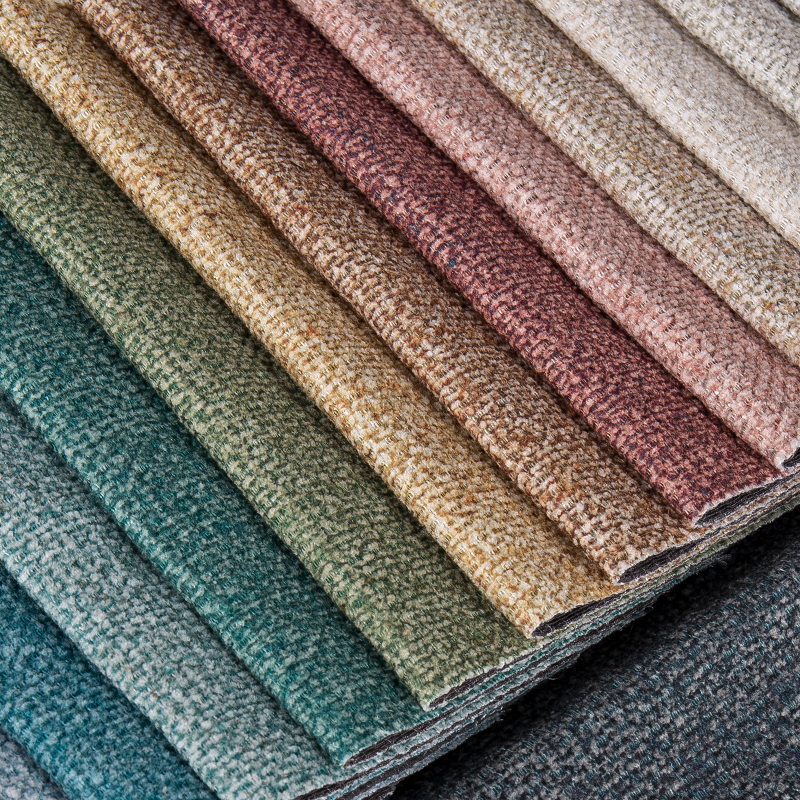
Chenille, boucle, spun polyester and filament yarns create different faces. Chenille builds softness from short fibres, boucle traps a looped texture, and filament yarns give a smoother, more reflective surface. The yarn also sets the baseline for pilling and abrasion.
Embossing, bronzing, printing, brushing and anti-pill finishing change the face without replacing the base structure. A finish can add depth, but it cannot rescue a weak weave.
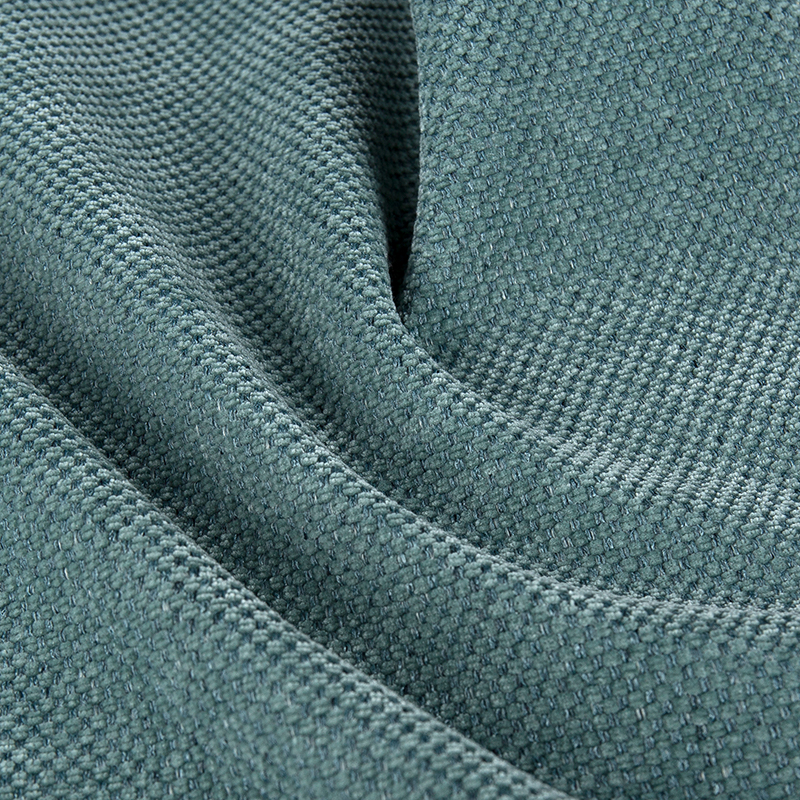
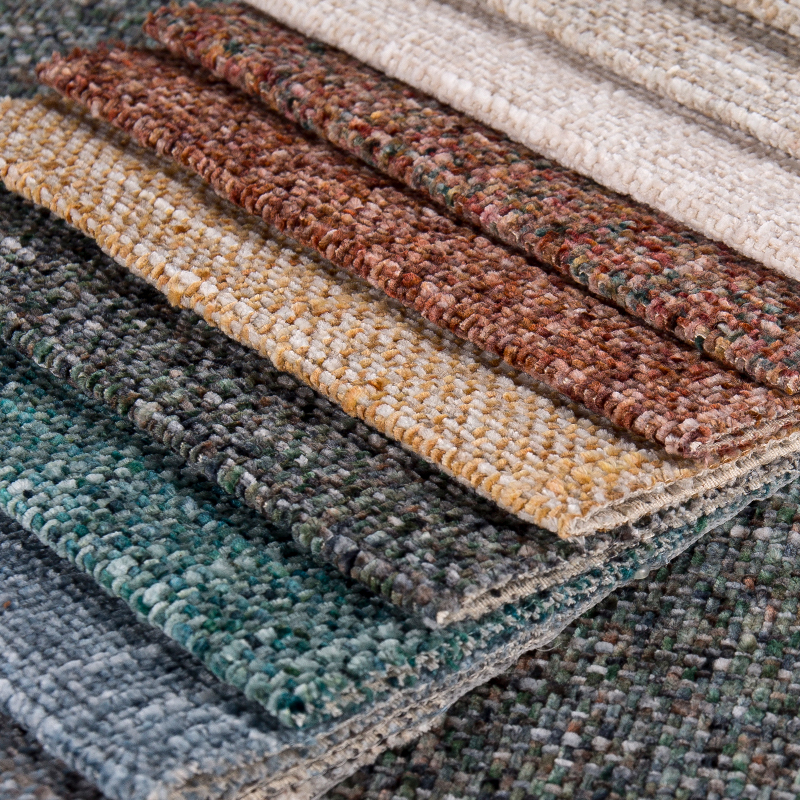
Polyester is the usual base for sofa fabric because it combines abrasion resistance, colour stability and predictable cost. A properly finished woven polyester can be specified for a family living room or a hotel lounge. The range of woven bases is broad, and the polyester woven upholstery fabric category shows how the same fibre can be pushed in very different directions.
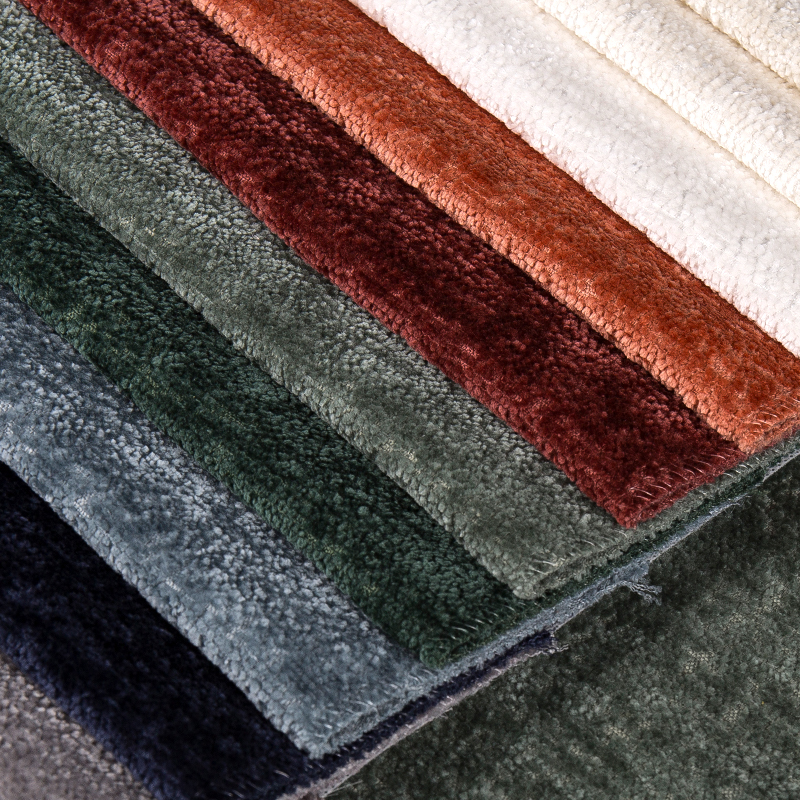
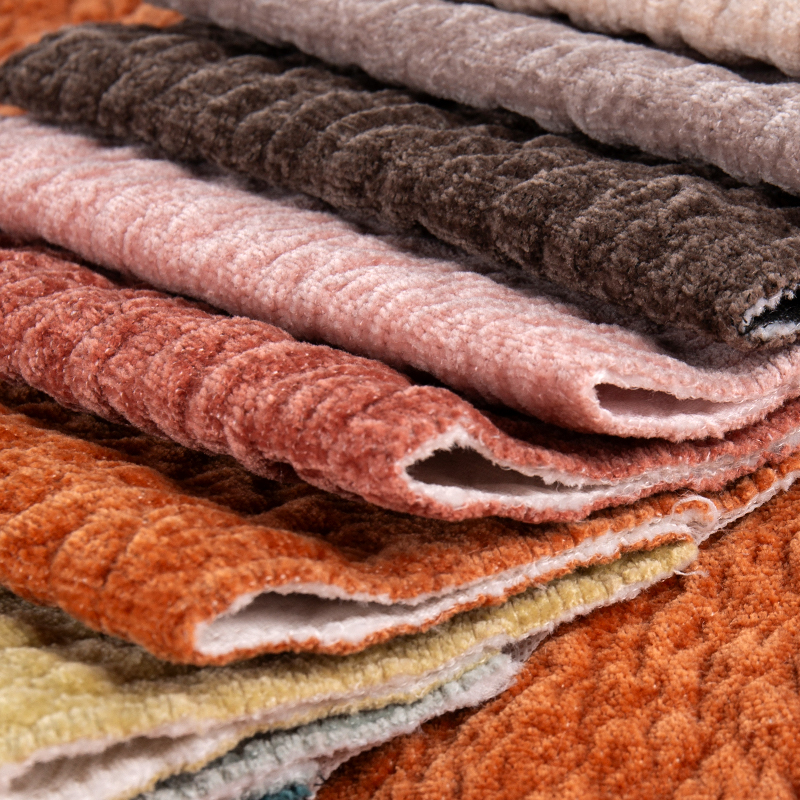
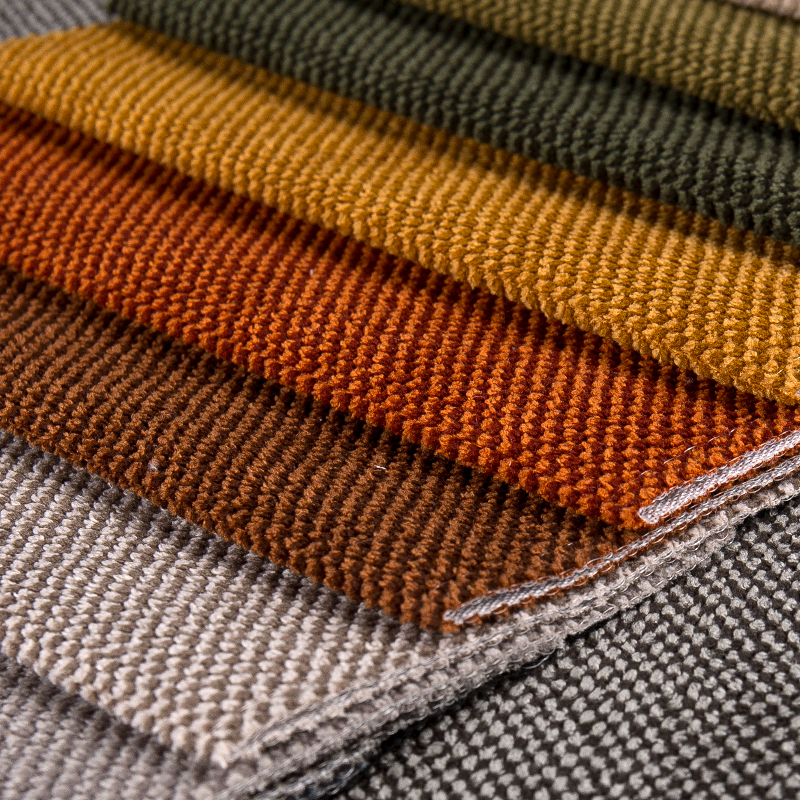
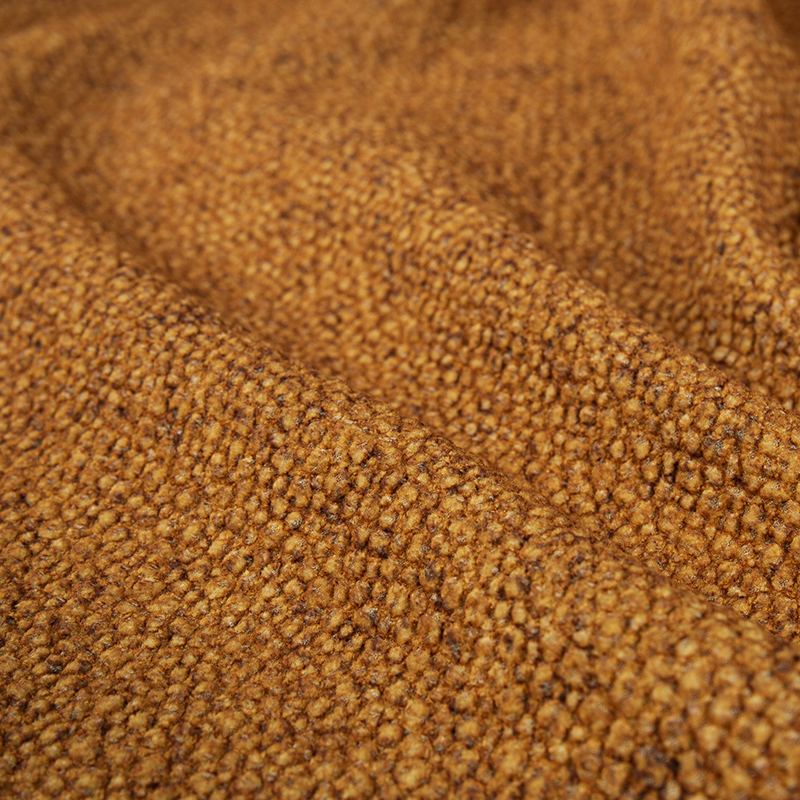
Chenille is the clearest example of yarn type dictating style. A cashmere-look chenille reads as soft and matte, while a coarse chenille reads as rustic. The fibre is the same; the yarn build and pile height do the work.
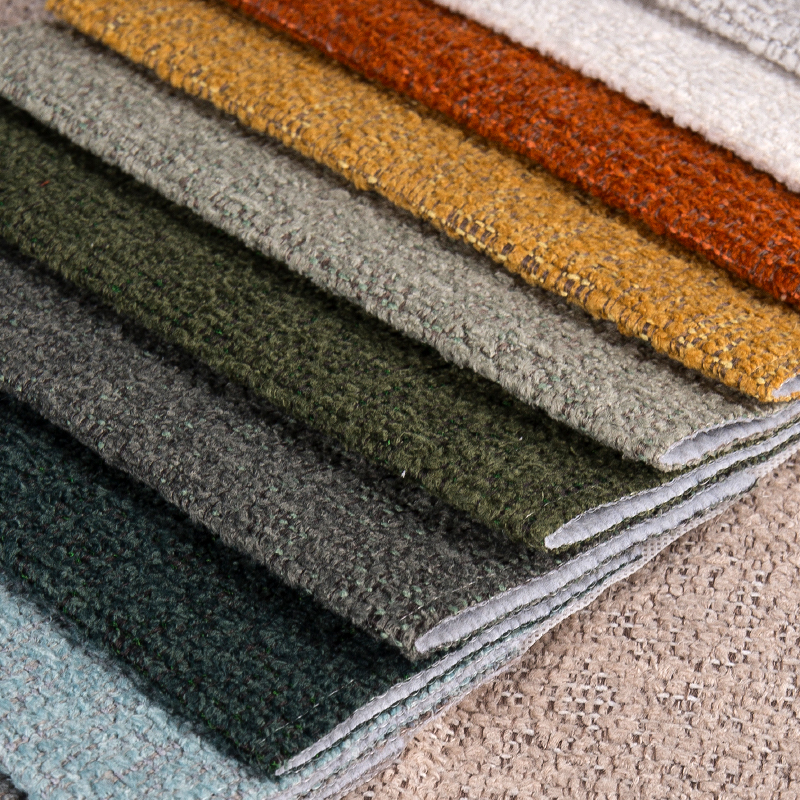 Cashmere Look Chenille Sofa Fabric1. Two-color effect chenille fabric.View Product →
The table below uses indicative ranges for mid-weight polyester upholstery. Abrasion figures are Martindale cycles at the point of visible wear, and the cost index is relative to a standard soft chenille set at 100.
Indicative mid-weight polyester upholstery values; abrasion is Martindale cycles to visible wear and the cost index is relative to soft chenille at 100.
Read the table across the row, not down a single column. A high abrasion figure means little if pilling is poor, because pilling shows up as an appearance failure long before the fibres actually break. Contract buyers usually accept a lower pilling score but demand higher abrasion; residential buyers usually do the opposite.
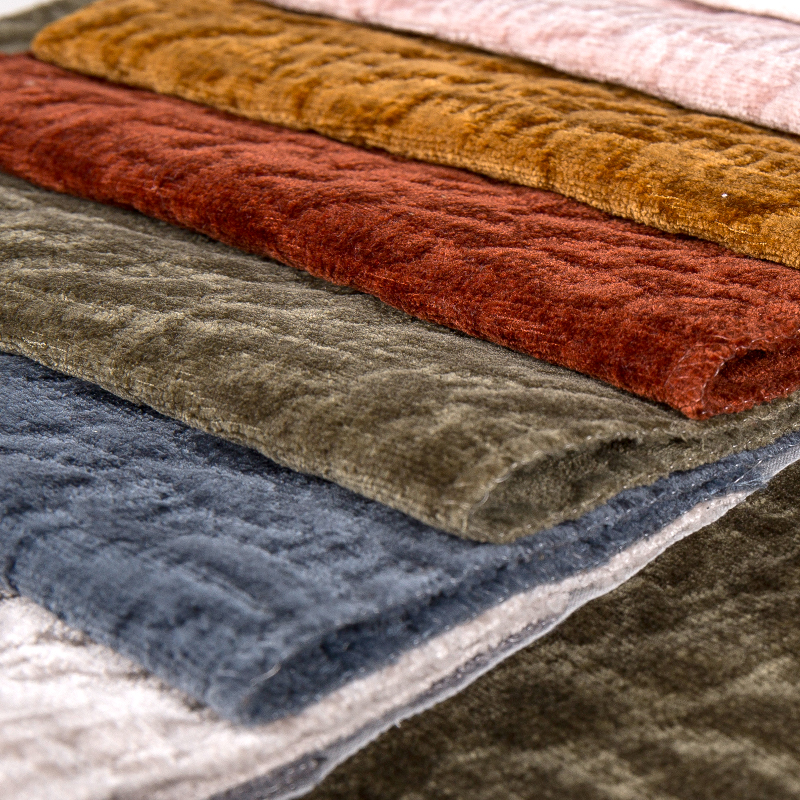
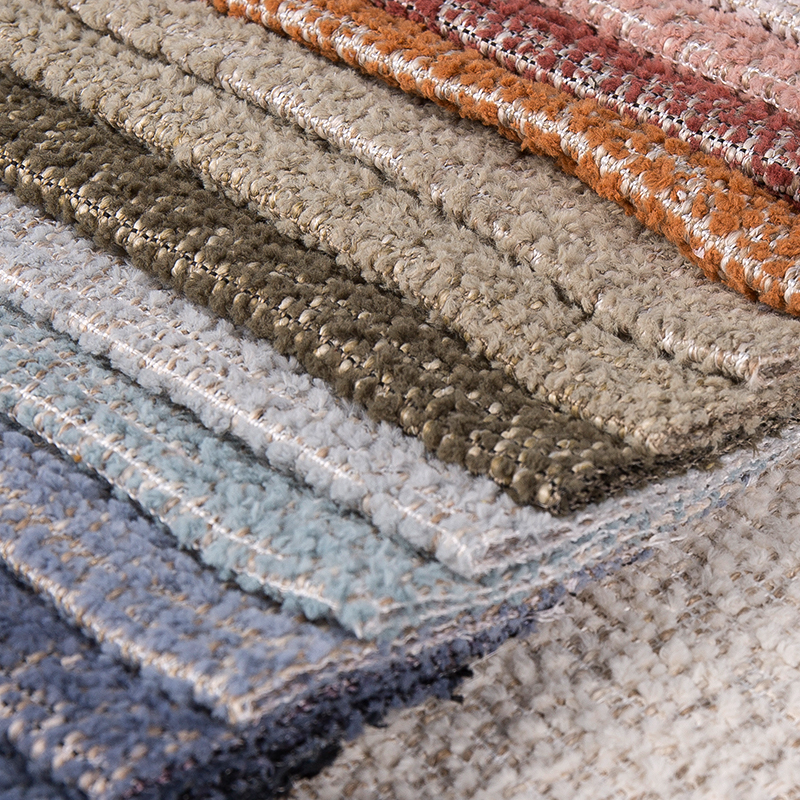
Bronzing is the style most often mis-specified. The metallic face is produced by a foil or pigment layer that sits on the surface, so it adds visual value without adding structural strength.
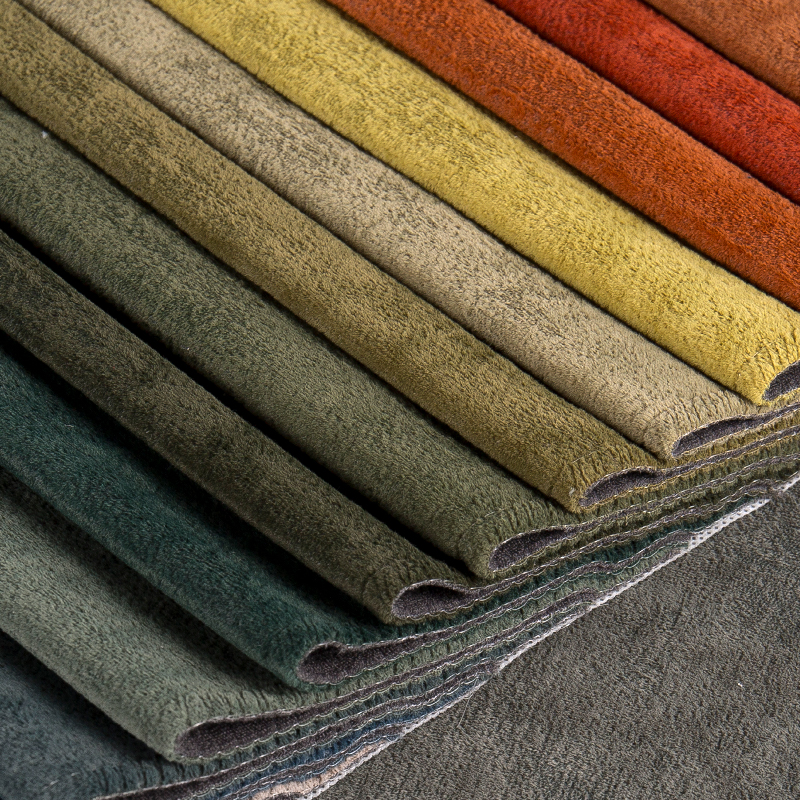 Soft Polyester Bronzing Velvet Sofa Fabric1. Bronzing flannelette.View Product →
Buyers compare style on look and price. The number that surfaces two years later is appearance-related service calls, covering crush marks, pilling, sheen and fading. The index below is a relative construction-risk model built from pile type, loop exposure and finish adhesion, not a field survey. Treat it as a screening tool, not a warranty forecast.
The pattern is consistent: exposed loops and surface-only finishes drift upward, while flat and printed woven structures stay low. If a range must hold its appearance in a high-traffic space, the index argues for a flat warp knit or a printed woven base rather than a long-pile or foil-faced style.
Style families are not evenly distributed. The chart below shows an indicative composition of a mid-market European residential sofa collection by style family.
Chenille remains the anchor style because it balances softness, cost and resilience. Embossed and printed constructions grow when a range needs visual variety without changing the base cloth. Bronzing stays a niche because its cleaning envelope is narrower.
For a fuller framework on balancing durability, comfort and style, see this upholstery fabric selection guide.
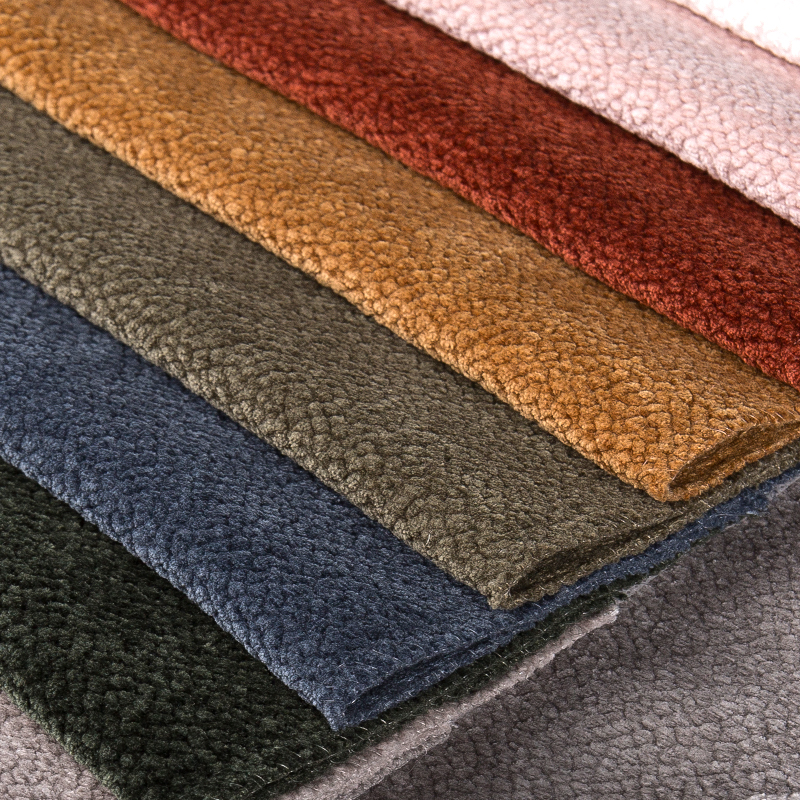
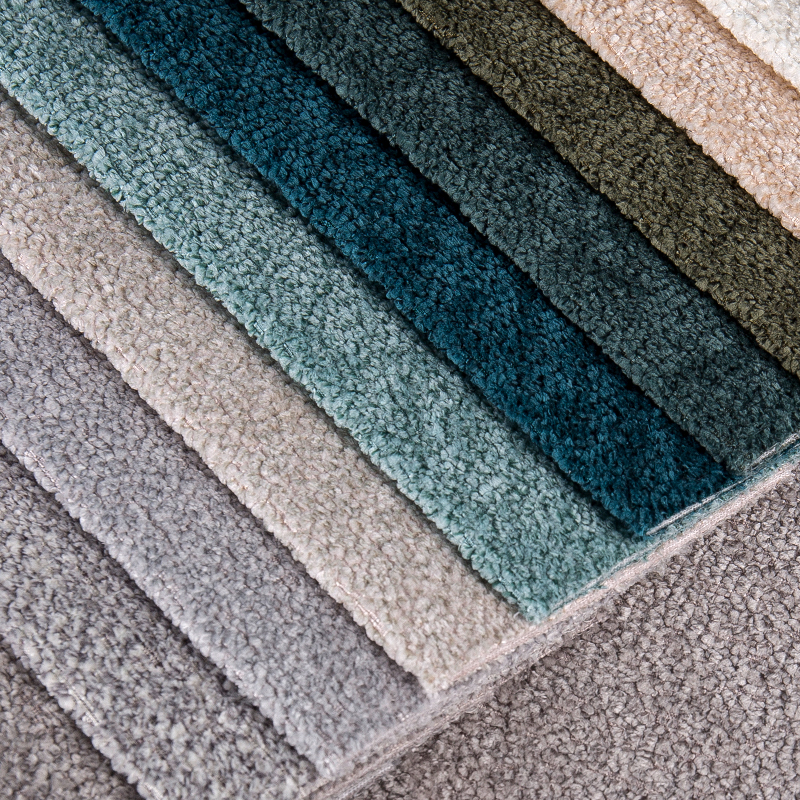
Embossed styles are the usual answer when a range needs relief without printing. A solid colour grain embossing gives depth that survives close inspection because the pattern is pressed into the cloth.
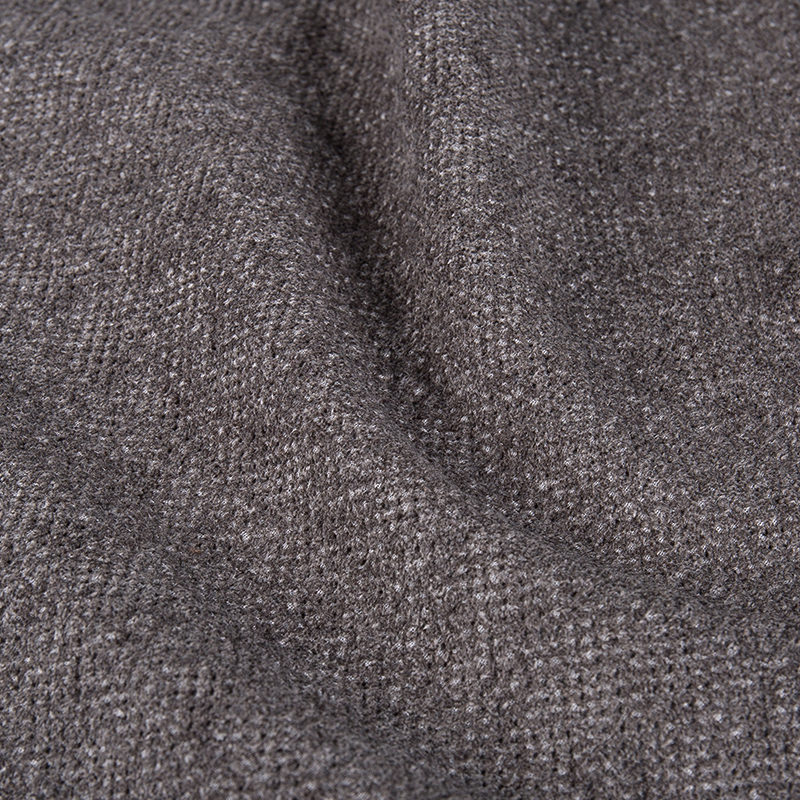 Solid Color Grain Embossing Sofa Fabric1. Plain embossed products.View Product →
Style survives on the sofa only if care and compliance are planned at the specification stage.
Fabric style is a specification, not a mood board. Weave, yarn and finish each carry their own risk, and the cheapest place to fix a mismatch is the sample room. When a range is built from those three layers in order, the fabric still looks like the March swatch when the following winter arrives.
Related Products

Contact us
Address
Hangfu Road 106#, Chongfu Town, Tongxiang City, Zhejiang, China
Phone
+86-15067379939
linachen@climbingtex.com / zac@climbingtex.com
lianniu@climbingtex.com
Fax/Tel
+86-573-88385698
products
QR CODE
 Home Textile Manufacturers
Sofa Fabric Factory
Home Textile Manufacturers
Sofa Fabric Factory
 English
 Español
 عربى
عربى