Sep 21, 2026
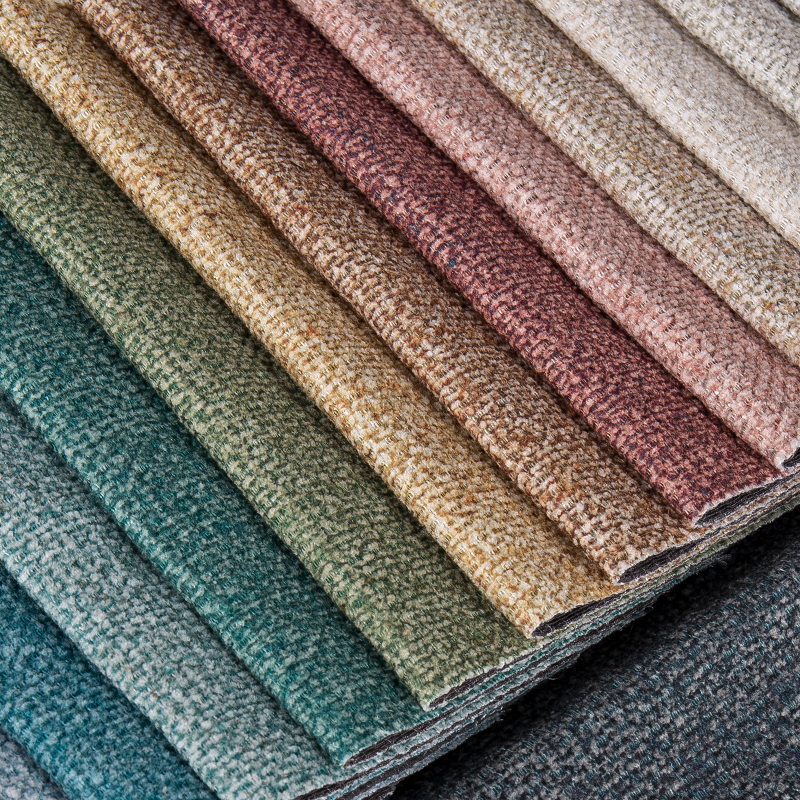
Picture a sourcing meeting where two velvet swatches sit side by side. The first is an inexpensive crushed pile with a wet, shifting sheen. The second is a dense cut velvet with a matte, linen-like surface. Both are quoted as velvet, both feel acceptable under the thumb, and both look identical in a phone photo. Eighteen months later, one still looks presentable and the other shows shiny pressure marks, flattened arms and a dulled seat cushion.
The short answer: velvet is not one fabric, it is a family of pile fabrics, and the type you specify decides how a sofa ages. Three variables do most of the work on upholstery. First, how the pile is built. Second, what fiber it is made from. Third, what finishing the mill applies. A fourth, backing and weight, decides whether the cloth holds its shape on a frame.
Most velvet sold for sofas is now polyester. That is a practical outcome rather than a fashion choice: polyester pile handles abrasion, moisture and light better than silk or viscose at the same price, and it can be engineered into cut pile, knit pile, embossed, printed or foil-finished surfaces. The sections below map the main types against real seating conditions.
Content
Trade names change between mills, so judge a velvet by construction rather than by the label on the sample card.
Cut pile, also sold as velour or plush, loop pile, and cut-and-loop. Cut pile gives depth and a soft hand; loop pile resists crushing on tight seats. Pile height and density decide how the surface catches light and how quickly it flattens.
Polyester, cotton, viscose or rayon, silk and blends. Polyester dominates contract seating and family sofas. Cotton velvet feels warmer but creases and fades faster. Viscose and silk deliver drape and depth of colour, but they demand careful cleaning.
Crushing, embossing, bronzing by foil transfer, printing, burn-out and brushing. Finishing creates the visual signature of a velvet and often sets the practical limits on cleaning agents, steam and light fastness.
Woven upholstery velvet commonly runs 250 to 450 g per square metre, while knit velvet can sit above or below that band. A stable backing matched to the frame prevents sagging, seam slippage and pile distortion on curved arms.
The comparison below covers the constructions that appear most often on upholstery order sheets, with the trade-offs a buyer should expect before the first container ships.
Comparison reflects typical upholstery-grade constructions; real performance also depends on pile density, backing and the finishing parameters set by the mill.
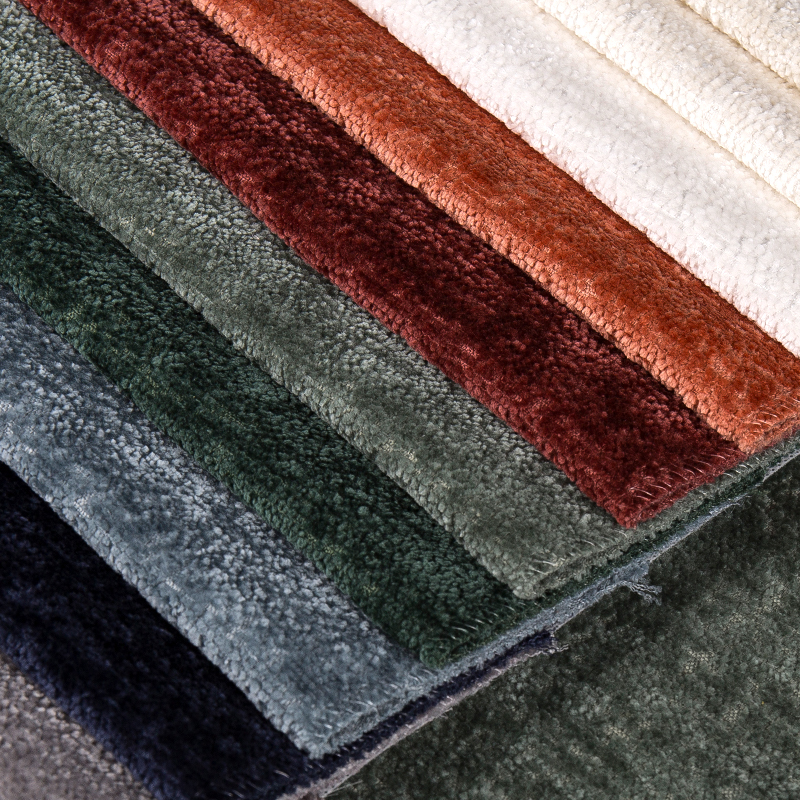
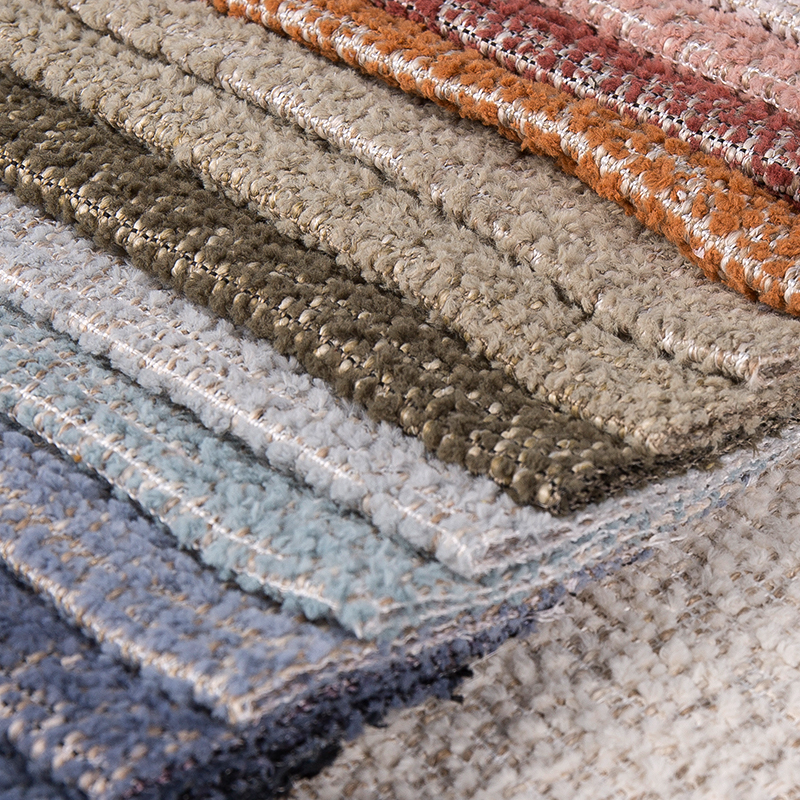
One naming trap is worth flagging. Chenille is a yarn structure rather than a pile type, yet chenille fabrics are frequently marketed as velvet because of their soft, fuzzy surface. The comfort and wear behaviour of that yarn is covered in this guide to chenille sofa fabric, which helps separate yarn-based softness from true cut pile.
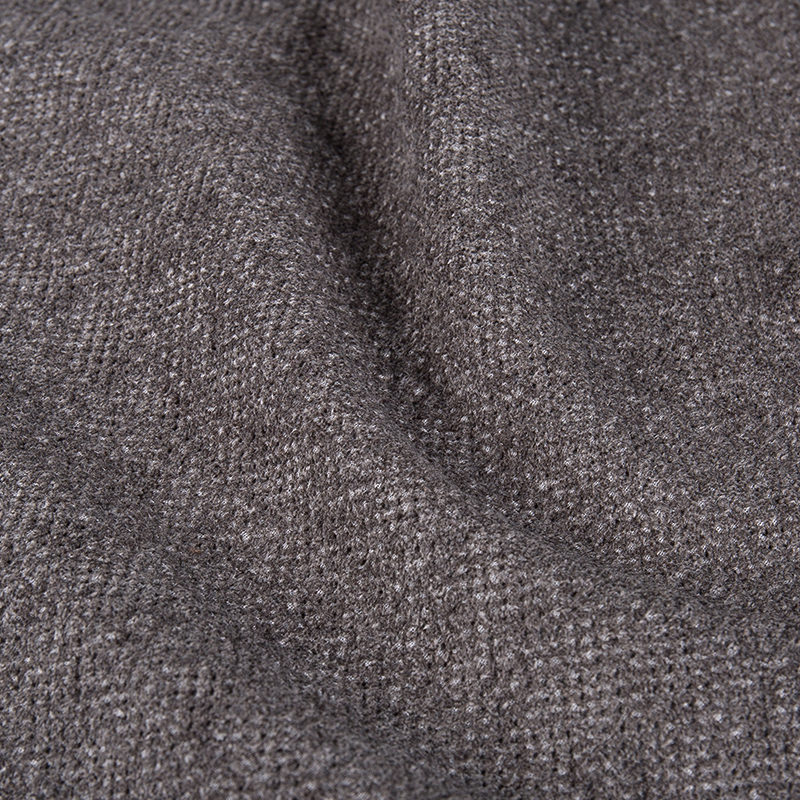
Cut velvet is where European buyers most often ask for a natural look without the maintenance of natural fiber. A linen-look cut velvet uses a polyester pile to imitate the matte, dry surface of linen while keeping the stain behaviour and dimensional stability of synthetic pile, which suits family seating and hotel lobbies alike.
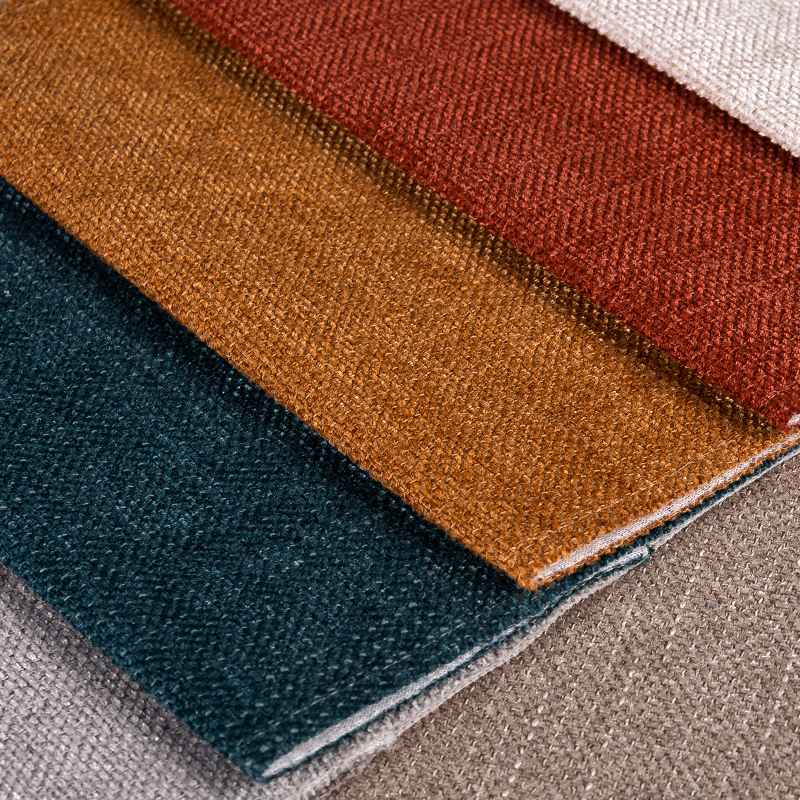
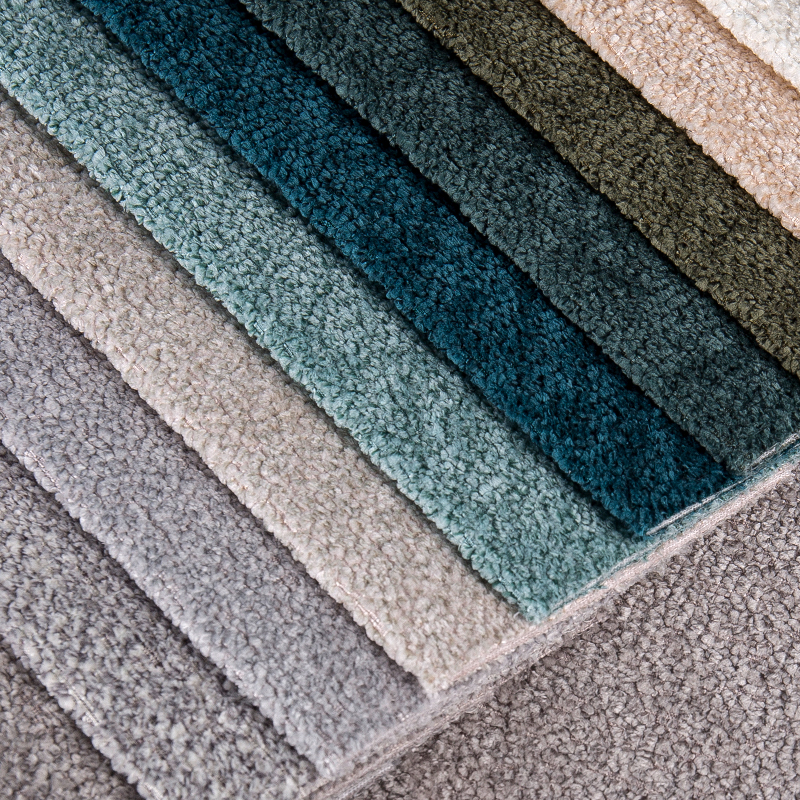 Linen Look Cut Velvet Sofa Fabric1. Imitation cut pile woven fabric.View Product →
Martindale abrasion results are the fastest way to separate velvet types on paper. Light domestic seating usually starts around 20,000 rubs, while contract projects expect 40,000 and above.
Rub count is a screening tool, not a warranty. Pilling, seam slippage, pile recovery and light fastness decide how a velvet looks after two years of sitting, and those properties come from fiber choice and finishing rather than from abrasion resistance alone.
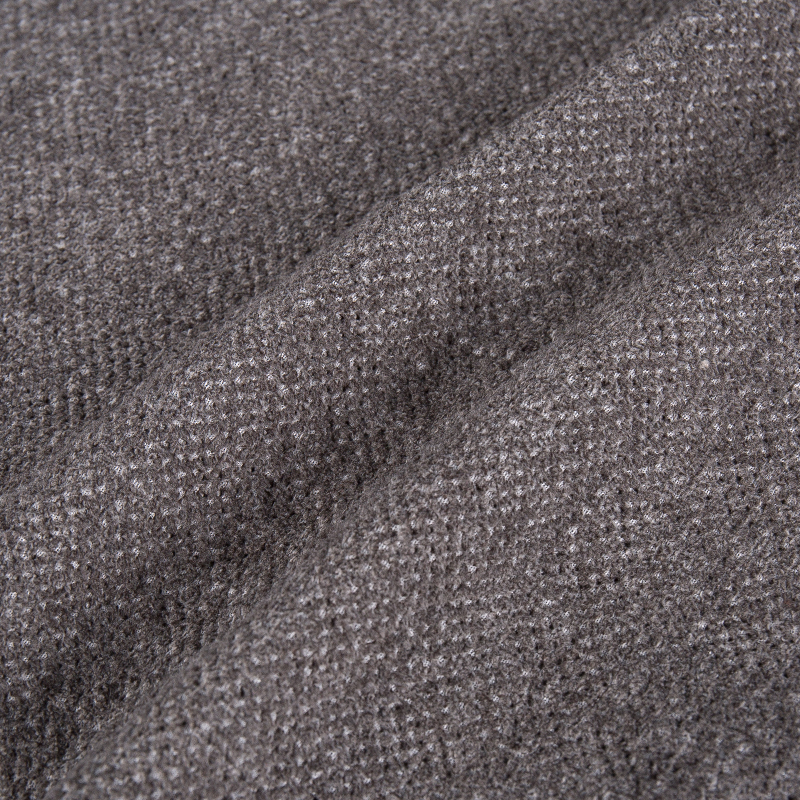
Finishing also changes how a surface ages. An embossed velvet hides shading better than a plain pile because the flat and raised areas break up reflected light, and the relief keeps the fabric from looking uniformly worn. A polyester embossed velvet with a printed and embossed surface holds that structure while staying straightforward to wipe down after daily use.
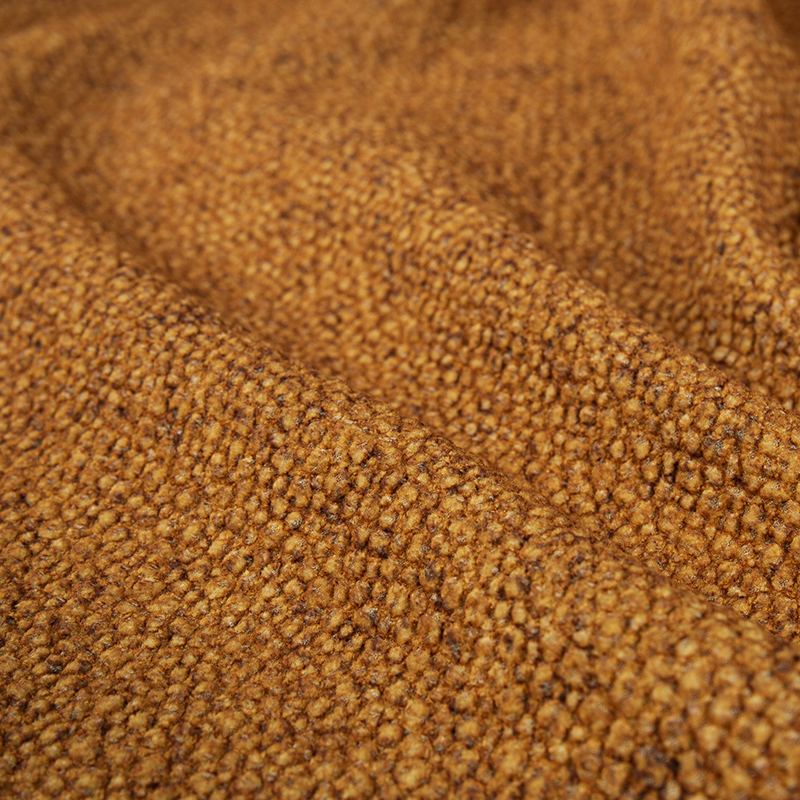 Printing And Embossing Velvet Sofa Fabric1. Warp knitting printed and embossed products.View Product →
Velvet demand splits roughly along application lines, which explains why some constructions are rare in retail but common in contract work.
Gloss has its own niche. Bronzing velvet, where metallic foil is transferred onto the pile, is specified for hospitality lounges, retail seating and accent pieces rather than for a family three-seater, because the finish rewards careful cleaning and cooler wash routines. A soft polyester bronzing velvet gives that reflective look while keeping a synthetic pile that tolerates regular vacuuming.
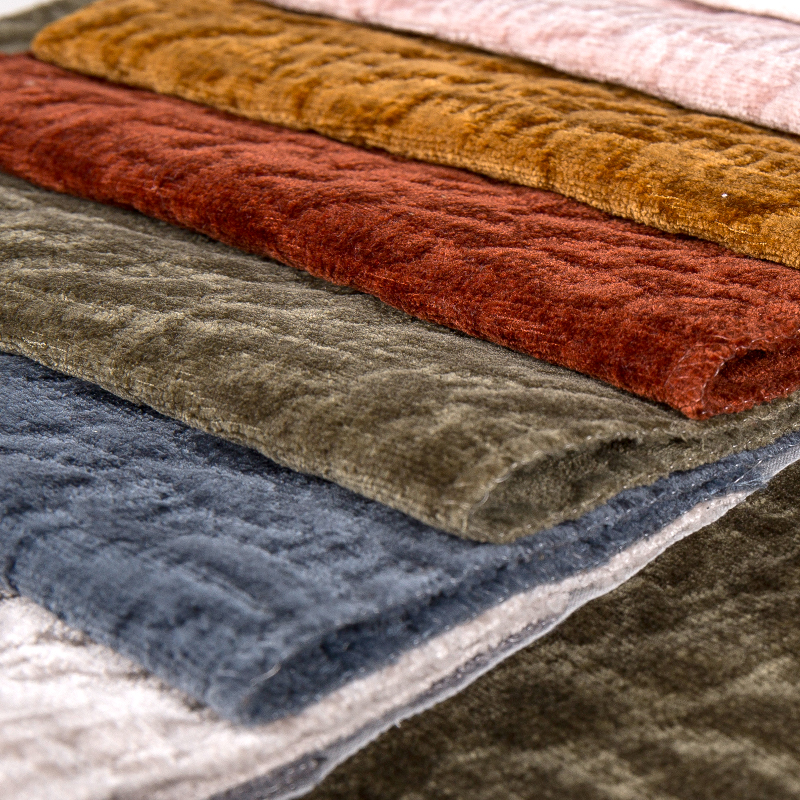
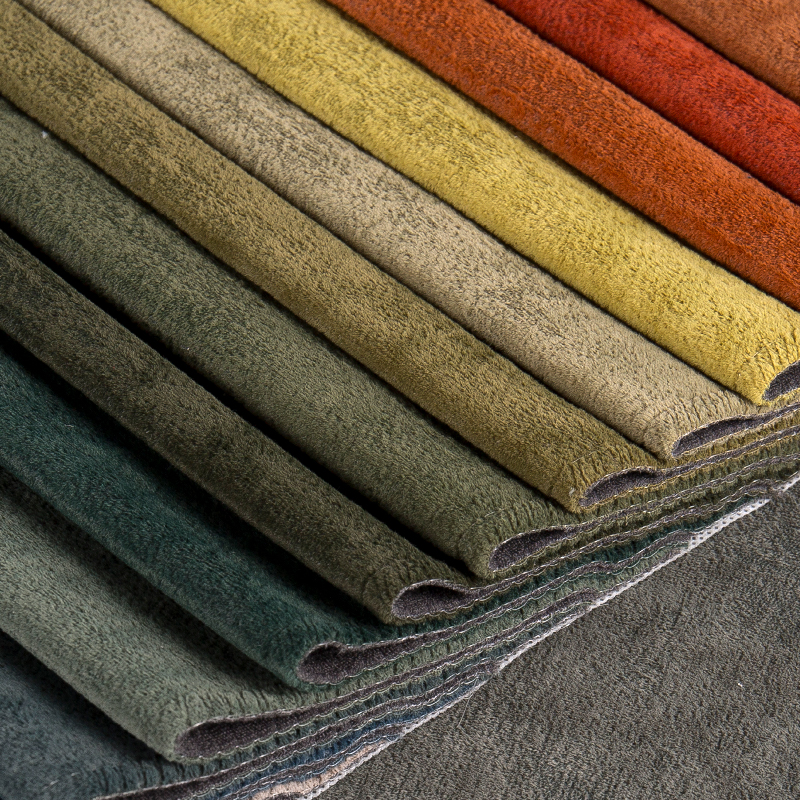 Soft Polyester Bronzing Velvet Sofa Fabric1. Bronzing flannelette.View Product →
Cost figures are easy to misread. A velvet priced 30 percent lower per metre but replaced after three years costs more per seat-year than a denser pile that lasts seven. When two quotes differ sharply, compare pile density, backing stability and the number of finishing steps before comparing price. Contract buyers can review construction options across our polyester woven upholstery fabric range to match density and finish to the seating grade.
Return to the two swatches on the desk: the difference between them was never the word velvet. It was pile construction, fiber and finishing, in that order. Match those three to the traffic, the cleaning routine and the budget, then confirm the numbers behind the sample, and the velvet you specify will still look like velvet after a few thousand sittings.
If a sample card carries nothing but a poetic name, ask the mill three questions: how is the pile built, what fiber is in the pile, and what finishing was applied. Those answers describe the next five years of the sofa far better than any catalogue photo.
Related Products

Contact us
Address
Hangfu Road 106#, Chongfu Town, Tongxiang City, Zhejiang, China
Phone
+86-15067379939
linachen@climbingtex.com / zac@climbingtex.com
lianniu@climbingtex.com
Fax/Tel
+86-573-88385698
products
QR CODE
 Home Textile Manufacturers
Sofa Fabric Factory
Home Textile Manufacturers
Sofa Fabric Factory
 English
 Español
 عربى
عربى