Sep 14, 2026
Chenille is not a fiber and it is not a specific weave. It is a type of yarn, and a fabric made from that yarn, defined by a raised fuzzy pile that gives the surface a soft, velvety touch. The French word chenille means caterpillar, a reference to the furry appearance of the yarn when examined up close. In sofa upholstery, the practical definition is simpler: chenille fabric is a pile textile chosen for its hand feel, warmth, and the slow, shifting sheen it gives a living room.
A clear conclusion: a chenille sofa fabric is only as good as its construction. Polyester chenille with tightly twisted core yarns and a dense pile routinely reaches Martindale abrasion values of 30,000 cycles or more, which is enough for busy homes and light commercial seating. When the pile is loose or the core yarn is thin, even an attractive chenille will shed, pill, and crush within a year of daily use.
A practical way to start is to scan the comprehensive catalog of an upholstery fabric manufacturer; seeing which chenille constructions are actually produced saves time before you request swatches. Then, before any buying decision, it helps to understand how chenille is made, how it behaves under stress, and which performance numbers truly matter for a sofa that gets used every day.
Content
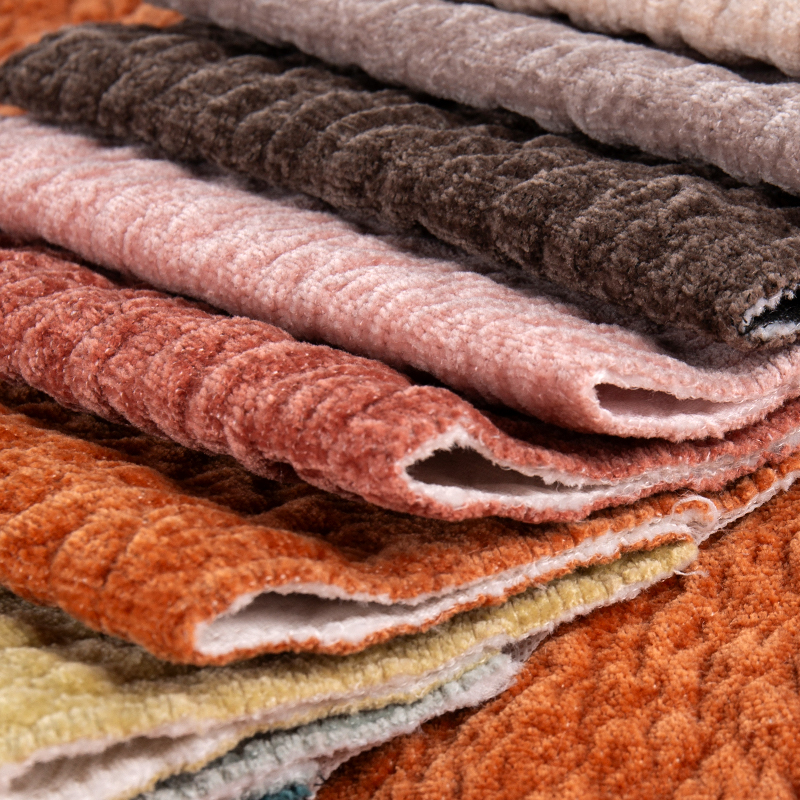
Chenille starts as a woven fabric whose warp threads are later cut into strips. Those strips are twisted around two or more core yarns, and the cut ends fan outward to form the pile. When that pile yarn is used as the filling in a base weave, the face of the cloth becomes a dense, softly brushed surface with a glow that changes as light moves across it.
Historically, chenille was made from cotton, wool, or rayon. These fibers feel beautiful but tend to shrink, sag, or lose pile under heavy use. Modern polyester chenille uses the same yarn structure with a synthetic fiber that resists moisture, holds its shape, and survives far more wear cycles.
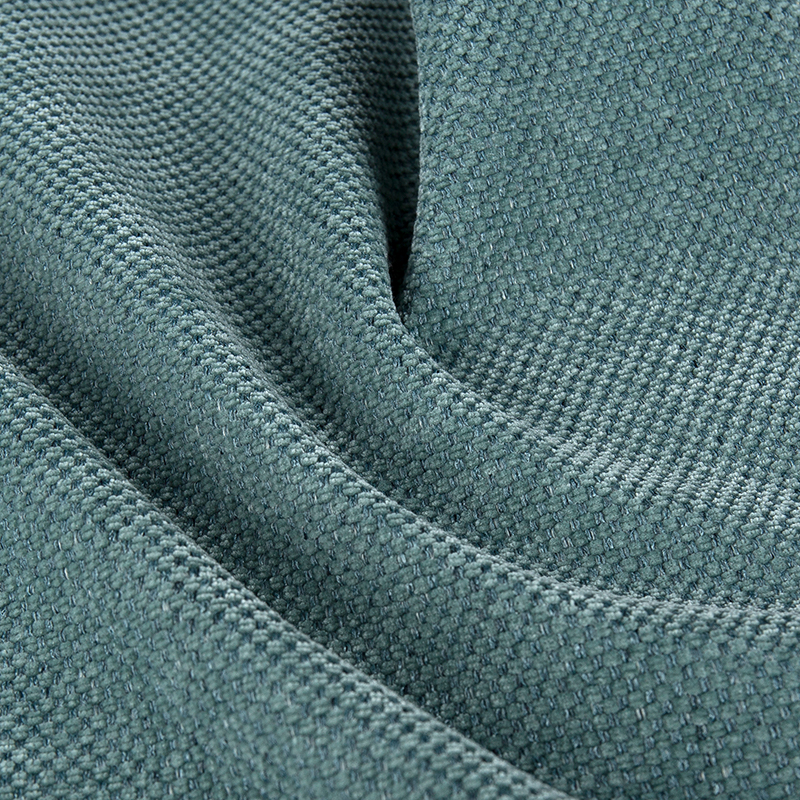
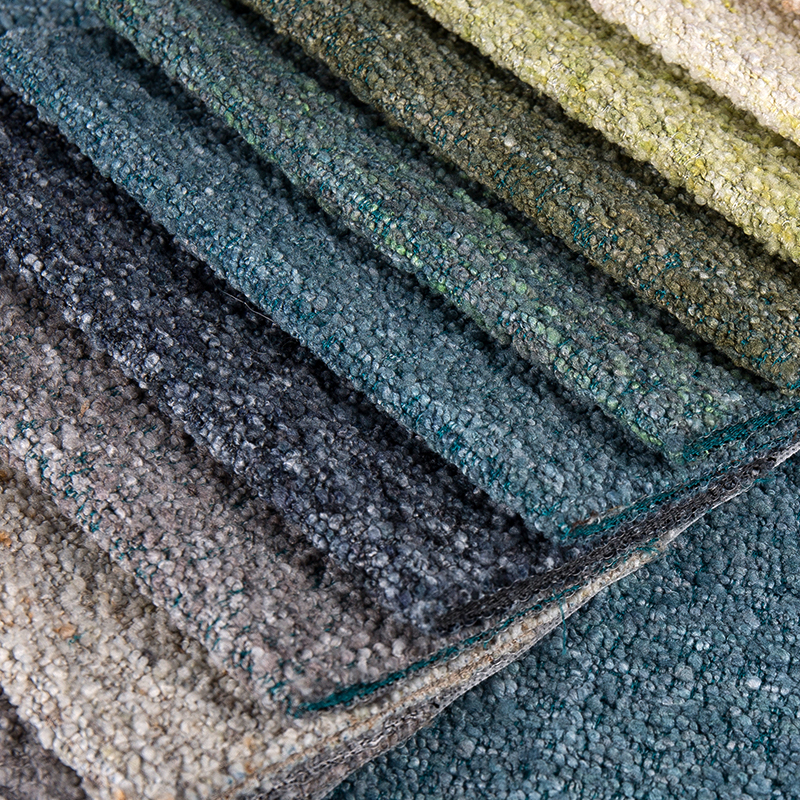
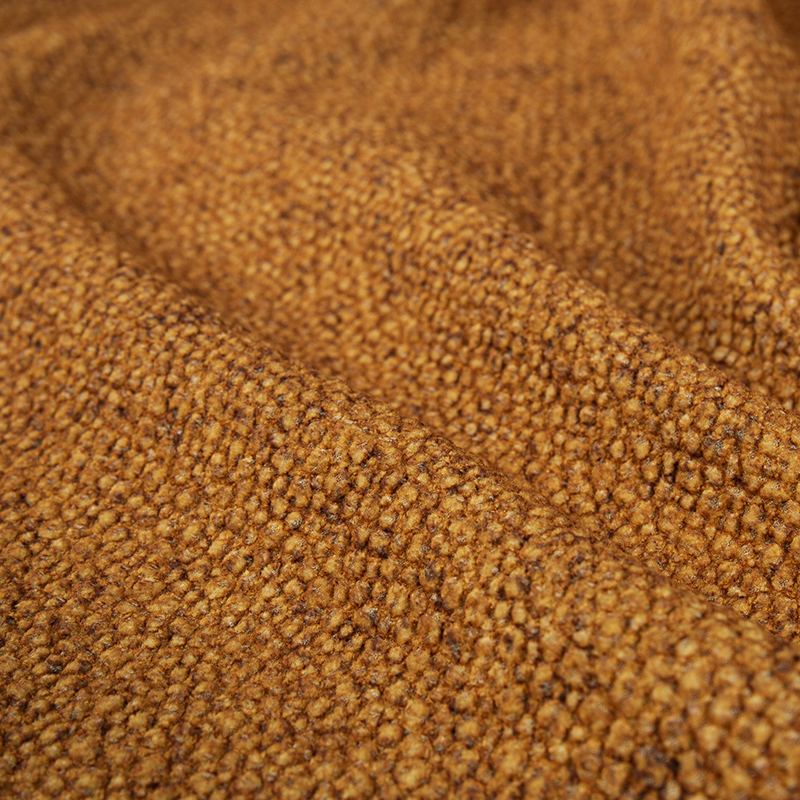
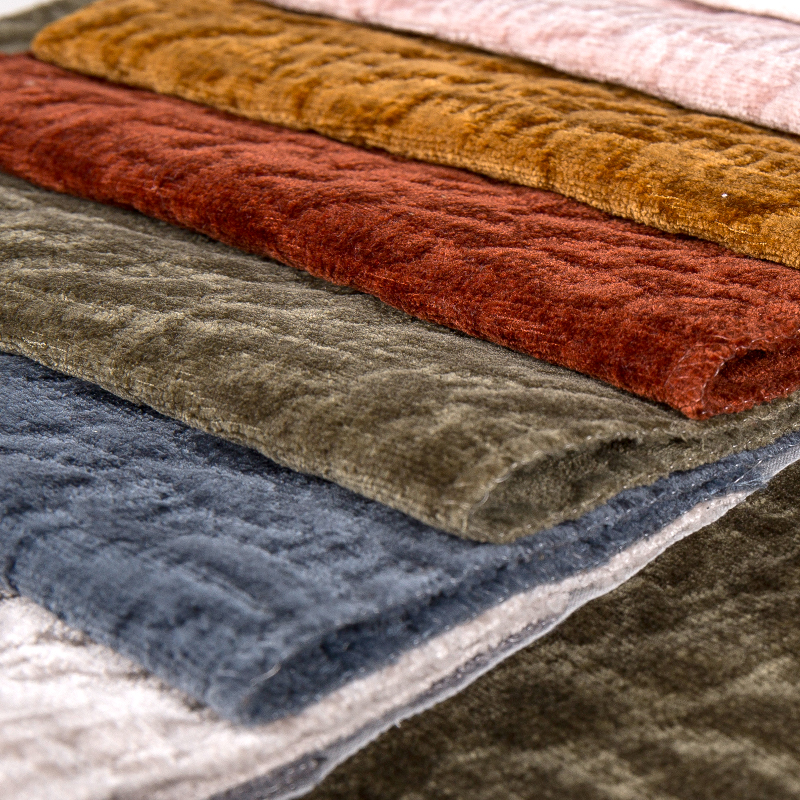 Bubble Chenille Sofa Fabric with Durable Polyester YarnThis heavy-weight chenille offers a comfortable hand and a subtly bright, dimpled texture. Its polyester base resists moisture and wear, making it suitable for long-lasting upholstery.View Product →
This construction produces a range of surface textures. In a bubble chenille sofa fabric, for example, variations in yarn tension create a dimpled surface without weakening the base structure.
Buyers talk about feel first, but the properties that keep a sofa functional for five or ten years are structural. These are the characteristics worth evaluating:
The pile traps a thin layer of air, creating a slight cushioning effect and a warm first touch, which is why chenille is chosen for sofas in colder climates.
Dense polyester chenille typically survives 25,000 to 50,000 Martindale cycles, depending on yarn twist and backing construction.
Because the pile is cut at an angle, chenille reflects light in different directions, making dyed colors look deeper and more changeable than on flat cloth.
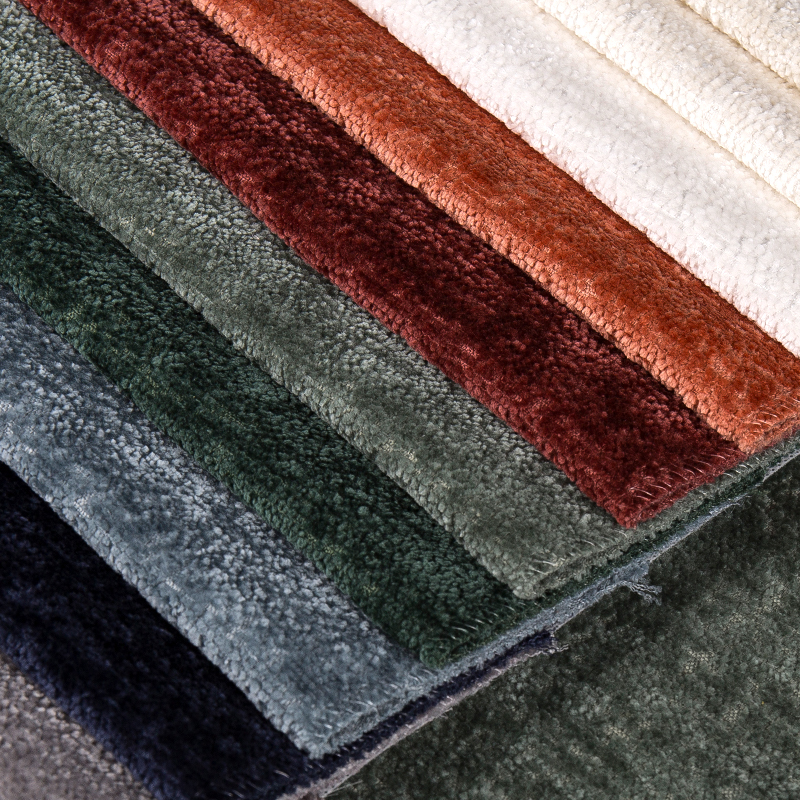
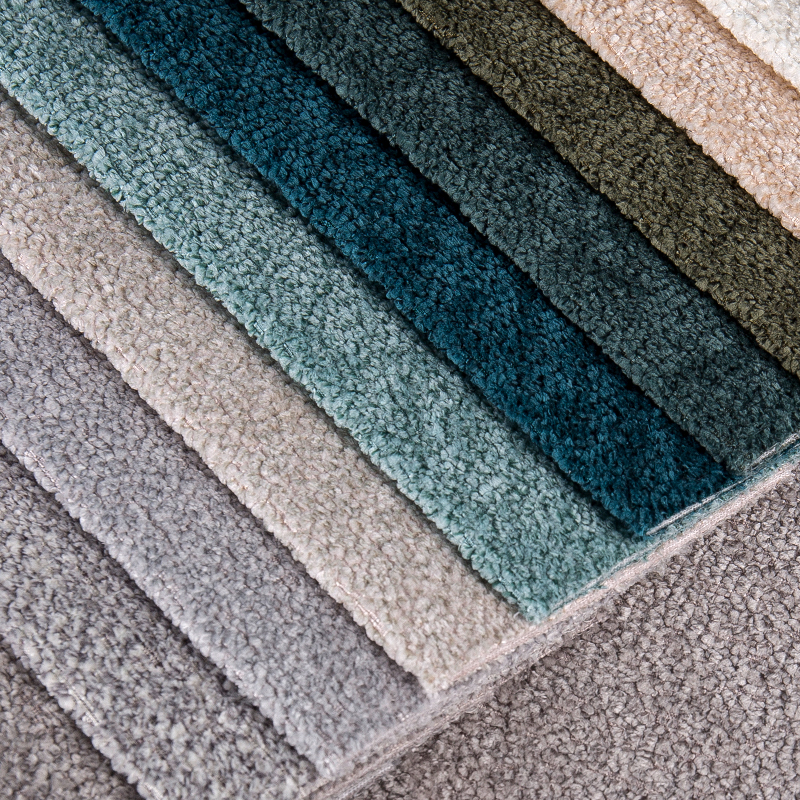
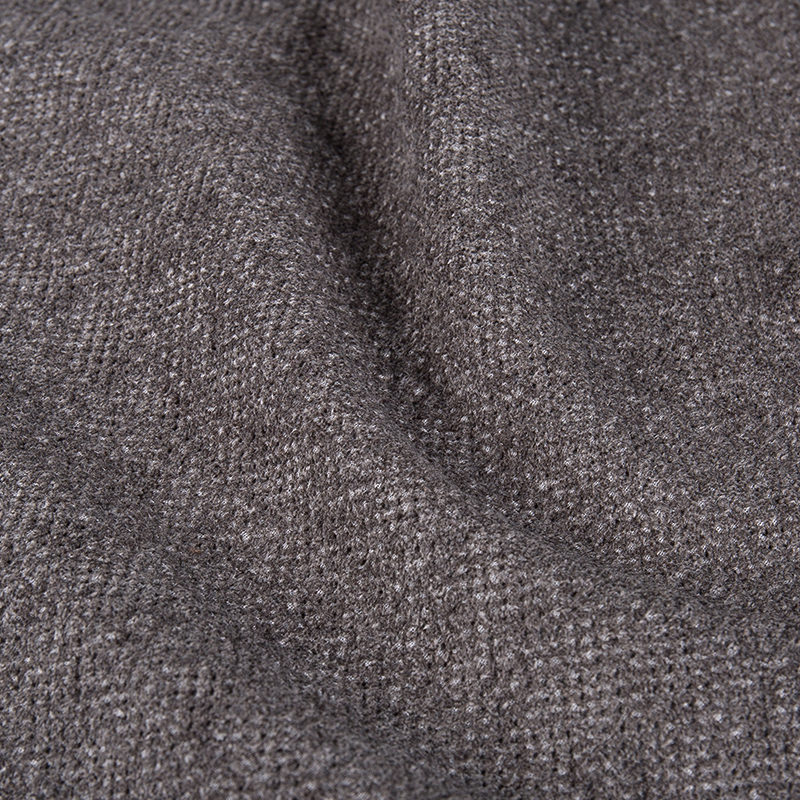
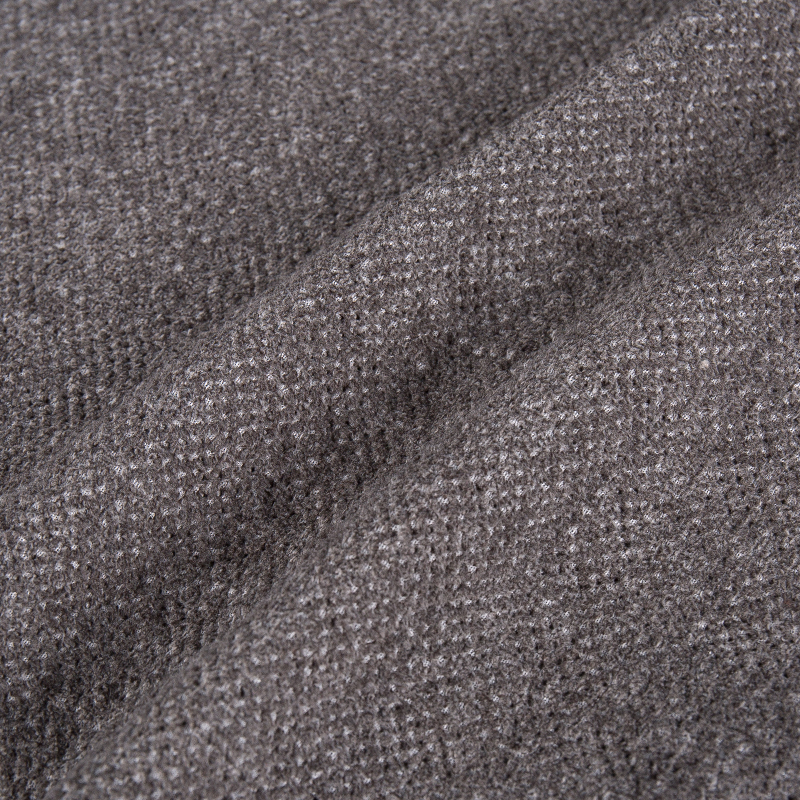
One of the most useful ways to evaluate hand feel before ordering is to request a physical swatch. The cashmere-look chenille is a favorite of European sofa makers because it mimics the drape of cashmere while retaining the wipe-clean benefit of polyester.
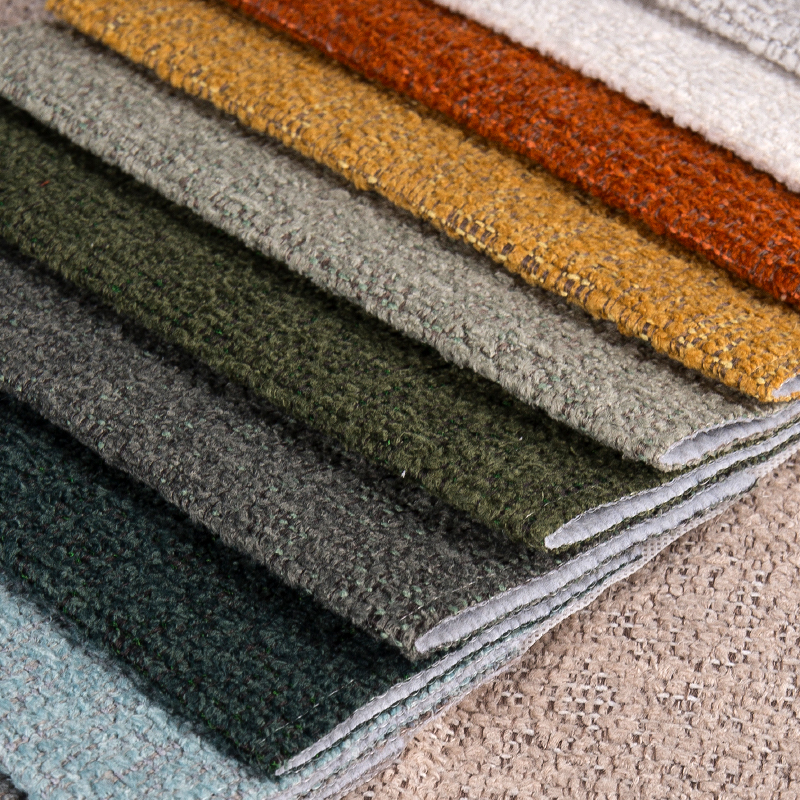 Cashmere Look Chenille Sofa Fabric with Two-Tone EffectA lightweight chenille with a classic micro-grained pattern and harmonious two-color effect. It mimics cashmere drape while providing the wipe-clean convenience of polyester, ideal for European sofa makers.View Product →
Once the basic properties are clear, the next step is comparing chenille with alternative upholstery textiles using measurable data.
The most reliable way to compare sofa fabrics is to read supplier test data rather than marketing descriptions. The table below summarizes typical figures; actual results vary by construction, yarn count, and finish.
| Fabric type | Hand feel | Martindale abrasion | Pilling risk | Maintenance | Common use |
|---|---|---|---|---|---|
| Polyester chenille | Soft, fuzzy, warm | 25,000–50,000 | Low to medium | Vacuum; spot clean | Sofas, armchairs, cushions |
| Cut velvet | Smooth, plush, glossy | 20,000–40,000 | Low when tight | Professional cleaning | Statement sofas, contract lounge |
| Boucle | Nubby, textured | 15,000–30,000 | Medium | Regular vacuuming | Casual seating, cushions |
| Flat woven polyester | Crisp, smooth | 30,000–60,000 | Low | Damp cloth; easy care | Family rooms, high-traffic spaces |
| Cotton/rayon chenille | Soft, matte | 10,000–20,000 | High if loose | Special care | Light-use sofas, throws |
The conclusion is not that chenille wins every row. Polyester chenille sits close to flat-woven polyester on abrasion while offering a completely different tactile experience. If absolute durability is the only criterion, a flat weave wins. If comfort and visual richness matter, chenille delivers better perceived value per unit of cost.
Showrooms show color and texture. They do not show what happens after years of sitting, sliding, and occasional spills. These are the indicators that matter when evaluating chenille fabric:
Typical abrasion resistance of common upholstery constructions, indexed to flat-woven polyester as 100:
The gap between a well-made polyester chenille and a premium flat weave is much smaller than most buyers expect, which is why chenille remains a practical choice for family sofas rather than a delicate decorative fabric.
Chenille is not limited to residential sofas. Among the companies that buy upholstery fabric, the typical distribution of chenille usage looks like this:
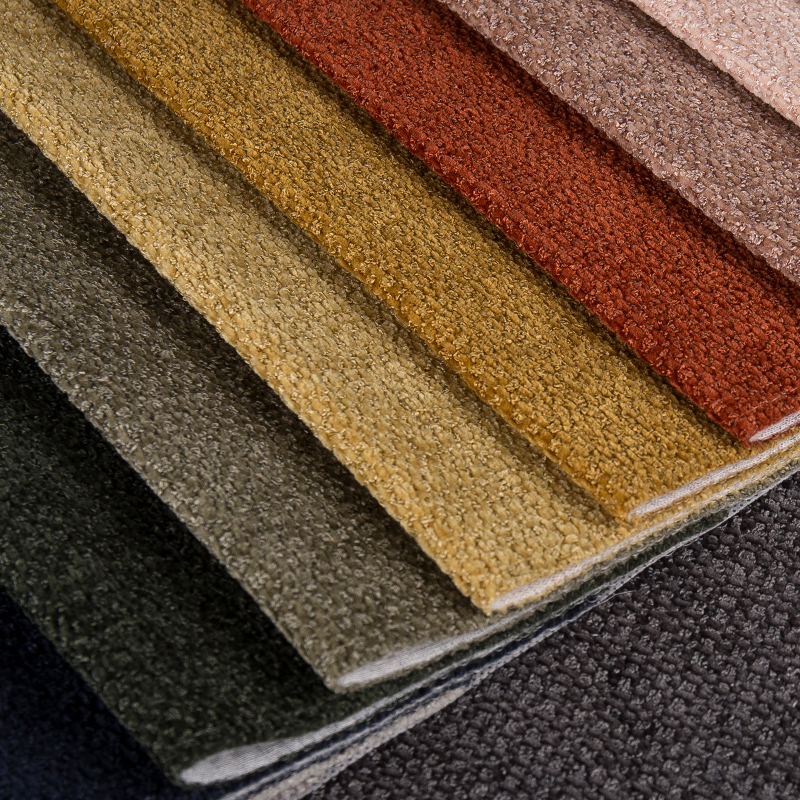
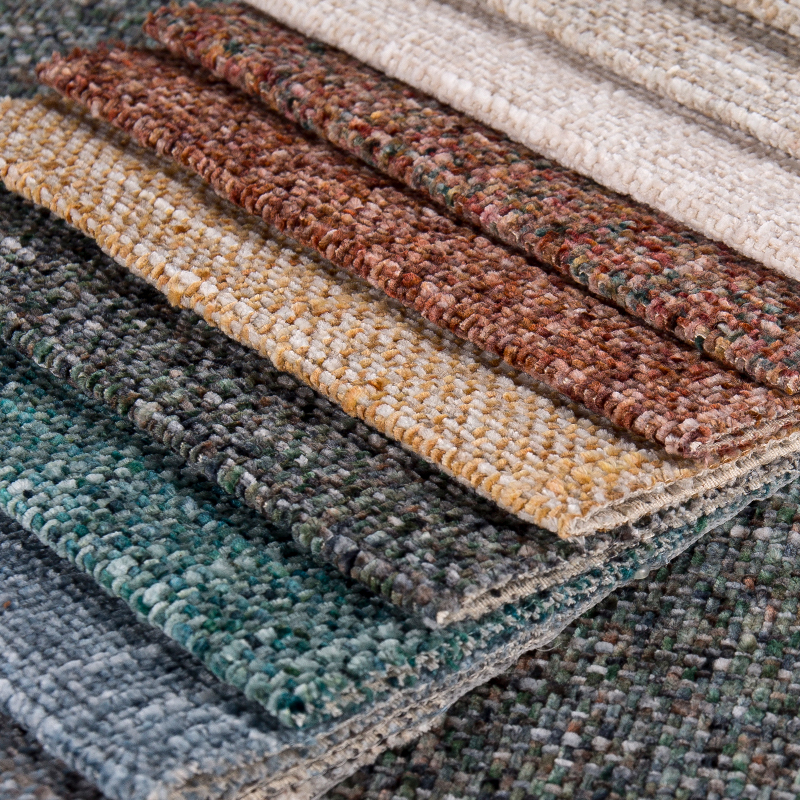
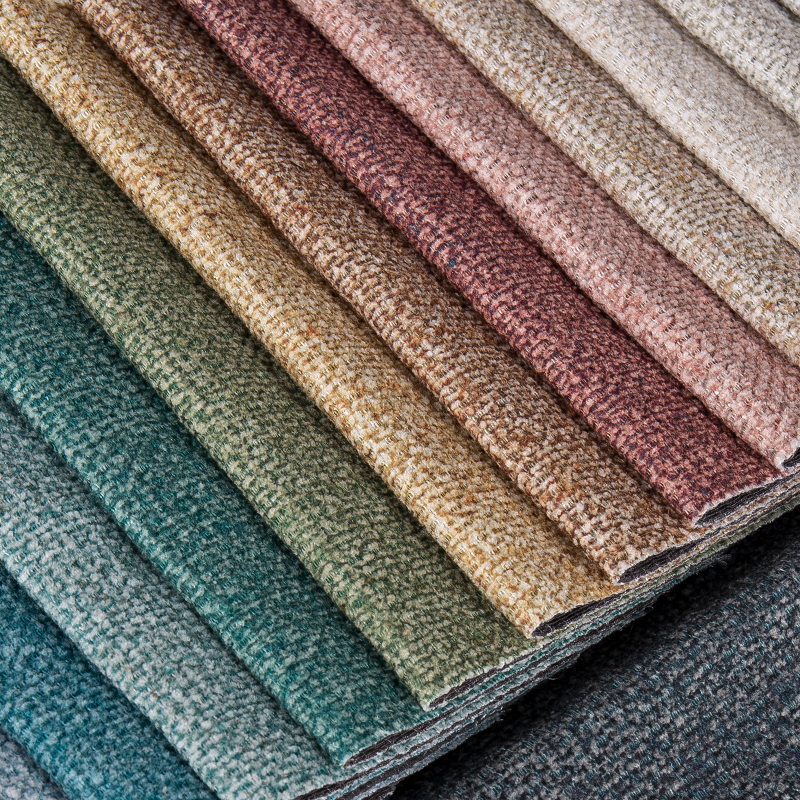
Residential sofas dominate because homeowners value the softness and warmth of chenille. Commercial seating, however, is the fastest growing segment for polyester chenille because hospitality projects need a fabric that feels premium but survives high-frequency turnover. A linen-look chenille fits both cases: it offers the relaxed, natural appearance modern designers request while keeping the pile softness that defines the category.
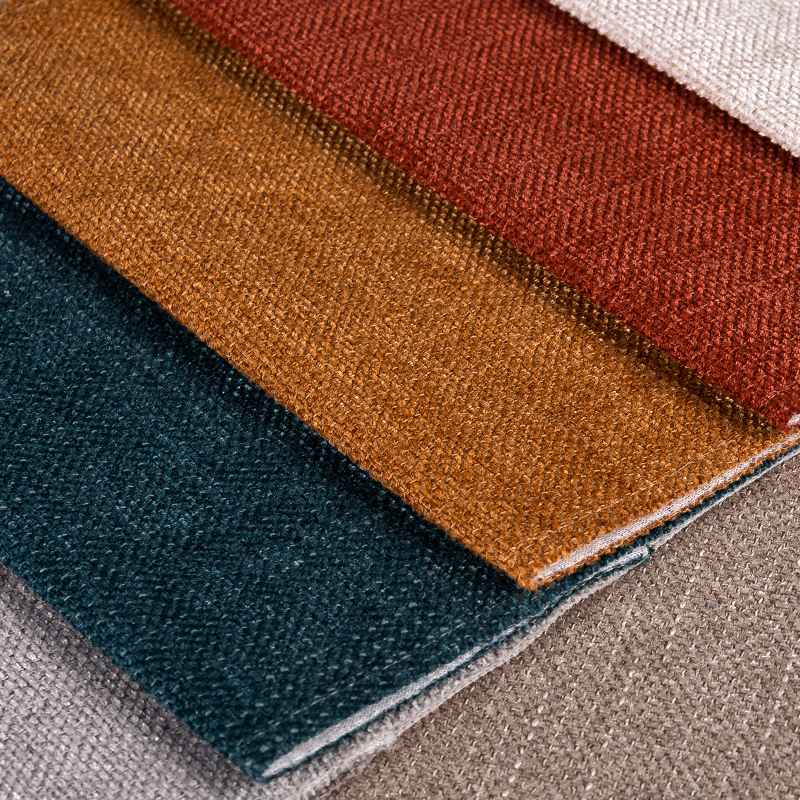 Linen Look Chenille Sofa Fabric for Residential and Commercial UseThis textured chenille delivers an affordable imitation-hemp appearance with soft hand feel and fresh colors. It suits both residential comfort and high-frequency commercial seating, balancing style and durability.View Product →
Furniture factories and distributors do not buy based on appearance alone. The following workflow has proven useful when selecting chenille for a new sofa range:
For a more detailed walkthrough of the same decision, our guide to choosing chenille sofa fabric covers each criterion with real production examples.
ROI note: Polyester chenille usually costs less than cut velvet and only slightly more than flat woven polyester. Because it lets furniture brands position a sofa in a higher price bracket on the strength of its perceived luxury, the added value is often greater than the added material cost.
Even a well-constructed chenille can be ruined by the wrong cleaning routine. Because the pile traps dust and absorbs oils, maintenance habits matter as much as the initial specification.
Compliance is just as important as care. Sofa fabrics sold in Europe usually need to pass EN 1021-1 and EN 1021-2 cigarette and match flame tests, while commercial projects may require additional classifications such as EN 13501 or BS 7176. Polyester is inherently more ignition-resistant than natural fibers, but pile density affects how a flame propagates. Always request the fire-retardant treatment declaration and the corresponding test certificate before mass production.
Environmental compliance also matters for exported furniture. Recycled polyester filament is now available in chenille constructions, and the same yarn structure performs well for producers who need to document sustainability efforts. That combination of softness, durability, and traceability is why chenille remains a forward-looking category in sofa upholstery.
Related Products

Contact us
Address
Hangfu Road 106#, Chongfu Town, Tongxiang City, Zhejiang, China
Phone
+86-15067379939
linachen@climbingtex.com / zac@climbingtex.com
lianniu@climbingtex.com
Fax/Tel
+86-573-88385698
products
QR CODE
 Home Textile Manufacturers
Sofa Fabric Factory
Home Textile Manufacturers
Sofa Fabric Factory
 English
 Español
 عربى
عربى