Oct 08, 2026
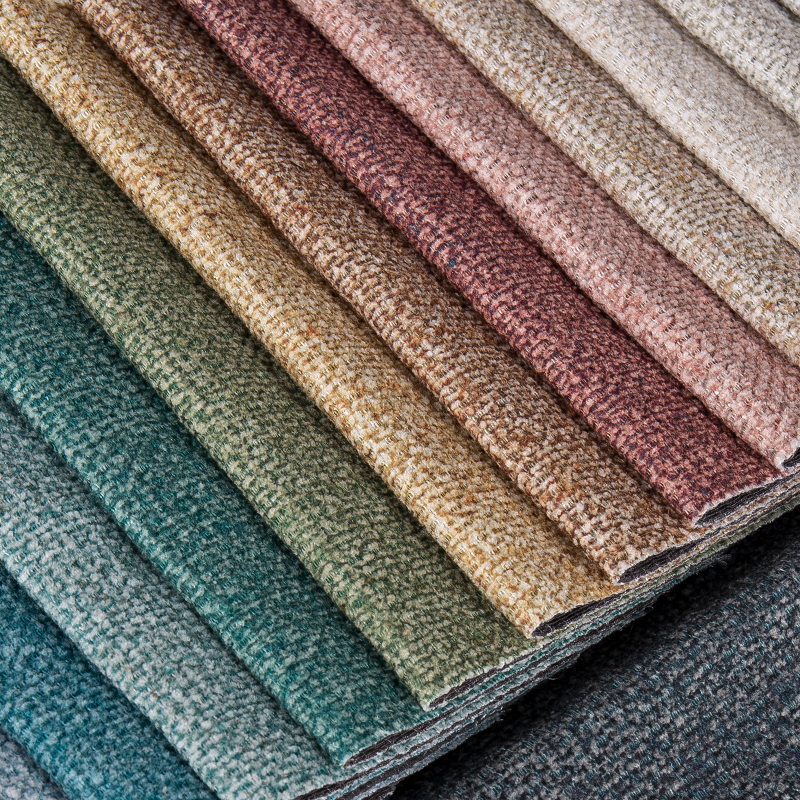
A sofa programme rarely fails because the fabric was the wrong colour. It fails because the cloth was specified on appearance alone, then survived only 12,000 Martindale cycles when the contract asked for 40,000. Furniture fabric is a performance product that happens to be beautiful, and the order in which the decisions are made decides the outcome.
The conclusion first: polyester now covers the overwhelming majority of upholstery demand in Europe, and the fibre is rarely where the money or the risk sits. The gap between a six-euro metre and a twelve-euro metre is almost never the polymer. It is the yarn structure, the weave and the finishing route. Buyers who lock the performance target before they fall in love with a swatch avoid most of the expensive mistakes.
Content
Polyester (PET) is the base fibre for a short list of reasons: it absorbs almost no water, keeps its tensile strength when wet, resists UV degradation better than most natural fibres, and its raw material price moves inside a predictable band. Those properties barely change between suppliers. What changes is everything that happens after the polymer is spun.
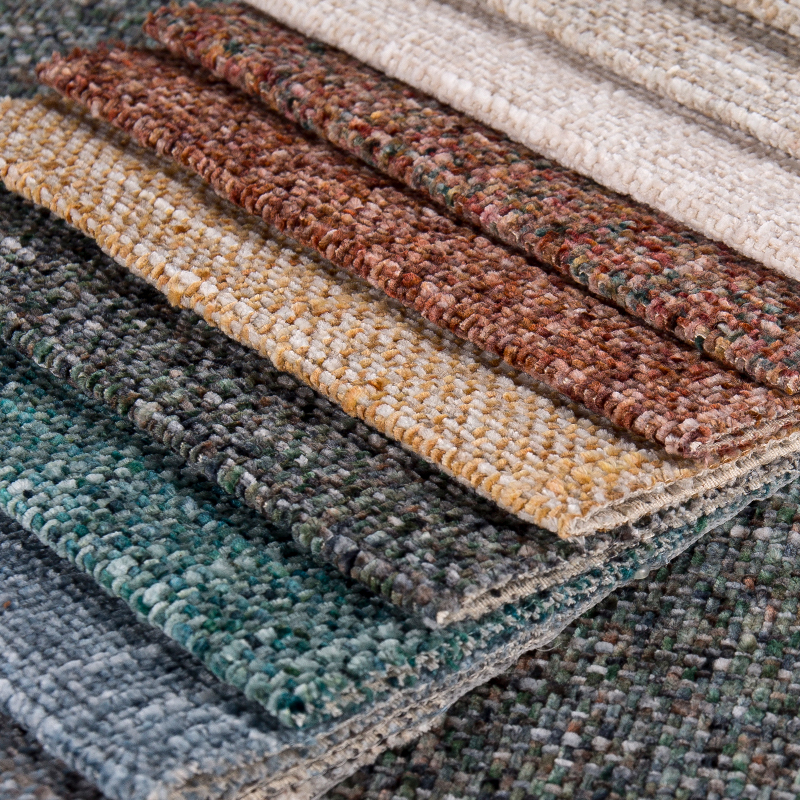
Chenille yarn
Two or more strands are twisted together and short fibres stand out sideways. The result feels plump and soft. That same loft is the weakness: loose fibres tangle, so pilling tends to run one grade behind a flat construction.
Yarn dyeing
Colour goes into the yarn before the loom ever sees it. Fastness sits inside the fibre rather than on its surface, and the pattern is built by interlacing rather than printing. The trade-off is minimum order quantity and lead time.
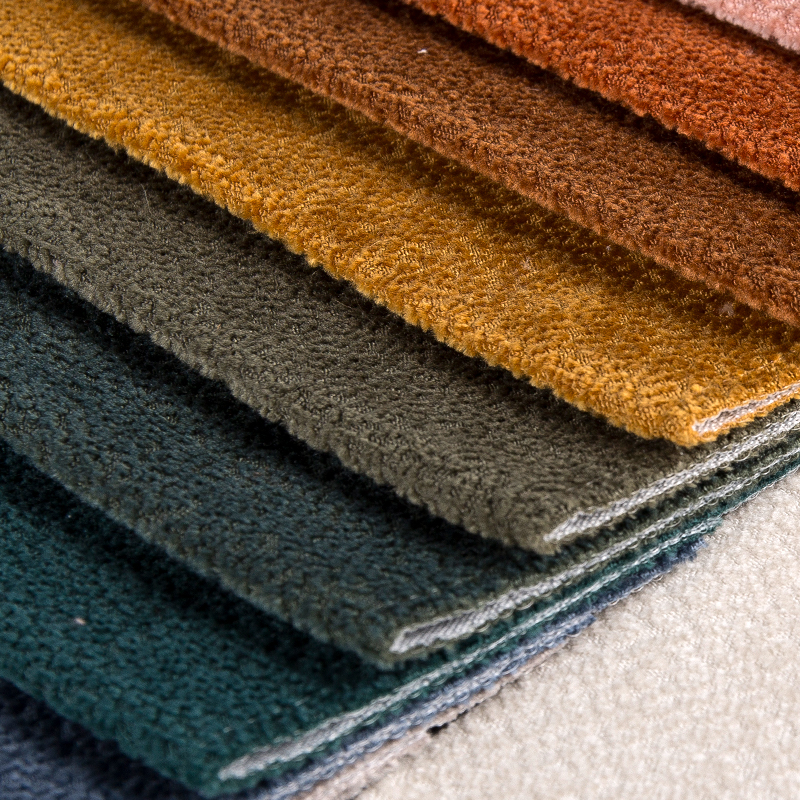
Cut velvet
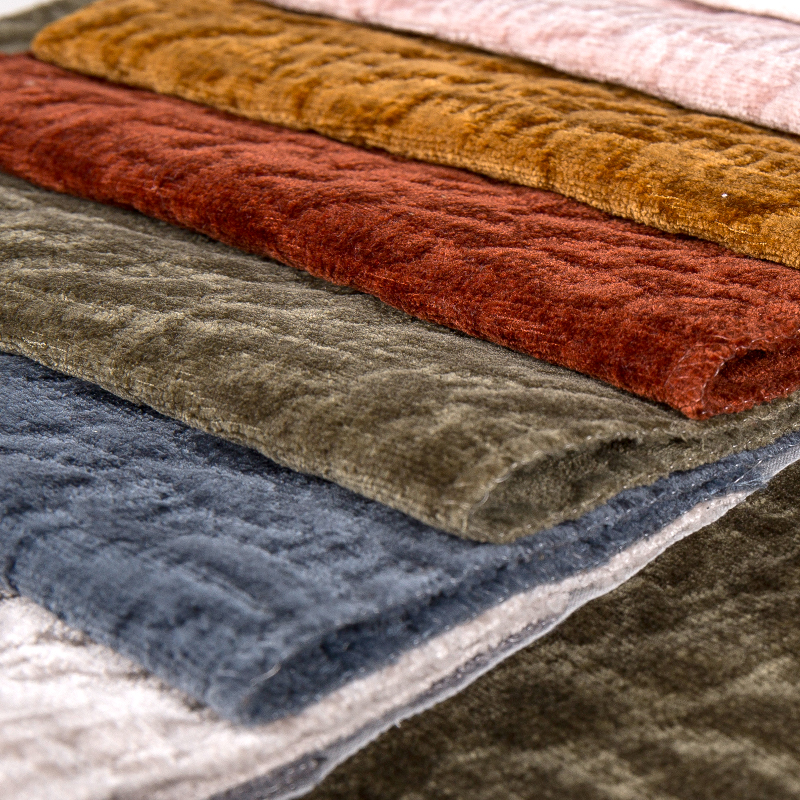
Loop pile is cut open to create an upright pile. Visually rich, but it records pressure marks and needs gentler care in homes with pets or heavy daily contact.
Bronzing
A metallic foil is transferred onto the surface under heat and pressure. It delivers high gloss, and because the foil is a surface layer, rub resistance is the natural limit of the technique.
Embossing
A patterned roller presses relief into the cloth. It adds depth and helps disguise minor surface variation. Poor temperature control flattens the recovery, so the same design can behave quite differently between two mills.
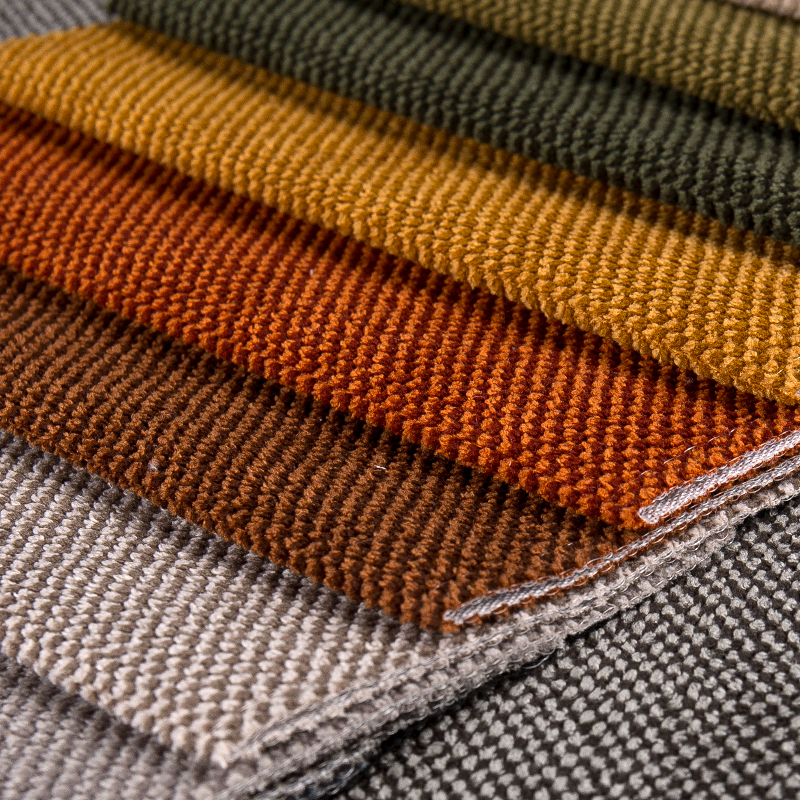
Warp knitting
Loops interlock along the length instead of crossing warp and weft. Yarns cannot easily slip, edges do not fray, and dimensional stability is high, which is why this route performs well in high-contact seating.
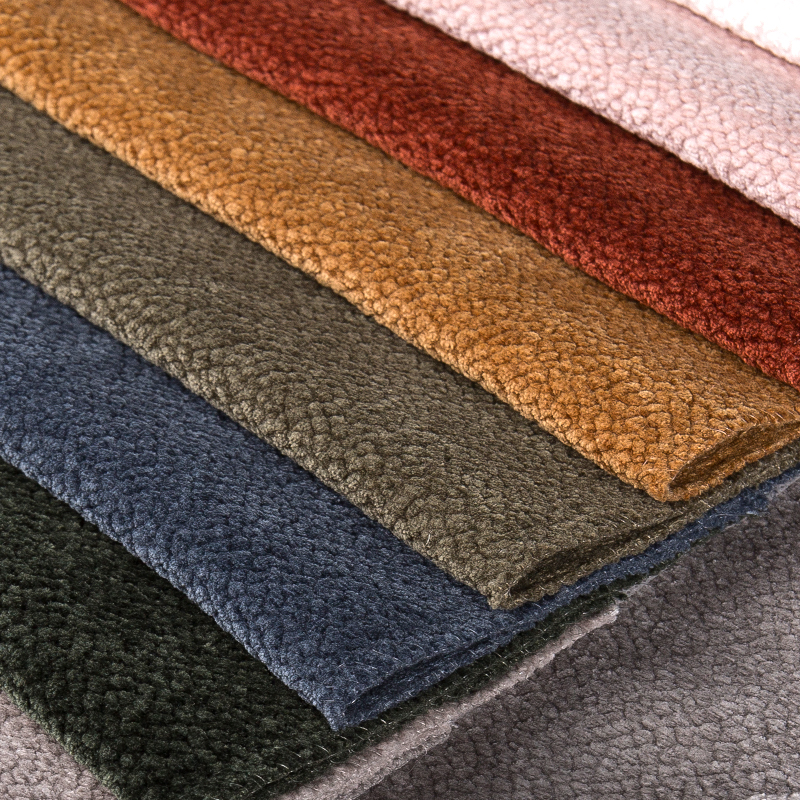
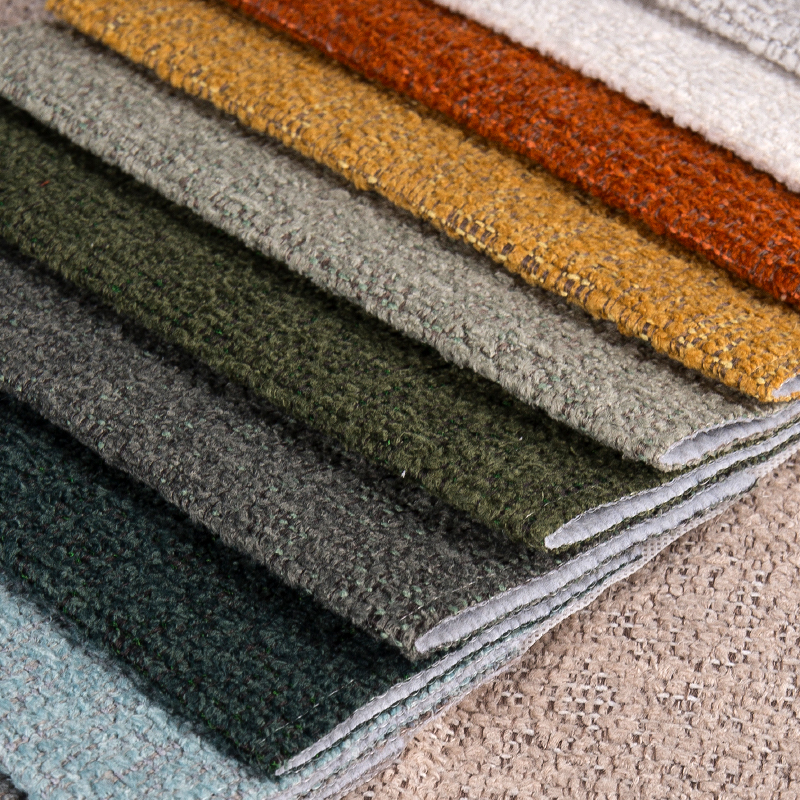 Polyester Cashmere Look Two-Color Chenille Sofa Upholstery FabricA two-color chenille sofa upholstery fabric with a soft micro-grained surface and 140 cm width, suited to high-contact seating where wool-like warmth meets polyester practicality.View Product →
A useful illustration is a chenille built on a fine-gauge pile, which reads as wool at arm's length while keeping polyester's cleaning profile and price predictability. That is the trade a buyer is really making: visual warmth on the outside, polyester economics underneath.
The figures below reflect ranges commonly written into European sofa specifications. They are industry-typical bands for comparison, not a guarantee for any single mill or batch.
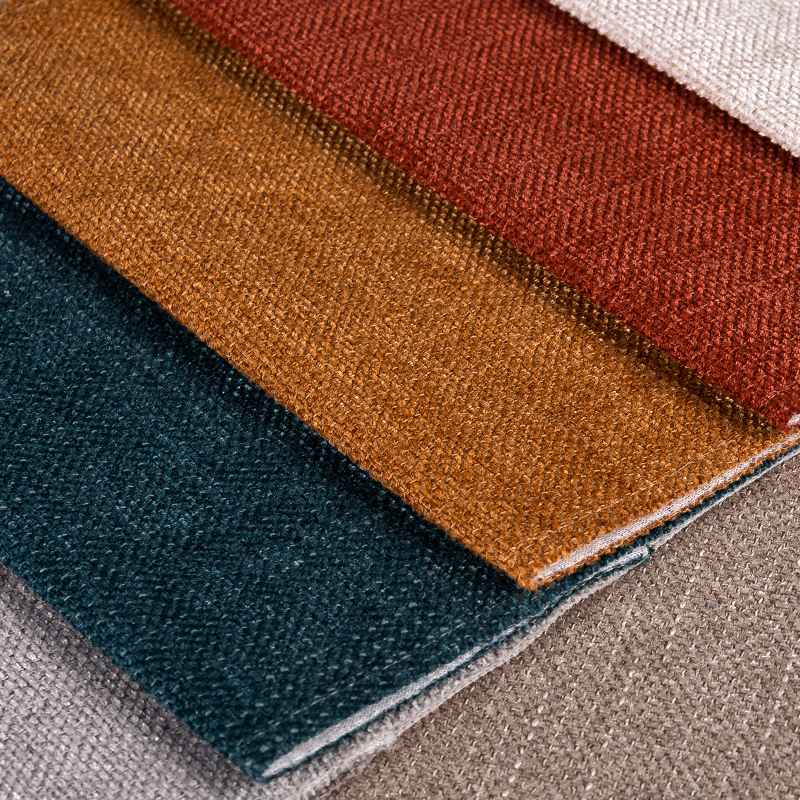
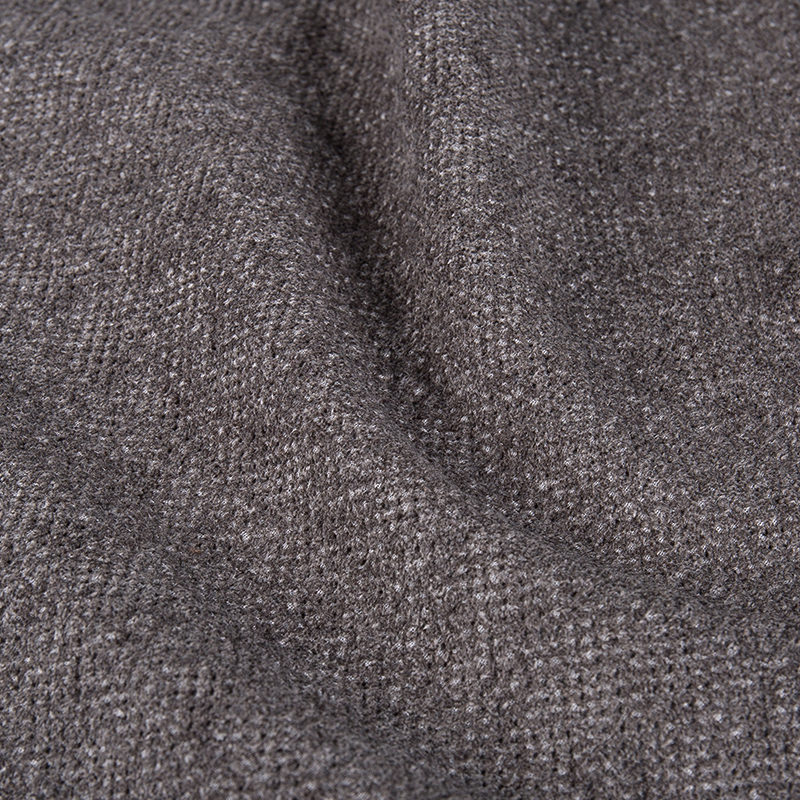 Solid Color Grain Embossed Polyester Sofa Upholstery FabricA plain embossed sofa fabric with cationic yarn for a two-color effect, 140 cm wide and 460 g/sm, offering textured comfort for upholstery.View Product →
Abrasion figures are only comparable inside one standard. A 30,000-rub result on a 280 g/m² embossed cloth and the same number on a 400 g/m² embossed cloth describe two very different seats, because weight drives how the cloth behaves at the seam and how quickly the pile collapses.
Buyers read the abrasion figure and stop there. The hidden variable is what abrasion is being asked to survive. Moving a fabric from a bedroom sofa to a hotel lobby multiplies the contact cycles without changing a single line on the technical data sheet.
Weight tolerance is the second invisible figure. A nominal 380 g/m² chenille can arrive anywhere inside a plus-or-minus five per cent band, and that swing feeds straight into cutting yield and seam behaviour. Mills that control heat setting and batch traceability hold the band tighter; mills that do not hand the variance to the furniture maker.
Upholstery demand splits into segments with very different requirements, and the split explains why most mills keep several finishing lines running at once.
Residential volume dominates, so most specifications optimise for appearance, cleanability and moderate abrasion. Contract work is roughly a quarter of the market but carries far higher thresholds, which narrows the shortlist to warp-knit constructions, yarn-dyed structures and heavier chenilles.
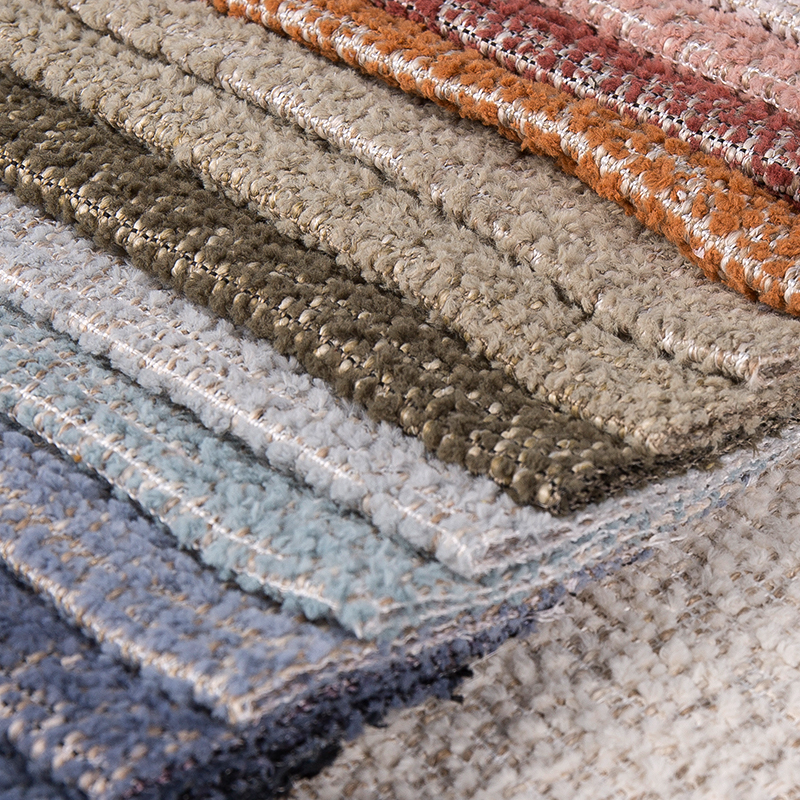
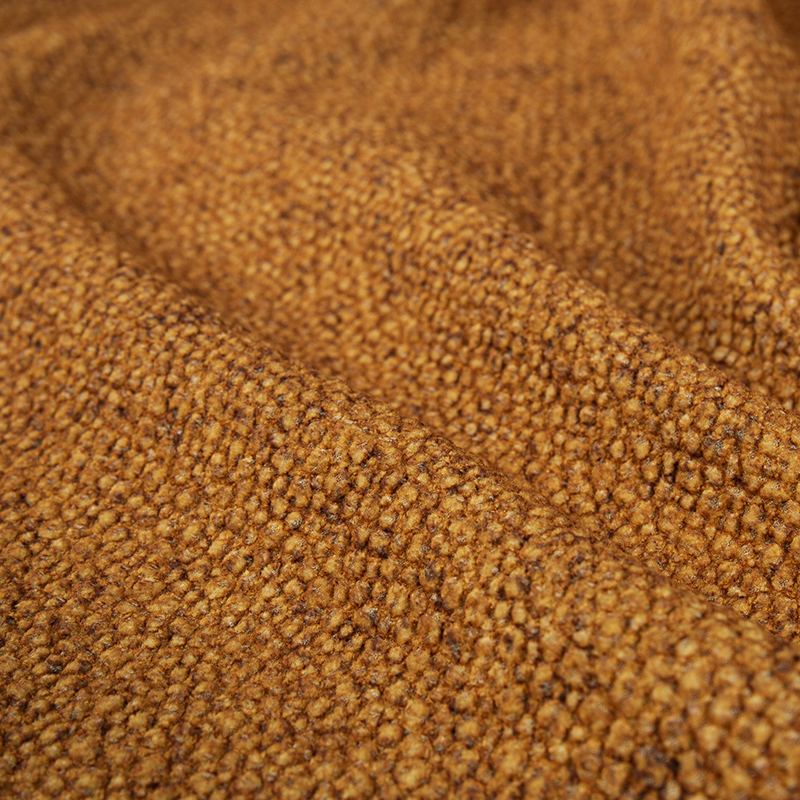
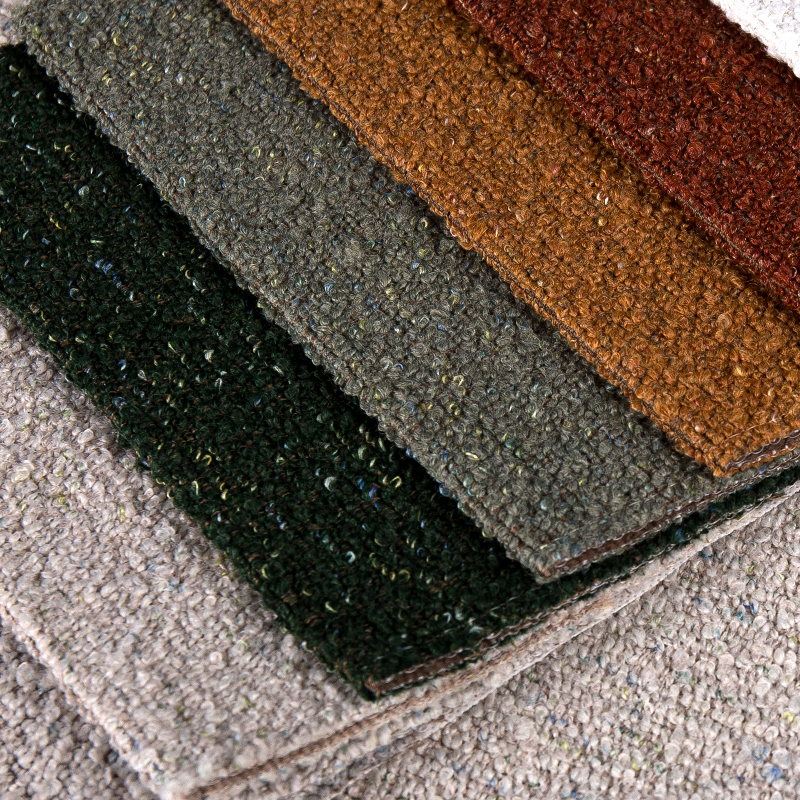 Yarn-Dyed Wool-Looking Chenille Polyester Sofa Upholstery FabricA yarn-dyed chenille sofa upholstery fabric with a wool-like look, prominent two-color effect, and 570 g/sm weight for repeat upholstery programmes.View Product →
The economics are easy to underestimate. Saving 0.30 euro per metre on a 5,000-metre order frees 1,500 euro. One rejected batch for shade variation can cost several times that in rework, freight and late delivery penalties. Dyeing the yarn before weaving rather than printing colour afterwards is one of the clearest ways to protect that margin, which is why yarn-dyed structures hold their value in repeat programmes.
Polyester tolerates water-based cleaning better than most natural fibres, but the finishing route changes the rules. Chenille and cut velvet should be vacuumed with a soft brush head rather than scrubbed; bronzed surfaces dislike solvent and abrasive cleaners because the foil is only a surface layer; embossed cloth should be ironed at low temperature to protect the pressed relief.
On the compliance side, European buyers normally ask for REACH documentation, a flammability result to the relevant national standard for the seating type, and fastness data covering light and rubbing. Protective finishes for stain and water repellency help on the showroom floor, but the chemical recipe behind them has to stay inside the restricted-substance list, and the treatment itself must not soften the abrasion result the buyer paid for.
Finally, traceability is what turns a good first order into a reliable programme. Batch records covering yarn lot, dye lot, finishing temperature and inspection result let a supplier reproduce the same cloth two seasons later. Without them, a perfect sample is just a lucky sample.
Related Products

Contact us
Address
Hangfu Road 106#, Chongfu Town, Tongxiang City, Zhejiang, China
Phone
+86-15067379939
linachen@climbingtex.com / zac@climbingtex.com
lianniu@climbingtex.com
Fax/Tel
+86-573-88385698
products
QR CODE
 Home Textile Manufacturers
Sofa Fabric Factory
Home Textile Manufacturers
Sofa Fabric Factory
 English
 Español
 عربى
عربى