Aug 24, 2026
When a hotel procurement team rejects a fabric sample, the reason is rarely aesthetics. It is almost always a performance number: Martindale cycles below 25,000, or a pilling grade under 4. For residential buyers, the same logic applies in a less formal way. A sofa that looks great in the showroom can look worn after two years of daily use when the material type was chosen for appearance rather than longevity. Furniture material types determine how a piece performs over its entire life, not just how it photographs on day one. This guide compares the main structural and upholstery materials, explains how to read the technical indicators that matter, and gives you a repeatable selection process for both home and contract projects.
Key conclusion: polyester-based upholstery fabrics currently deliver the strongest all-around balance of abrasion resistance, colorfastness, stain control, and cost per meter. Natural materials suit specific looks and textures, but they demand more maintenance and generally wear faster in busy households or commercial settings.
Content
Furniture materials divide into two groups: structural materials that form the frame, and surface materials that cover, cushion, and finish the piece. Structural choices determine whether the sofa stays solid; surface choices determine whether it stays presentable. Both matter, but the surface material receives the most abuse, which is why upholstery fabric has the largest impact on long-term satisfaction. The table below summarizes the most common furniture material families and their trade-offs.
Upholstery fabrics fall into natural and synthetic families, each with a different performance profile. The selection is not simply "natural is better" or "synthetic lasts longer." Each fiber brings measurable strengths and real trade-offs.
Cotton is breathable and inexpensive but wrinkles and absorbs stains. Linen has a beautiful drape but scores low in abrasion tests and creases easily. Wool is naturally resilient and more flame-resistant than most synthetics, yet it is costly, can shrink if cleaned incorrectly, and remains vulnerable to fabric pests. Leather is durable and easy to wipe clean, but it demands conditioning, shows scratches, and carries a high price per square meter.
Nylon is tough but can feel plastic-like and tends to generate static. Acrylic mimics wool at a lower cost but pills noticeably. Polyester combines high abrasion resistance with good colorfastness, low moisture absorption, and easy cleaning. When engineered as a tightly woven fabric, the same polyester yarn can outperform natural fibers on nearly every objective upholstery test. If you are weighing specific trade-offs between fiber families, our guide on how to choose the right sofa fabric covers each criterion in practical detail.
Martindale cycles (ISO 12947) are the most widely used benchmark. The thresholds below are a practical starting point:
For North American specifications, Wyzenbeek double rubs (ASTM D4157) are common, with 15,000 double rubs considered heavy-duty residential and 30,000 contract grade.
Pilling resistance should grade 4 or higher on the ICI pilling scale. Lightfastness should reach 5 or more under ISO 105-B02 for sofas placed near windows. Stain-release scores of 3.5 or better on the AATCC 130 test keep everyday spills manageable.
Buyers often ask whether polyester is "good enough." The better question is how the polyester was constructed. The same polymer can become a flat weave, a plush chenille, a shiny cut velvet, or a stretch knit, and each structure behaves differently on a sofa.
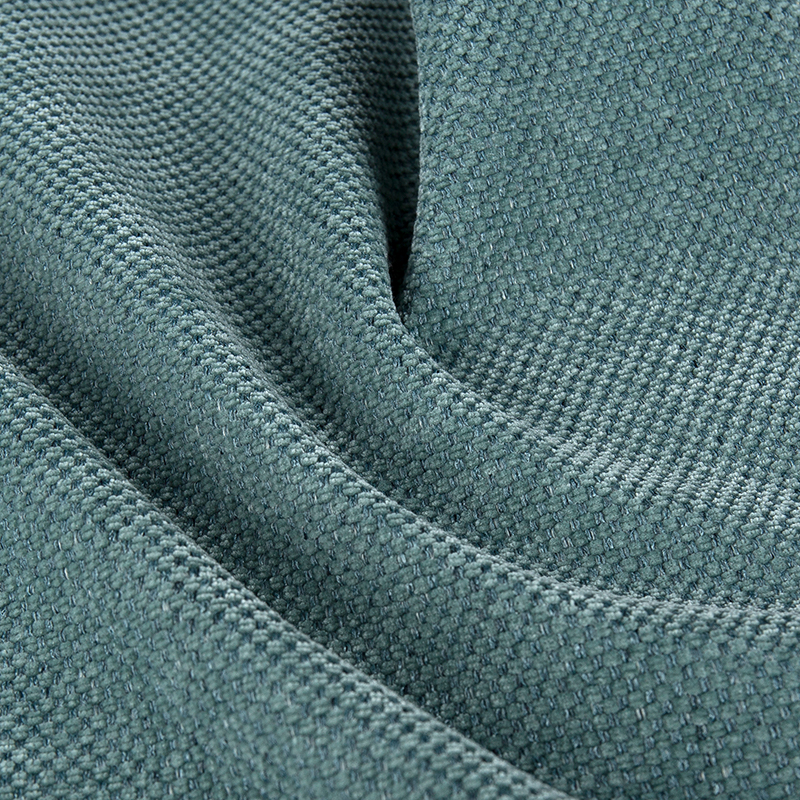
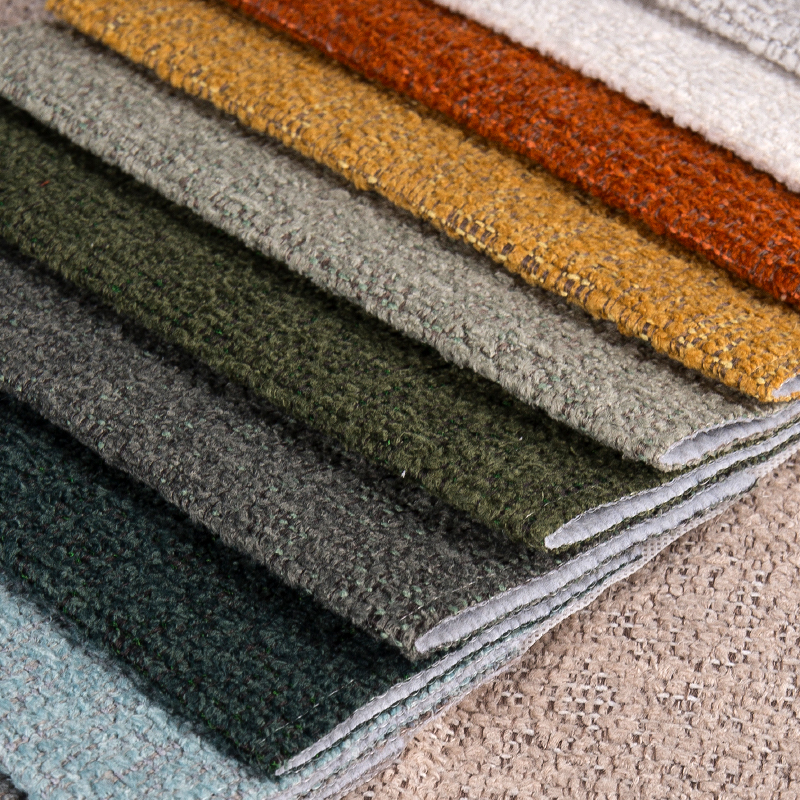
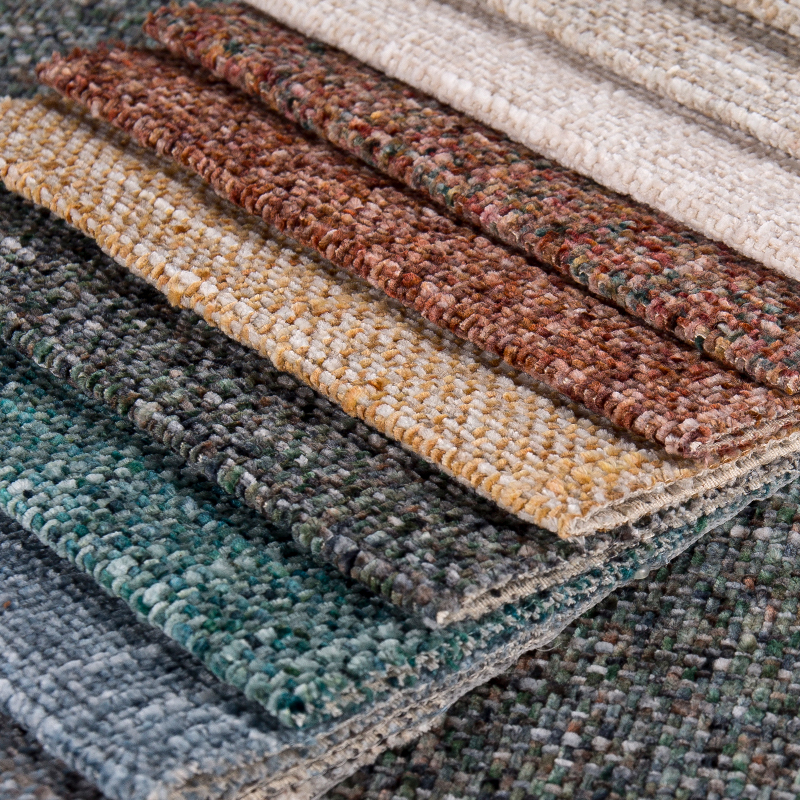
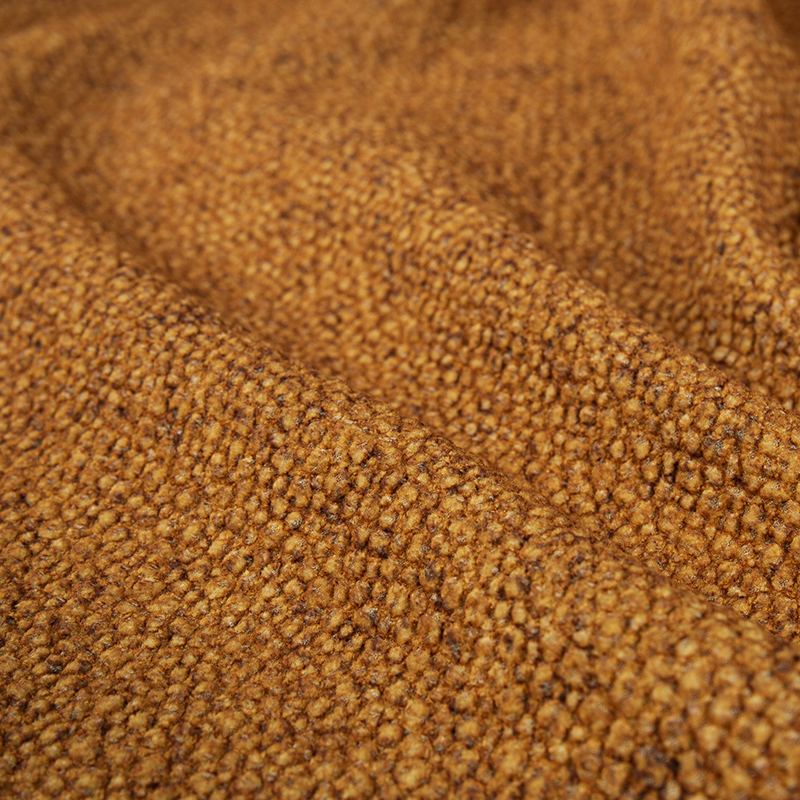
Tightly woven polyester offers the best dimensional stability and the highest abrasion scores. Yarn-dyed woven fabrics hold color better because the yarn is colored before weaving, which also reduces dye fading over the product's life. The yarndyed boucle sofa fabric is a good example of how a textured weave adds visual depth while keeping the strength of a dense construction.
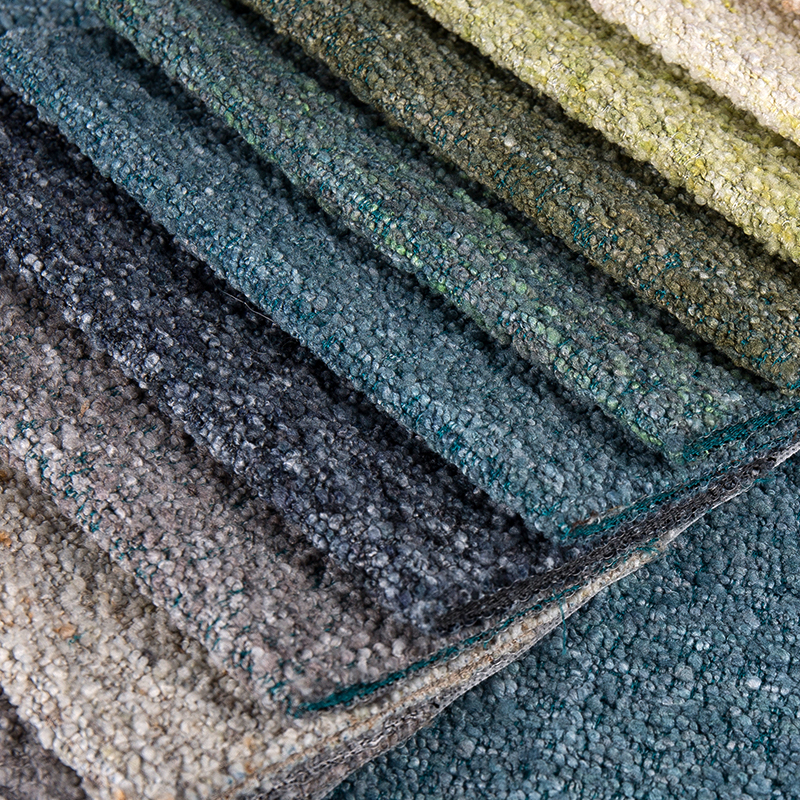 Yarn-Dyed Boucle Sofa Fabric Manufacturers, Company - Tongxiang Climbing TextileClimbing Textile is China Wholesale Yarn-Dyed Boucle Sofa Fabric Manufacturers and Custom Yarn-Dyed Boucle Sofa Fabric Company,1. Yarn-dy...View Product →
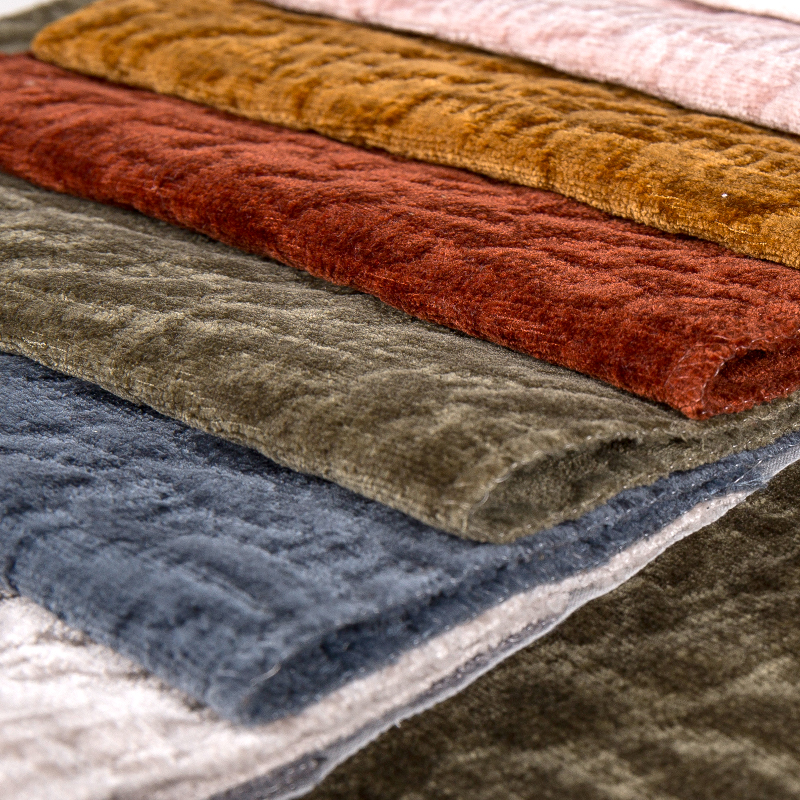
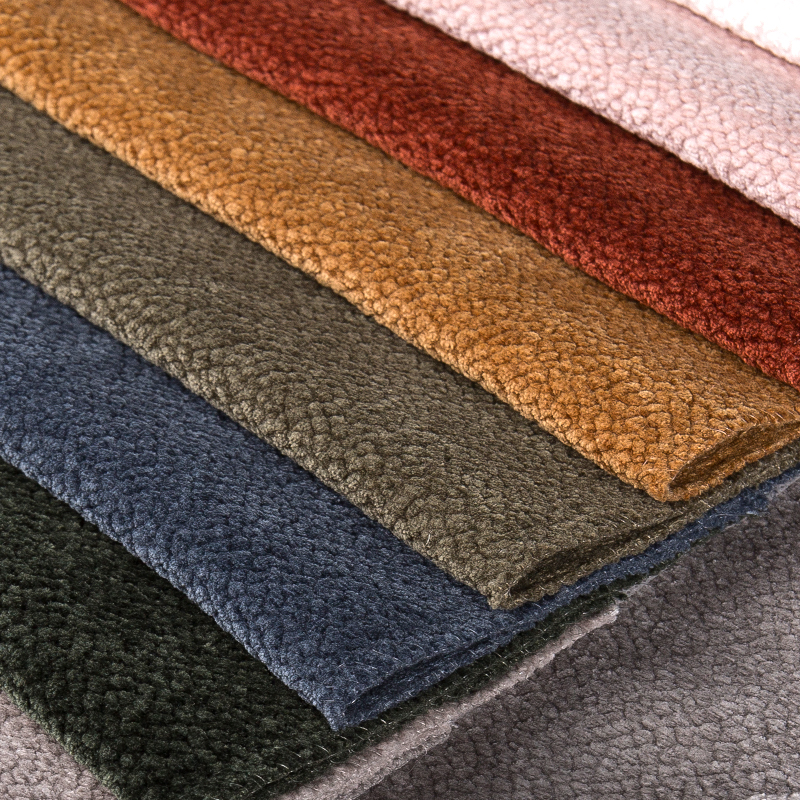
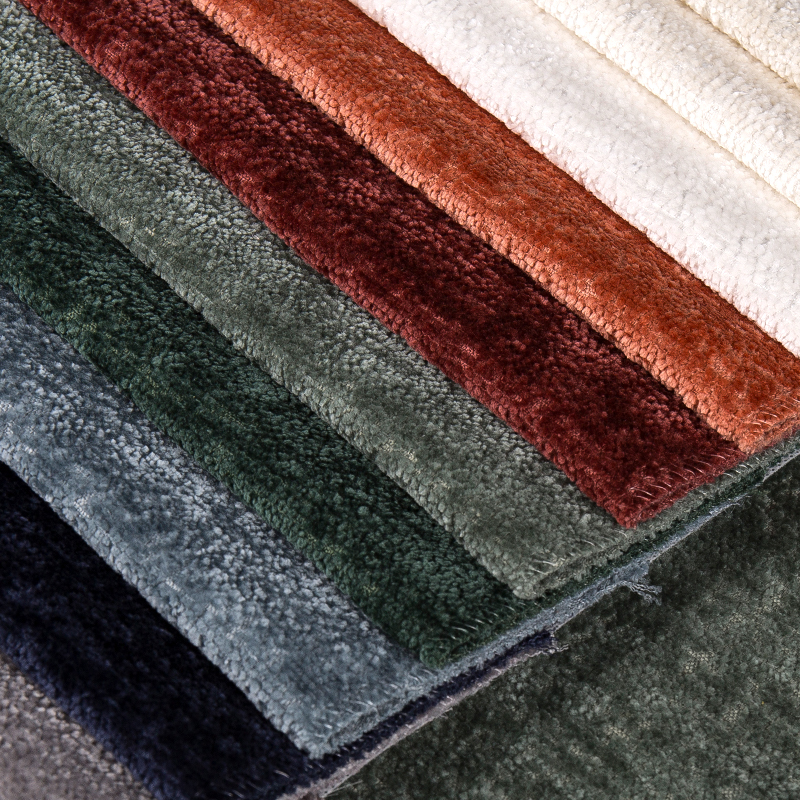
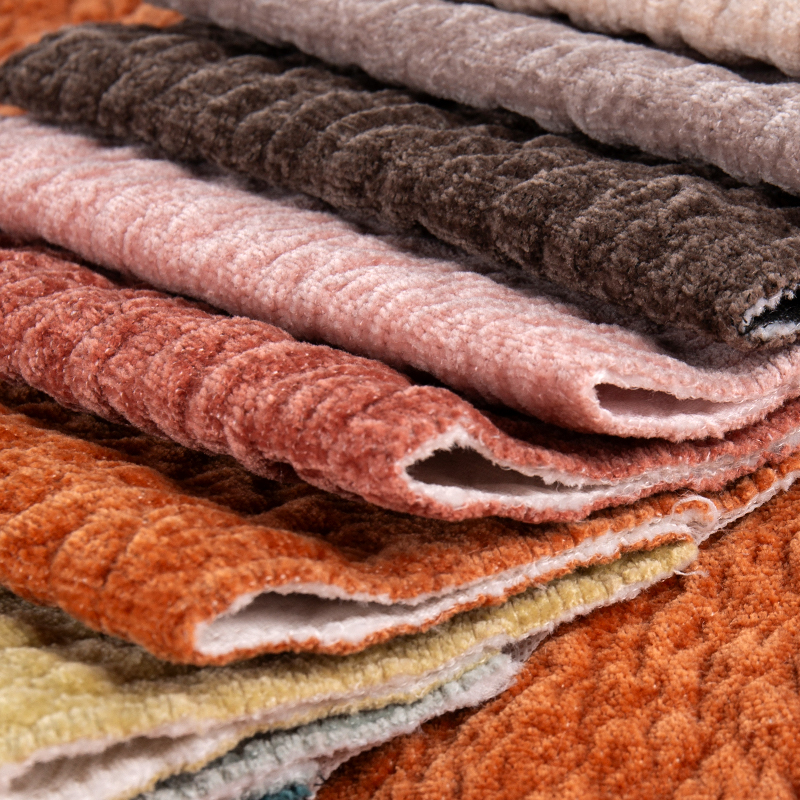
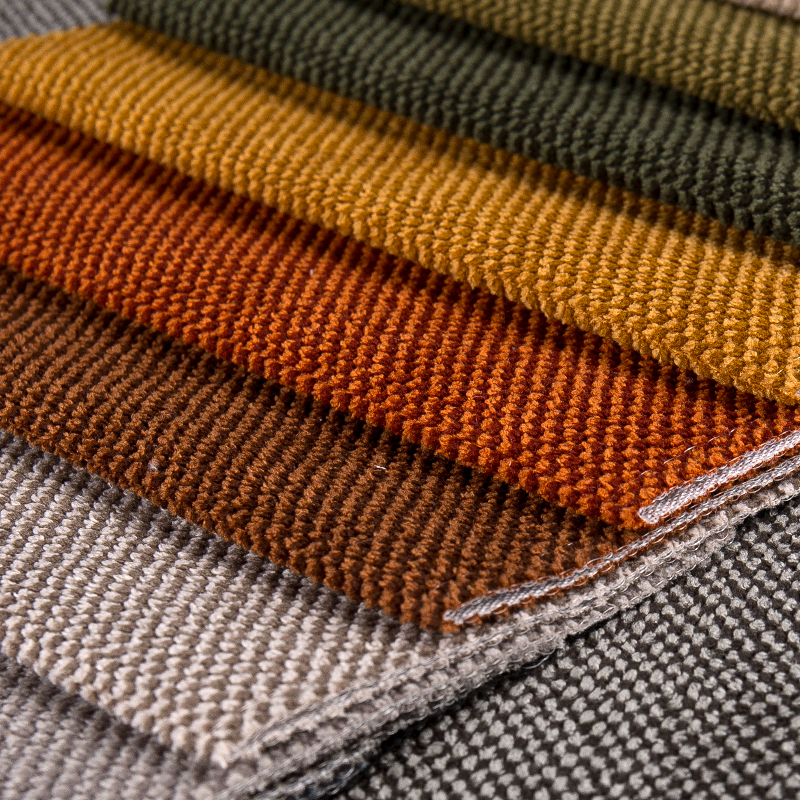
Chenille is produced by cutting short pile yarns into a soft, lofty surface. It delivers a luxurious hand feel while keeping polyester's practical durability, which is why a soft chenille sofa fabric works well for family rooms. Cut velvet combines sheen and texture through contrasting cut and uncut loops, as seen in the linen-look cut velvet sofa fabric. Knitted polyester, by contrast, adds stretch and drape for relaxed, slim-fit covers and is often used for modern silhouettes.
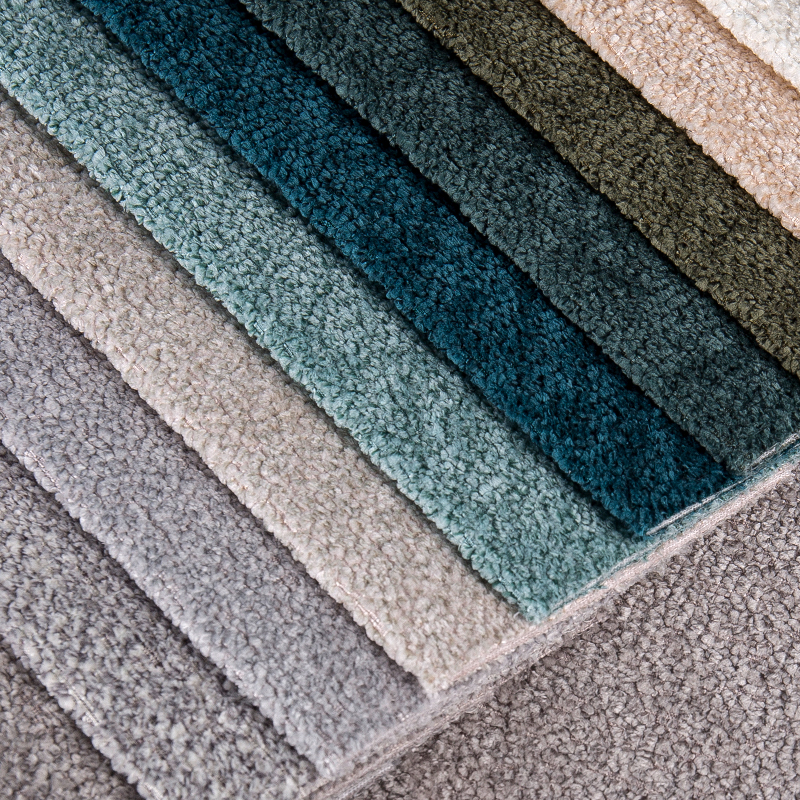 Linen Look Cut Velvet Sofa Fabric Manufacturers, Company - Tongxiang Climbing TeClimbing Textile is China Wholesale Linen Look Cut Velvet Sofa Fabric Manufacturers and Custom Linen Look Cut Velvet Sofa Fabric Company,...View Product →
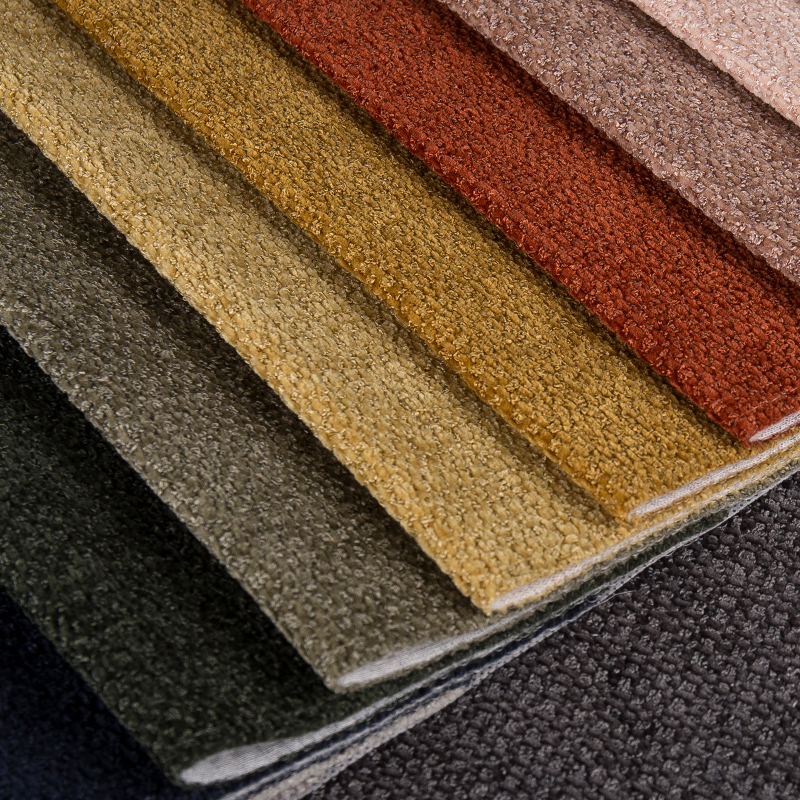 Soft Chenille Sofa Fabric Manufacturers, Company - Tongxiang Climbing Textile CoClimbing Textile is China Wholesale Soft Chenille Sofa Fabric Manufacturers and Custom Soft Chenille Sofa Fabric Company,1. Classic cheni...View Product →
Browse our polyester woven upholstery fabric collection to compare how the same base fiber performs across different weaves and finishes.
Beyond the headline abrasion number, three less obvious factors separate a fabric that lasts from one that disappoints.
Fabric weight below 300 gsm is light-duty; contract-grade polyester upholstery usually ranges from 350 to 600 gsm.
A woven or acrylic backing improves dimensional stability and boosts abrasion scores. Stain-repellent finishes extend service life without changing hand feel.
Continuous filament polyester does not pill easily; spun polyester has a softer, more natural texture but can shed short fibers over time.
Polyester now accounts for the largest share of residential upholstery because it offers durability at a reasonable price and adapts to nearly every construction style. Cotton-blend fabrics remain popular for casual, breathable seating. Leather holds the premium segment, while wool occupies a niche in formal and contract settings where natural fire performance matters.
Use the following process to reduce risk when you compare furniture material types for a specific project.
Residential sofa, pet household, rental unit, hotel lobby, or office lounge each sets a different minimum for abrasion and stain resistance.
Require Martindale 30,000 or higher for daily seating, pilling grade 4 or better, lightfastness 5 or higher, and a W-S cleaning code.
Check yarn type, finished weight, and backing. Ask for the specification sheet; a supplier who cannot provide test data is a risk.
Push, stretch, and fold the swatch to judge hand feel, shear, and recovery. Photos do not show these properties.
Communicate the cleaning code to the end user. W-S fabrics can be cleaned with either water-based or solvent-based products, which gives households the most flexibility. Routine vacuuming prevents abrasive dust from working into the weave.
Commercial upholstery must meet regional flammability regulations such as BS 5852 in the United Kingdom and CA TB 117-2013 in the United States. For importers in Europe, REACH compliance is mandatory, and OEKO-TEX certification provides additional assurance for residential buyers. Confirm that the fabric supplier documents these standards.
In the end, furniture material selection comes down to matching the material to the use pattern. A delicate natural fabric can be right for a formal room that receives little wear; a polyester construction with a verified Martindale score suits family sofas, rental furniture, and contract seating. Read the data, order swatches, and choose the material that fits real conditions rather than showroom impressions.
Related Products

Contact us
Address
Hangfu Road 106#, Chongfu Town, Tongxiang City, Zhejiang, China
Phone
+86-15067379939
linachen@climbingtex.com / zac@climbingtex.com
lianniu@climbingtex.com
Fax/Tel
+86-573-88385698
products
QR CODE
 Home Textile Manufacturers
Sofa Fabric Factory
Home Textile Manufacturers
Sofa Fabric Factory
 English
 Español
 عربى
عربى