Sep 01, 2026
When you are evaluating polyester upholstery for a sofa production run, the question "is polyester stretchy?" is not a simple yes-or-no. It depends on how the fiber is constructed, what it is blended with, and what finishing treatments it has received. For upholstery buyers, the answer matters because stretch affects whether a fabric conforms to foam shapes, resists sagging after daily use, and maintains its appearance over time.
Core conclusion: 100% polyester is not naturally stretchy. In its pure form, polyester has limited elongation and high elastic recovery. Stretch appears when fabric construction changes - knitting loops, elastane blending, or mechanical finishing - so the final performance is determined by the fabric engineer, not the fiber alone.
A small amount of stretch is desirable in sofa upholstery. It lets the fabric follow the curved contours of seat cushions, slim armrests, and high backs without wrinkling. But too much stretch, or recovery that fails over time, creates loose covers and unsightly bagging. Understanding the engineering behind polyester stretch helps you specify the right fabric for each application.
Content
Polyester is a generic term for a family of synthetic polymers, most commonly polyethylene terephthalate (PET). In fabric form, the fiber has a moderate extension at break of roughly 30-40%, but its stretch is not elastic. It deforms under load and recovers most of its shape when the load is removed. Four mechanisms give polyester fabric actual usable stretch.
The polymer chain of PET has crystalline regions that resist stretching. When pulled, the amorphous segments align first. This gives polyester a stretch ceiling of about 30-40% before breakage, but only if the fibers were not already drawn during yarn production.
Knitted fabrics interlock loops, and the loops can open under tension, delivering 8-15% stretch with good recovery. Woven fabrics have yarns crossing at right angles; a plain weave stretches only 2-5%, while a twill weave gives a little more. Warp knit fabrics, used in many upholstery products, sit between these extremes.
Adding 2-5% spandex or elastane to polyester yarn changes the behavior fundamentally. The elastane fibers stretch and recover independently, producing fabrics with 15-30% elastic stretch and recovery rates above 95%. In upholstery, this is often used for motion furniture or premium cushion covers.
Texturing, air-jet intermingling, and heat-setting processes impart stretch to the yarn itself. These treatments open the fiber structure, allowing more movement between filaments. The resulting dimensional stretch is distinct from elastic stretch and is a common way to make woven polyester sofa fabrics more compliant.
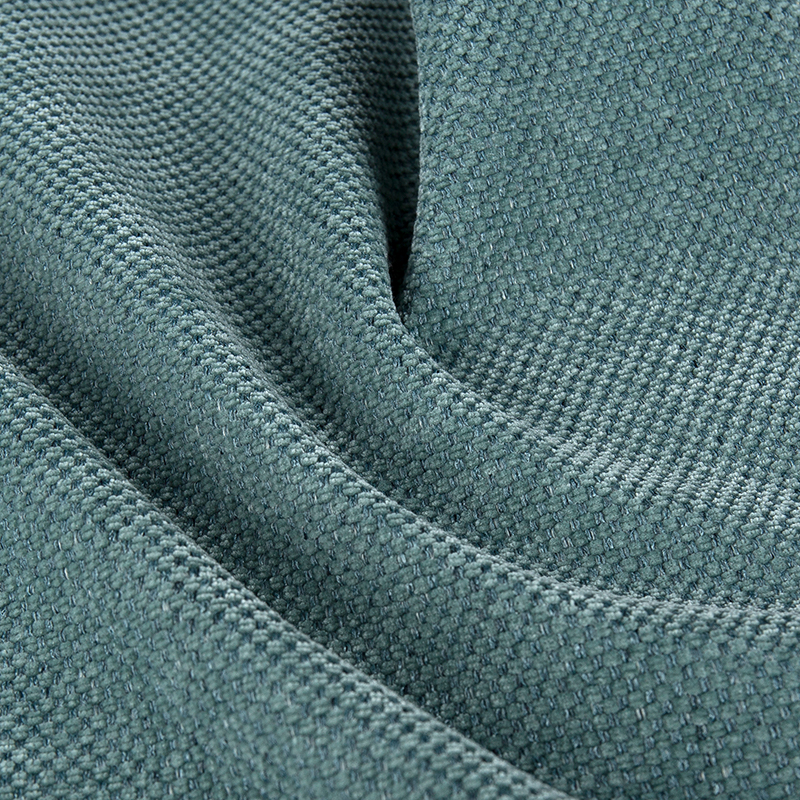
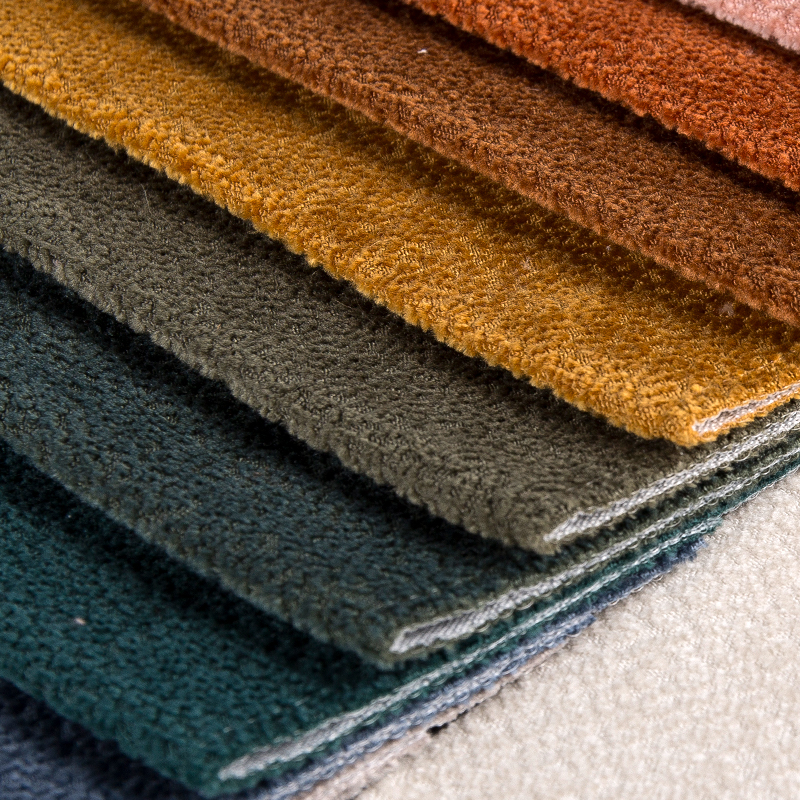
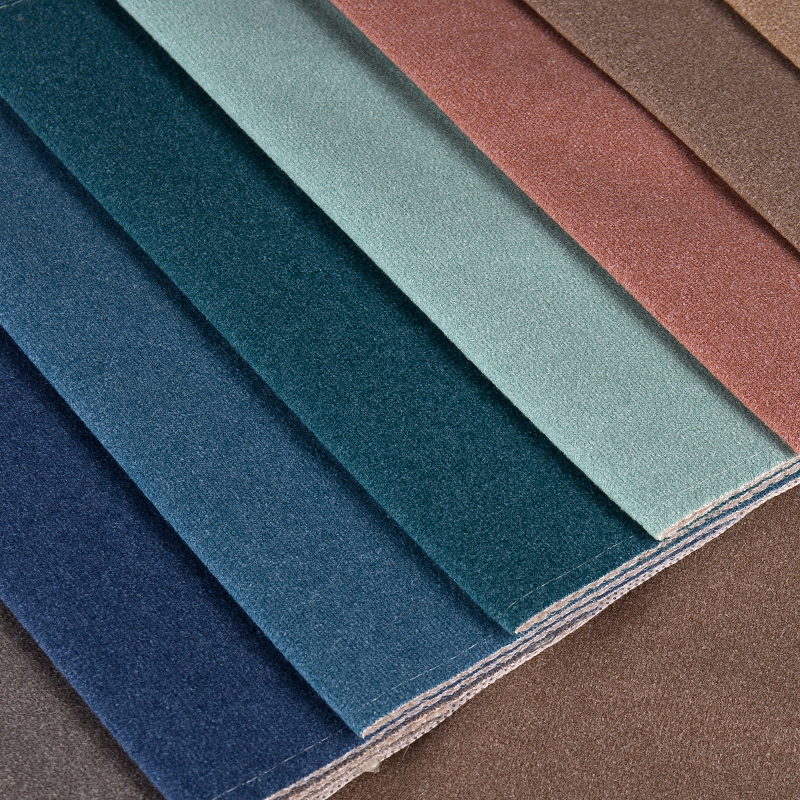 Two-Tone Velvet Sofa Fabric for Durable UpholsteryThis warp-knit two-tone velvet offers softness and inherent stretch, making it suitable for patterned sofas that must conform to compound curves while remaining economical and easy to care for.View Product →
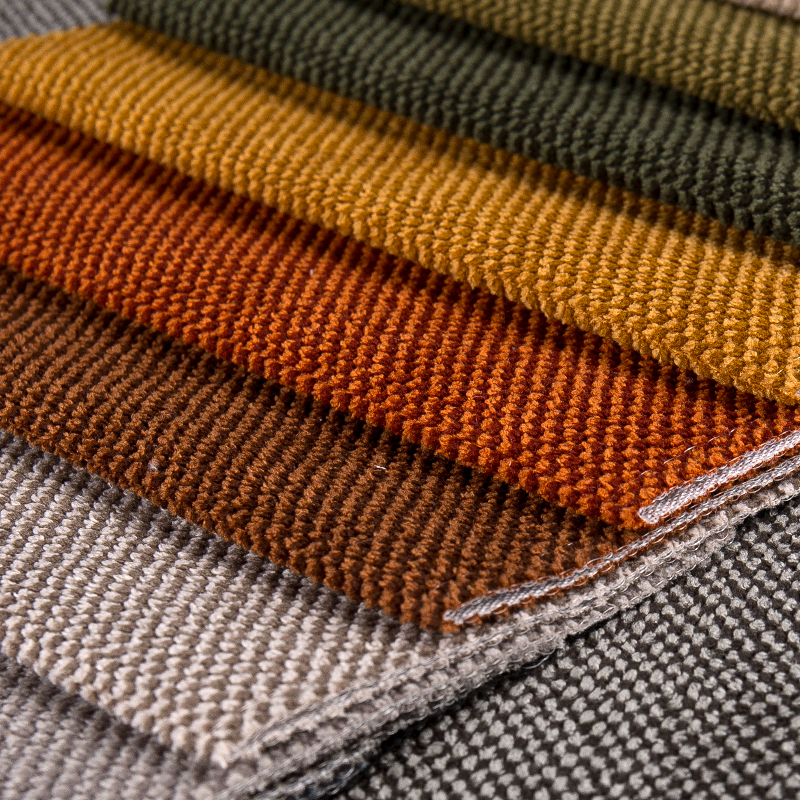
Warp knit flat fabrics are a good example. Their loop structure gives them inherent stretch and recovery, which is why they are frequently specified for patterned sofa designs and velvet-look upholstery where the fabric must conform to compound curves.
The most useful parameter for upholstery evaluation is not the total stretch percentage but the elastic recovery rate. A fabric that stretches 20% but returns to 80% of its original length will sag over time. A fabric that stretches 5% and returns to 98% will hold its shape much better. Below are typical values for common polyester sofa fabric types.
Table: Typical stretch and recovery values for common polyester upholstery fabric types.
For buyers who need a more technical understanding of fabrication differences, this comparison of polyester knitted fabric versus woven polyester explains the structural basis of stretch in more detail.
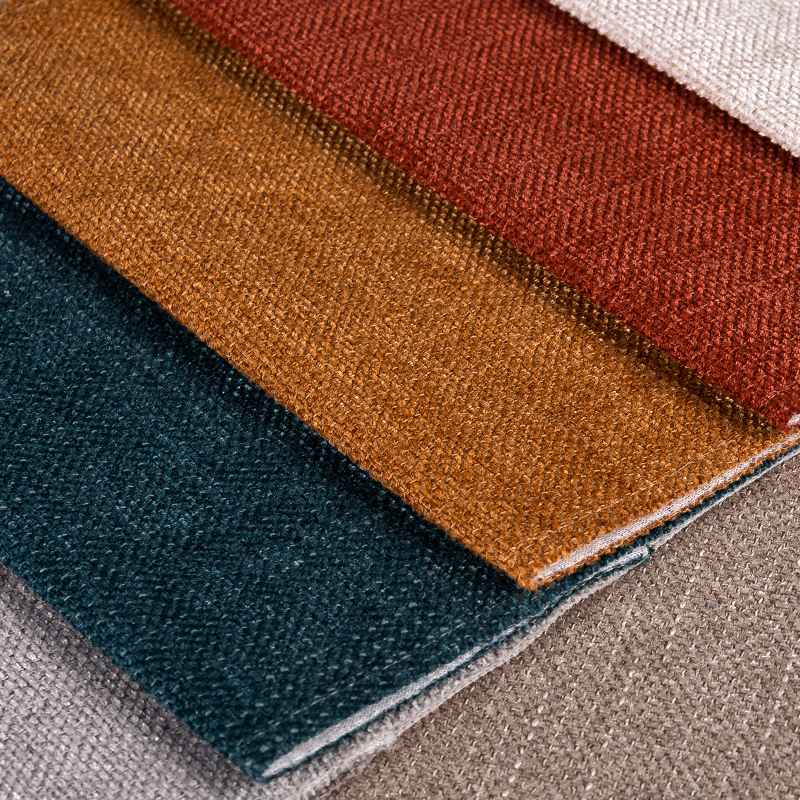
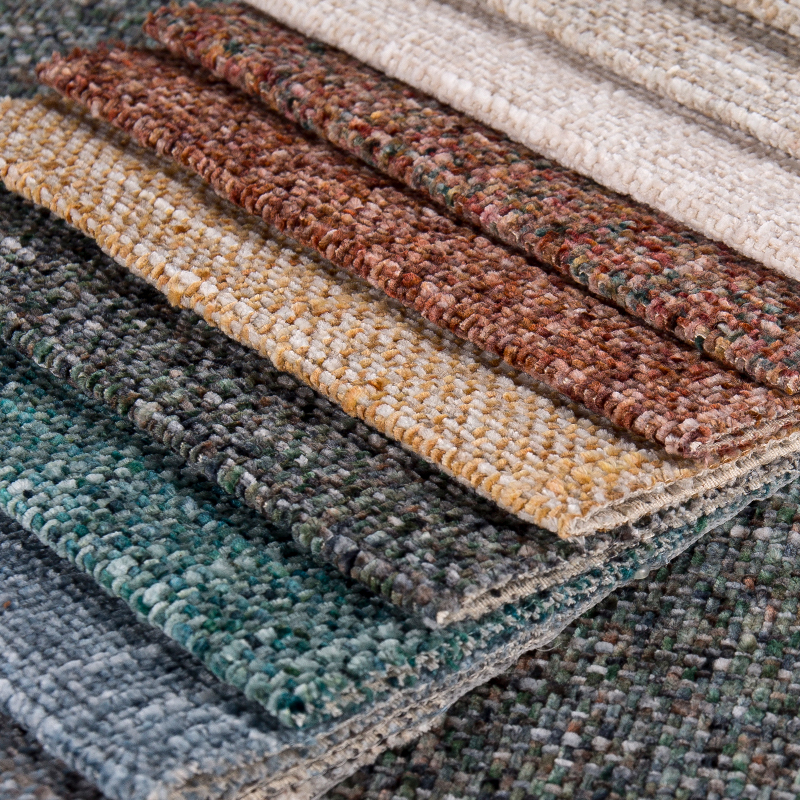
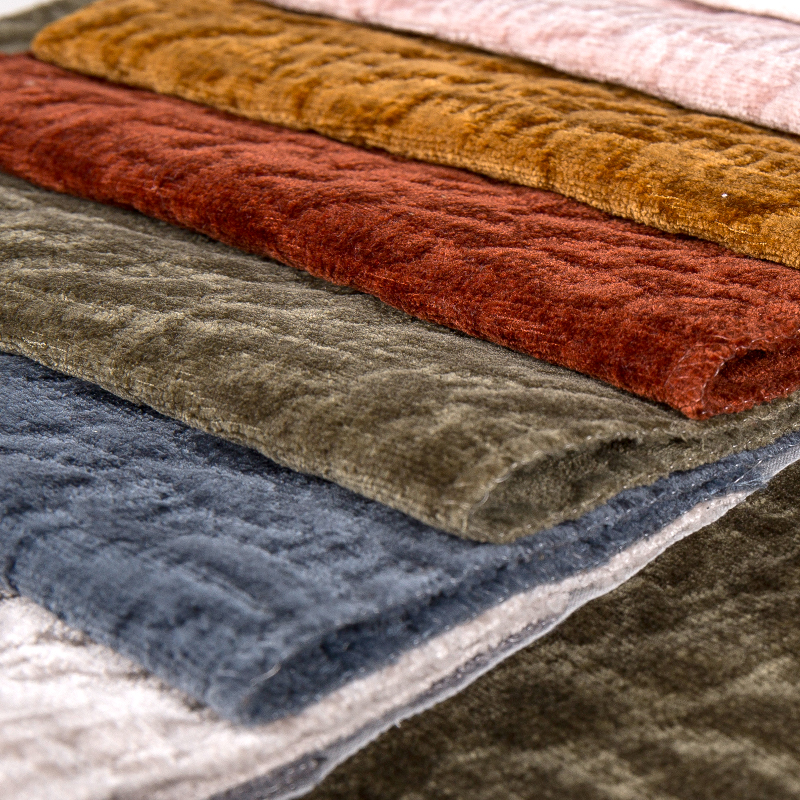 Polyester Woven Sofa Upholstery Fabric ManufacturersPolyester woven upholstery combines durable construction with color performance, providing a stable and cost-effective option for sofa covers that require less stretch than knits.View Product →
Recovery, not stretch, is the hidden metric that determines whether a polyester sofa fabric becomes loose after a year of use. In a standard cyclic test, fabric is stretched to a set extension and then released. The percentage of the original extension that returns is the recovery rate. The chart below compares typical recovery rates for different construction types.
Chart: Comparative elastic recovery rates for polyester upholstery fabric constructions.
The practical implication for buyers is that a fabric with high recovery can be used with tighter upholstery tolerances. You can cover a seat cushion shell directly without attaching a separate lining, because the fabric returns to its original dimensions. When a knit fabric has only 85% recovery, you need to account for 15% of the original extension remaining in the fabric - the correct approach is a pre-stretched, heat-set finishing step that reduces residual stretch.
In commercial sofa production, stretch is not uniformly requested. Different product lines rely on different fabric technologies, and the market split follows the functional needs of sofa styles.
Chenille 35%
Warp Knit Velvet 25%
Yarn-dyed 15%
Bronzing/Embossed 15%
Printed/Other 10%
Chart: Estimated market distribution of polyester upholstery fabric types in the sofa segment.
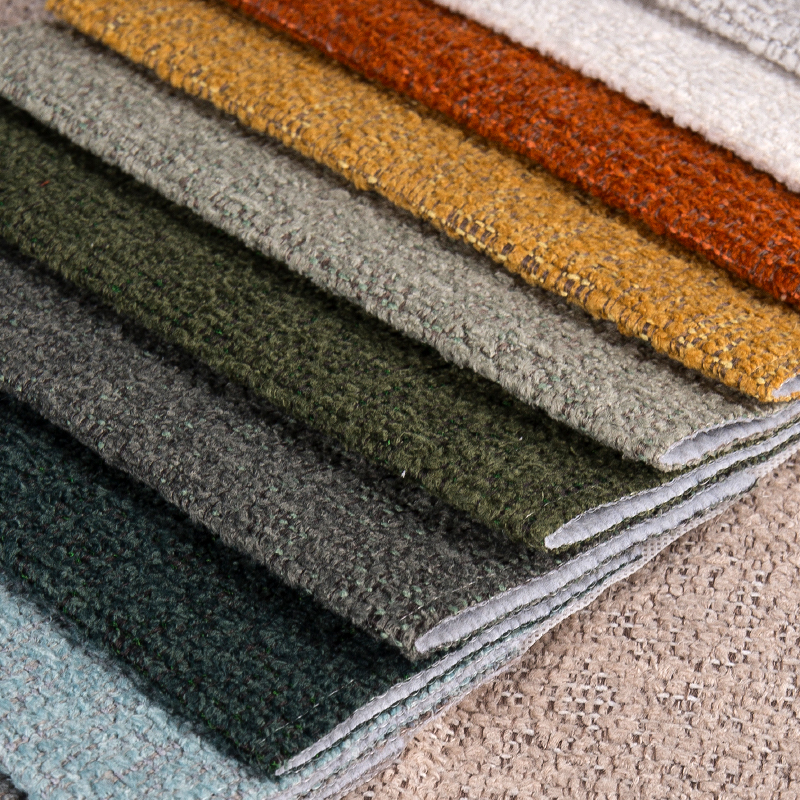
Chenille accounts for the largest share because its woven construction offers a controlled amount of stretch - enough to adapt to cushion shapes while keeping the firmer hand-feel that many buyers expect. Warp knit velvet has grown quickly as manufacturers want velvet aesthetics with the stretch of knitted structures. Yarn-dyed, bronzing, embossed, and printed fabrics serve decorative needs where stretch is secondary to surface appearance. For a sofa factory, understanding this split helps balance inventory between flexible and stable fabrics.
A systematic approach to specifying stretch in polyester sofa fabric can prevent costly errors. Work through these five steps before placing a production order.
Fixed-back sofas need minimal stretch. Motion or recliner sofas need higher stretch and exceptional recovery to follow the mechanism.
If the design requires strong contouring, ask for fabric with at least 15% stretch and recovery above 90%. Avoid high-stretch fabric on fixed sofa frames.
Request knitted fabric for soft, flexible upholstery. Request woven fabric for crisp, tailored silhouettes. Chenille gives a compromise between the two.
Ask the supplier for a stretch and recovery report that measures extension at 20N and residual extension after repeated cycles. Values matter more than marketing language.
Stretch fabrics with elastane blends cost more per meter, but they reduce installation labor and improve fit. The economic case depends on your production volume. When the budget is tight, comparing chenille sofa fabric cost against other upholstery types is the first step.
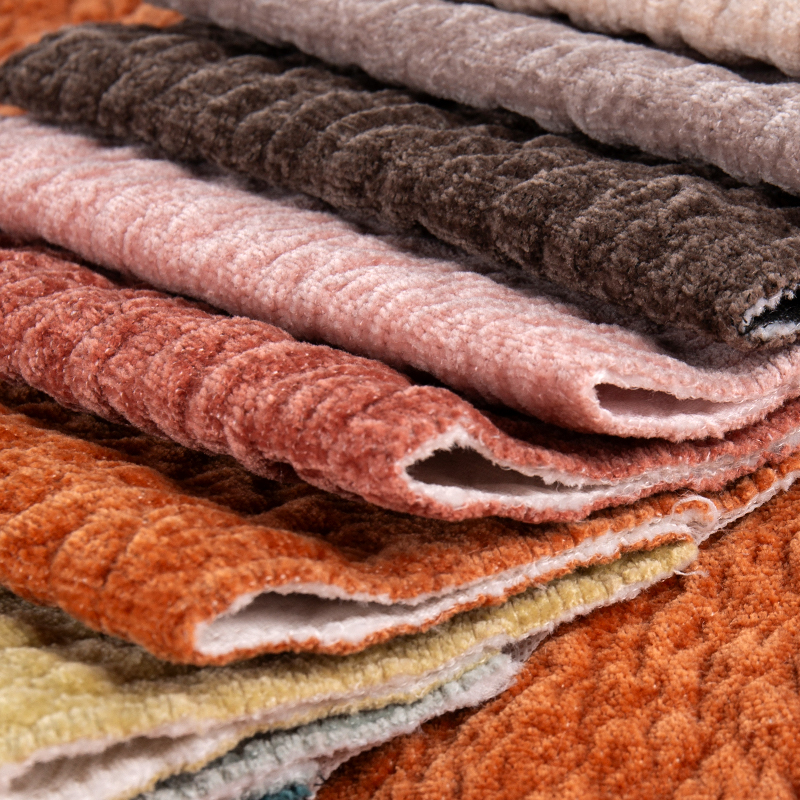
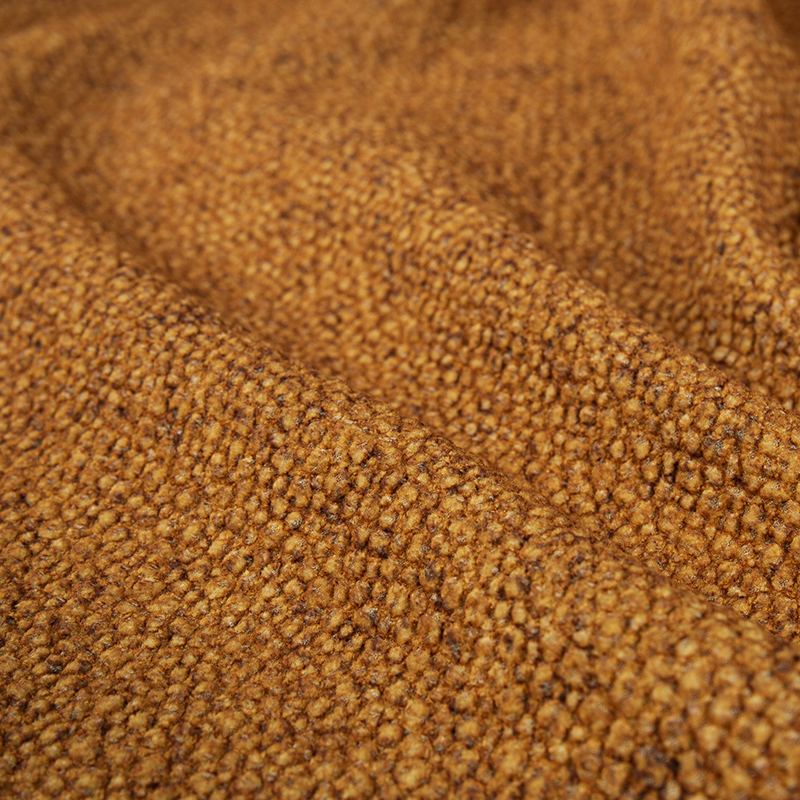
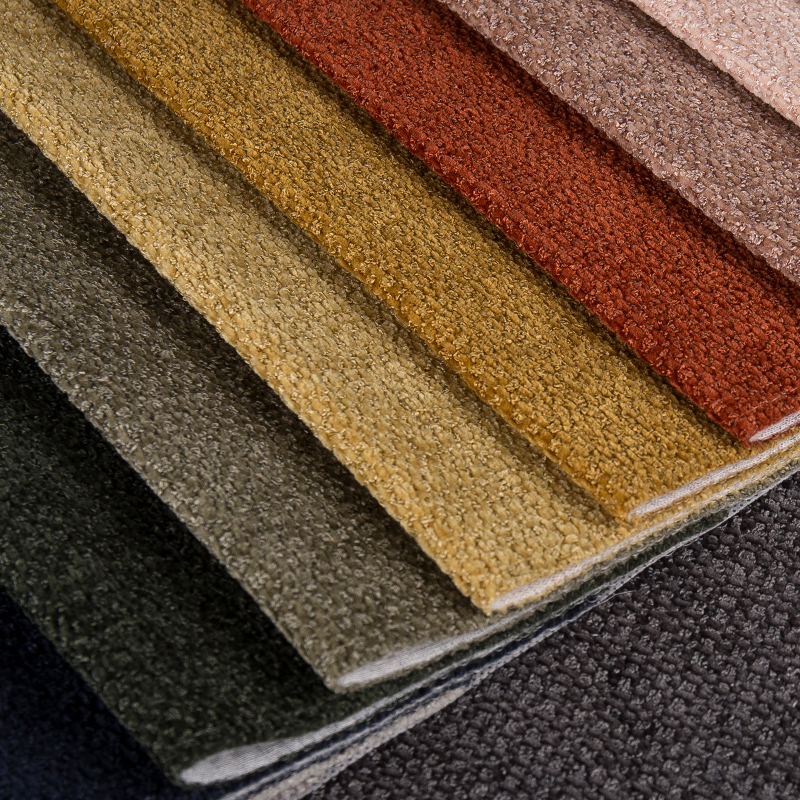 Soft Chenille Sofa Fabric with Classic PatternClassic soft-touch chenille at 440 g/m² balances comfort and affordability, with the elongation needed for efficient installation when budget constraints limit elastane blends.View Product →
The elastic properties of polyester stretch fabric can degrade if care instructions are ignored. The two main threats are heat and mechanical fatigue.
For commercial upholstery, compliance with industry standards is part of the specification. The most relevant include OEKO-TEX Standard 100 for harmful substances, ISO 105 for colorfastness, and EN 14465 for upholstery fabric performance. EN 14465 defines test methods for tear strength, seam slippage, and dimensional stability. If your project is in the European market, request the test report before approving the fabric. A fabric that passes these tests will handle the daily wear of a household sofa without deforming.
Related Products

Contact us
Address
Hangfu Road 106#, Chongfu Town, Tongxiang City, Zhejiang, China
Phone
+86-15067379939
linachen@climbingtex.com / zac@climbingtex.com
lianniu@climbingtex.com
Fax/Tel
+86-573-88385698
products
QR CODE
 Home Textile Manufacturers
Sofa Fabric Factory
Home Textile Manufacturers
Sofa Fabric Factory
 English
 Español
 عربى
عربى