Nov 02, 2026
Two rolls of the same check lie side by side on a cutting table in Tongxiang. The repeat looks identical, the colour is identical, and yet the first sewn panel lands 8 mm off at the seam. By the time the third cushion cover is being closed, the mismatch has become a remake, a delay, and a claim against the fabric supplier who did nothing wrong.
That scenario explains the single most useful thing to know about pattern matching: the match is decided before the shears touch the fabric. Repeat depth, roll direction, cutting order and seam allowance do more damage than any sewing technique can repair afterwards.
The short answer
Measure the repeat over at least three cycles, keep every panel running in the same direction, budget one full repeat of extra fabric for every matched pair of panels plus 3–5% for distortion, and mark a datum line on both pieces before pinning. Match at the repeat, not at the seam.
The sections below work through repeat types, fabric selection, the practical matching sequence at the machine, the numbers behind yield loss, and the production controls that keep a batch consistent across a 200-cover order.
Content
A pattern repeat is the distance the design takes to return to its starting point. Vertical repeat controls how many metres you lose in cutting; horizontal repeat controls how panels line up side by side. Before matching anything, confirm which of the four behaviours the fabric actually has, because the layout rule changes completely between them.
Every panel starts at the same point of the repeat. The simplest to cut and the cheapest in consumption. Typical of small geometrics and regular stripes.
Adjacent panels shift by half the vertical repeat. Common on damask-style jacquards and mirrored florals. It doubles the number of positions a cutter must track.
The design is reflected around a centre line, usually the middle of a sofa back or seat cushion. Any deviation shows immediately because the eye reads symmetry.
No alignment requirement, but direction still matters. Solid-colour chenille and cut velvet are "free" in pattern terms yet unforgiving on pile direction.
Measure the vertical repeat with a steel rule across three full cycles and divide by three; single-cycle measurement on a soft chenille can easily be 2–3 mm out, and that error multiplies across eight panels. Write the confirmed figure on the roll ticket, not on a scrap of paper that stays in the office.
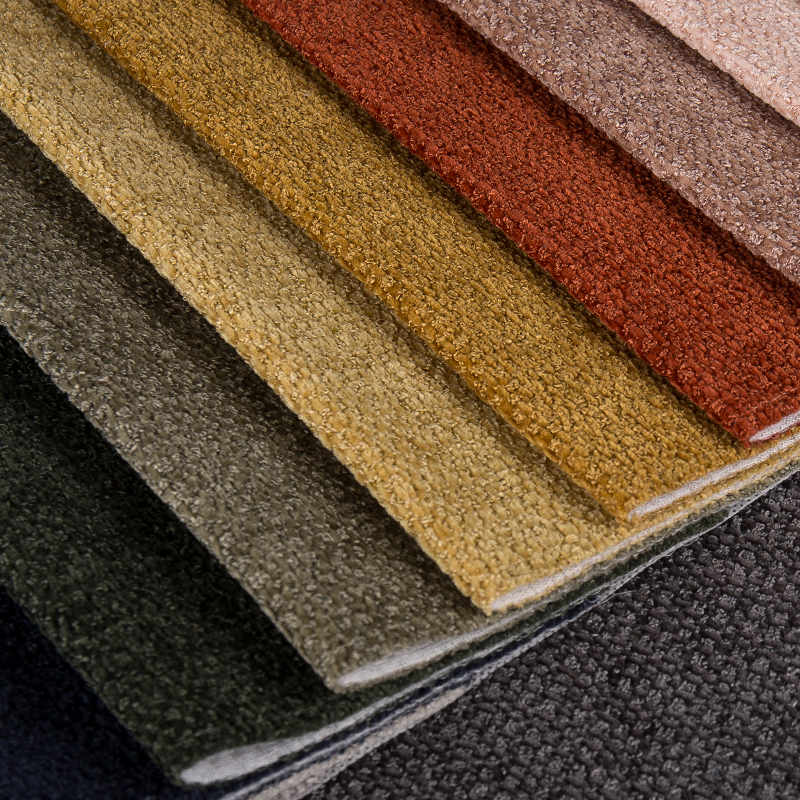
Pattern matching is far easier on a fabric whose structure holds its shape. Loosely woven cloths with high stretch skew during cutting and sewing, and no amount of pinning will recover a 1.5% bias shift. Dense polyester constructions hold the repeat line far better, which is why most upholstery programmes standardise on polyester chenille, yarn-dyed constructions and embossed surfaces with a defined, stable repeat.
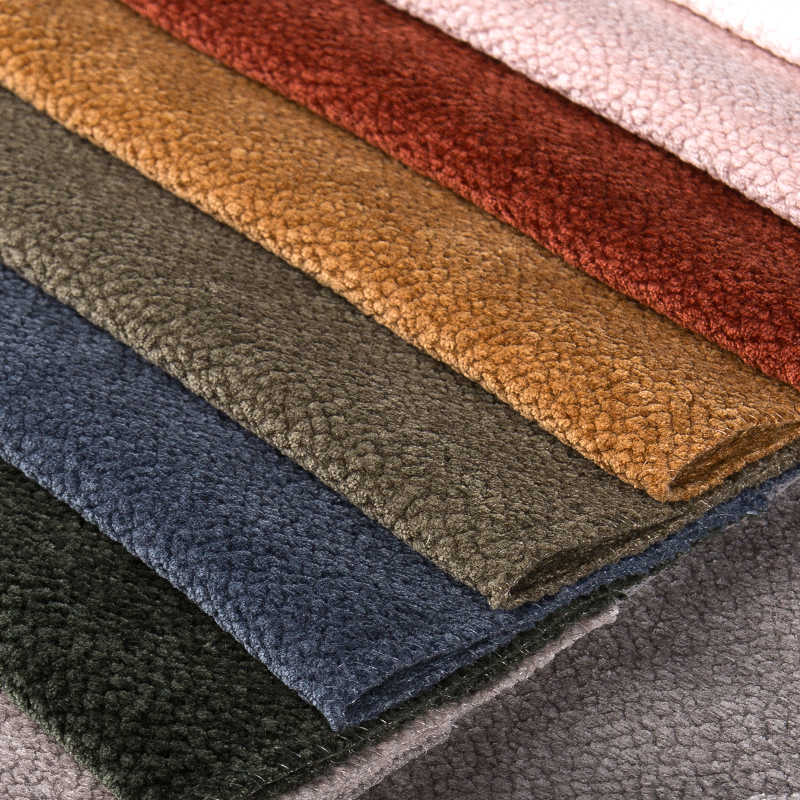
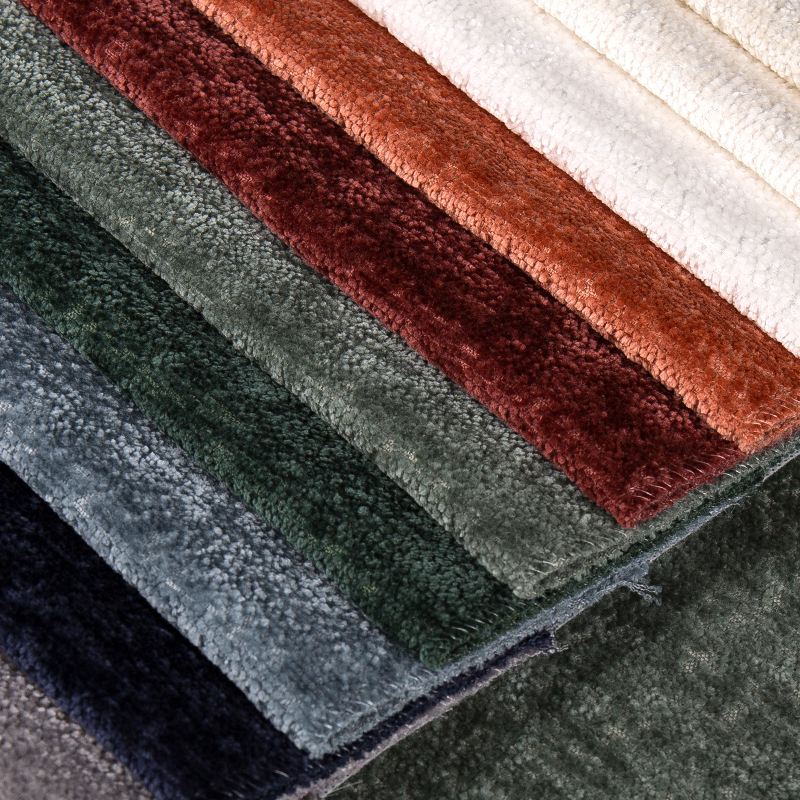
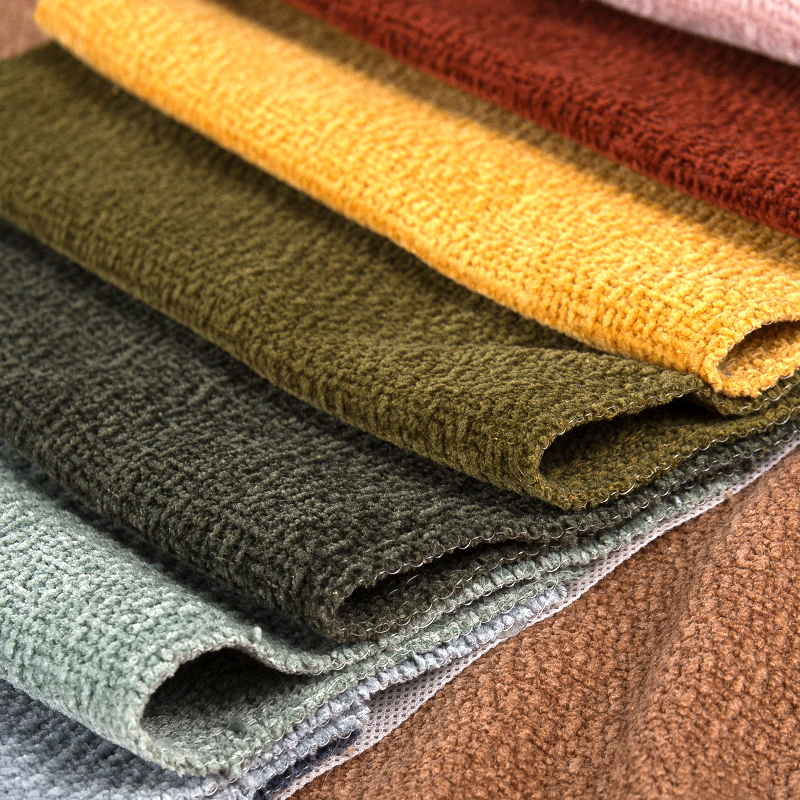
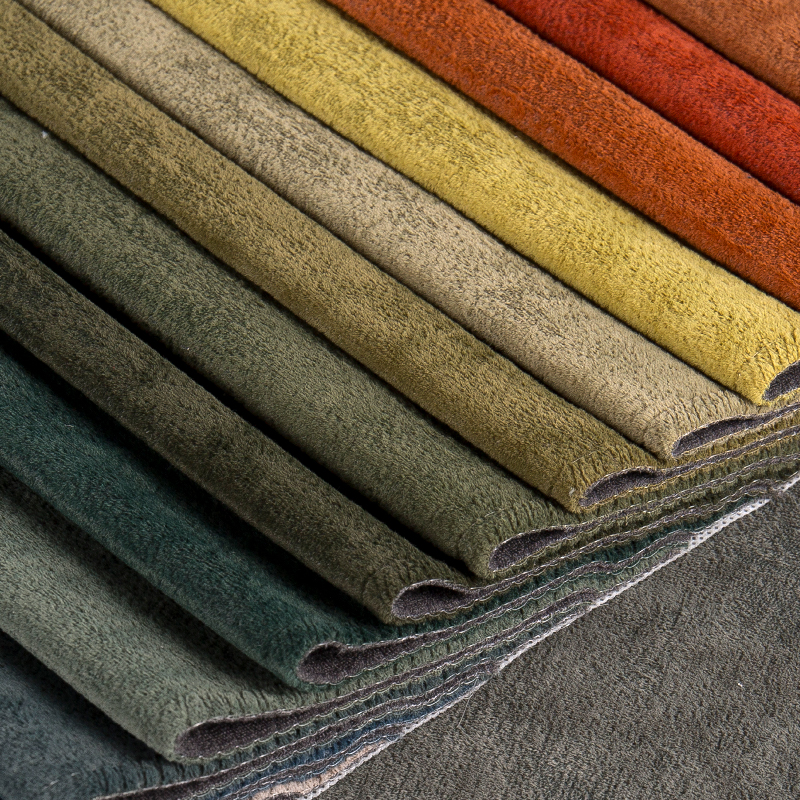
 Soft Chenille Polyester Sofa Upholstery FabricA 140 cm, 440 gsm polyester chenille with a comfortable hand and durable pattern; its stable structure supports upholstery cutting and pile-direction matching.View Product →
Soft chenille is a good example: the pile gives a soft hand and strong colour depth, but it also pushes the matching job onto pile direction rather than print alignment. Every panel must be cut with the pile running the same way, or two cushions of the same colour will read as two different shades under window light.
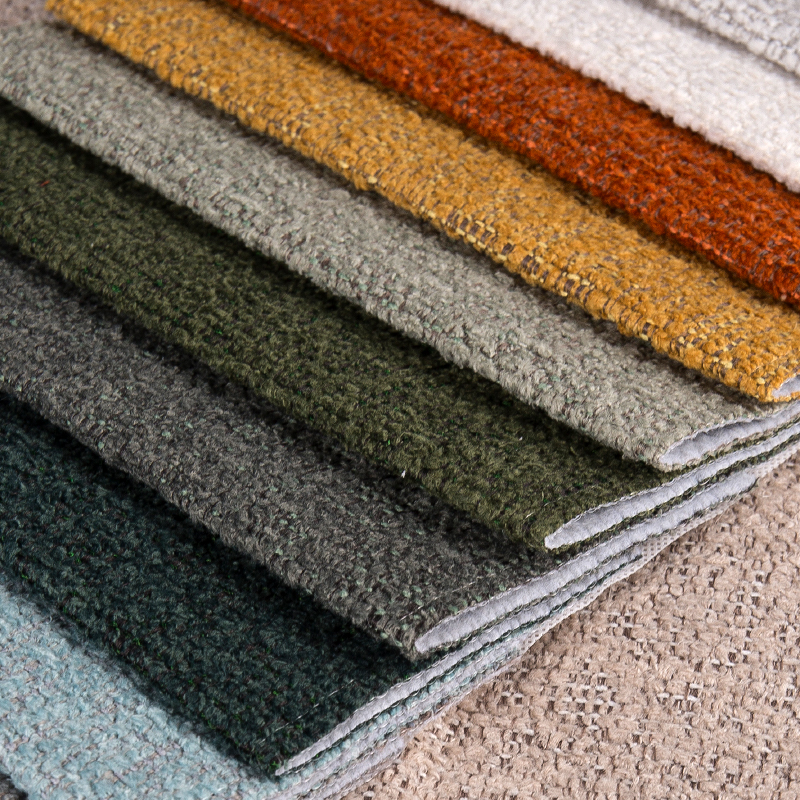
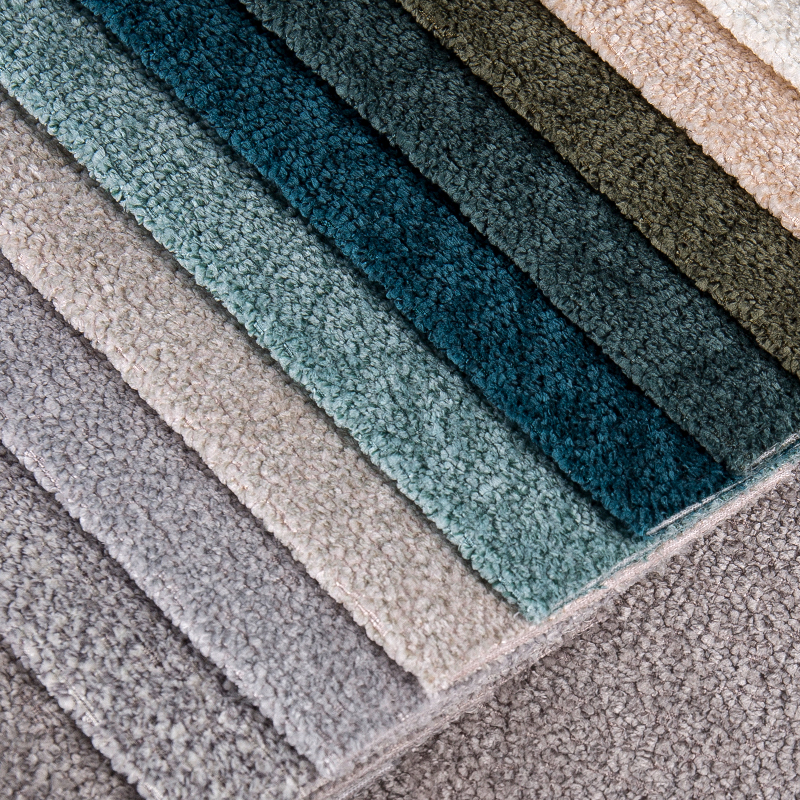
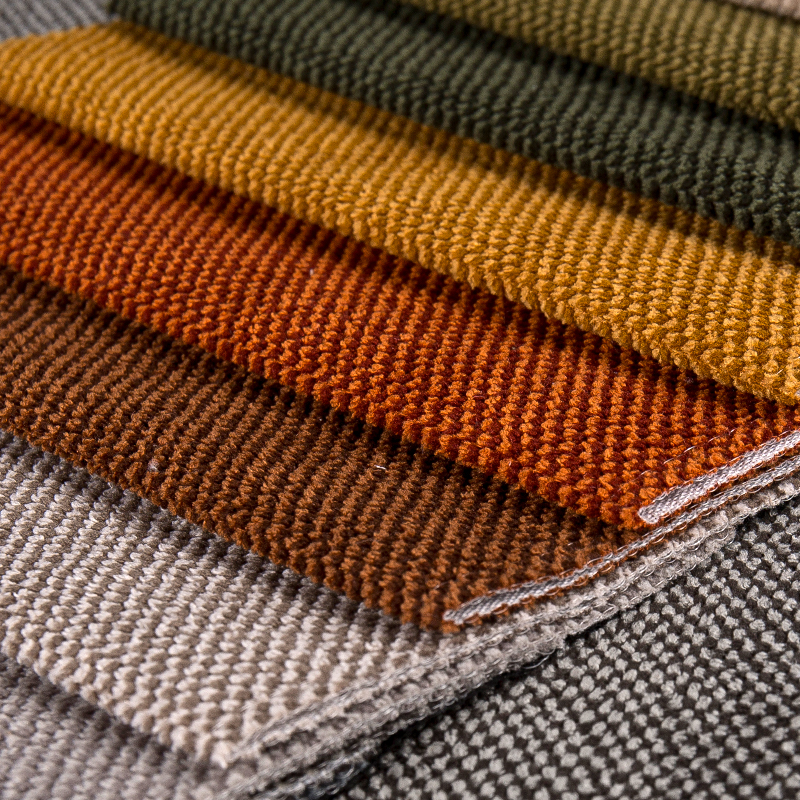
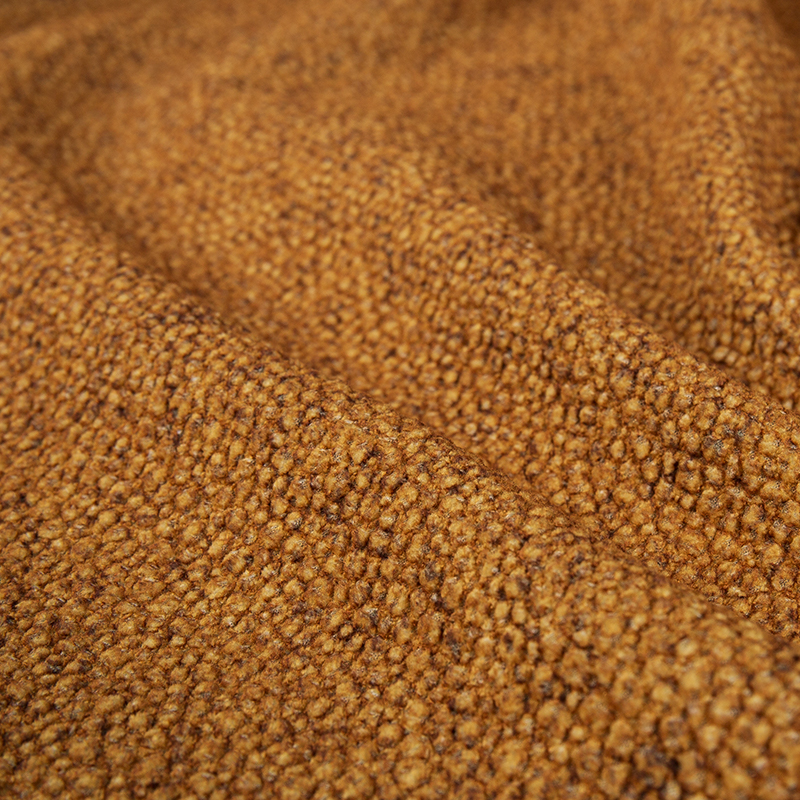
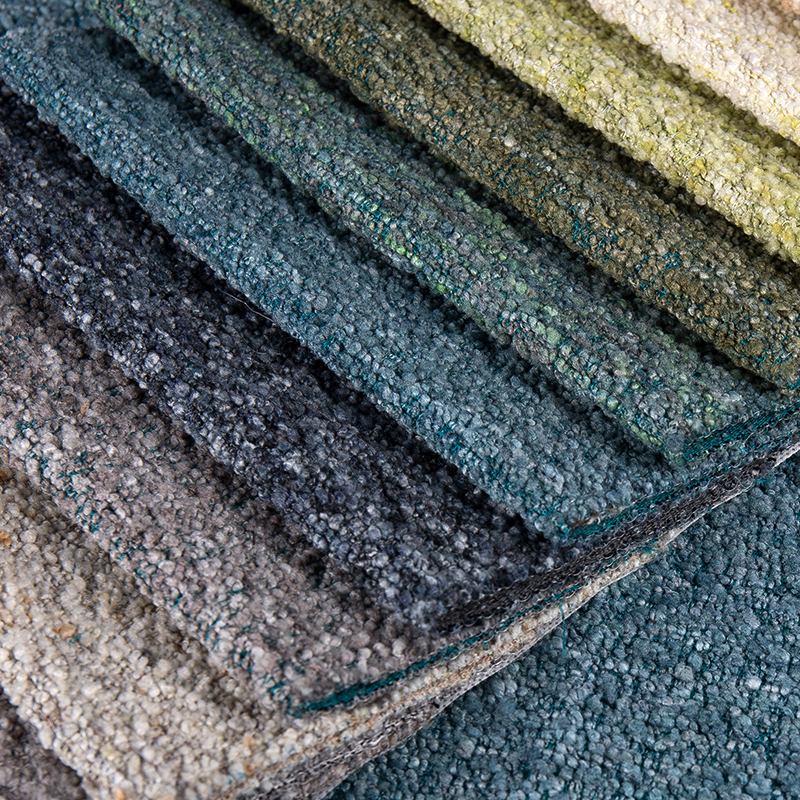 Yarn-Dyed Boucle Polyester Sofa Upholstery FabricA 140 cm, 660 gsm yarn-dyed chenille boucle with textured hand and clear particles; suited to upholstery where woven repeat and panel direction matter.View Product →
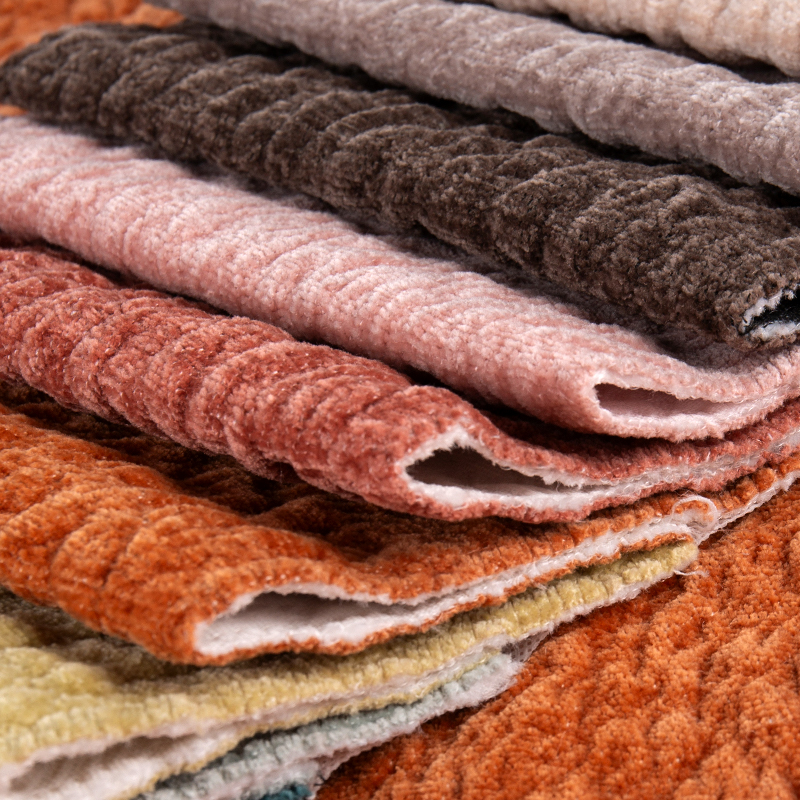
Yarn-dyed constructions are the harder test, because the pattern is built into the weave rather than printed on top. A boucle or a yarn-dyed check gives you a genuine repeat that must be respected at every seam, plus a textural direction that becomes visible when panels are rotated. Embossed surfaces behave similarly: the relief pattern is a repeat, and pressing or steaming too hard flattens the edge that makes the match look clean.
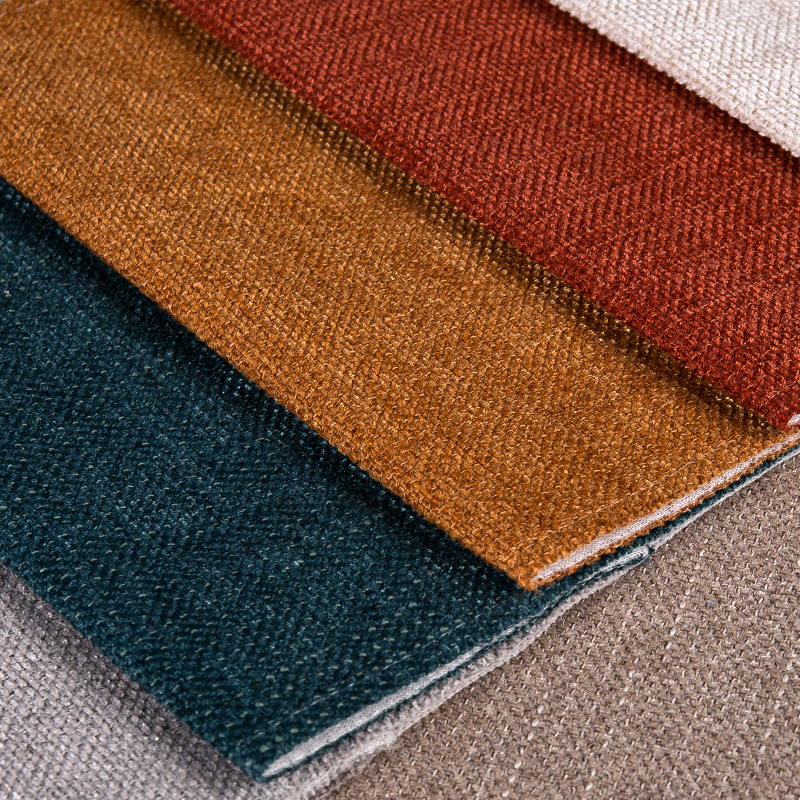
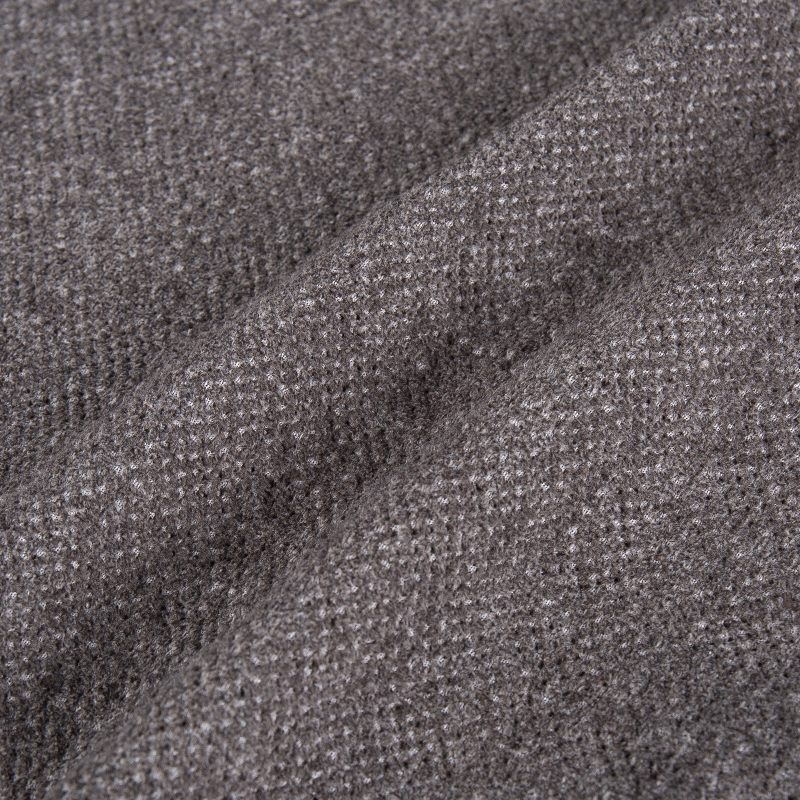
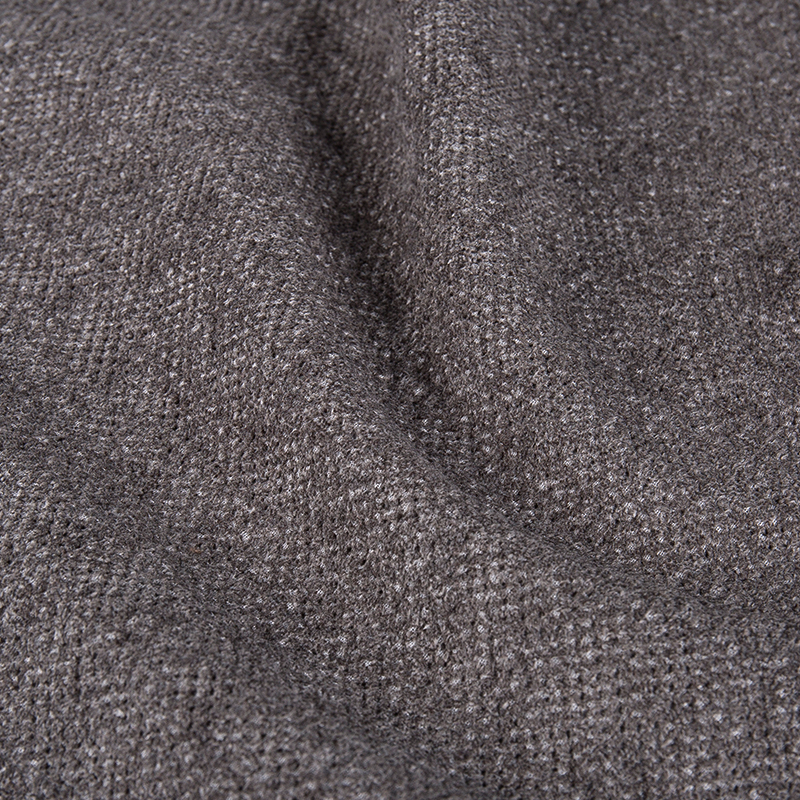 Solid Color Grain Embossed Polyester Sofa Upholstery FabricA 140 cm, 460 gsm embossed polyester with cationic yarn and a two-color effect; its relief surface makes repeat and direction checks relevant before cutting.View Product →
When specifying, ask for the repeat depth and width in writing, the pile or relief direction relative to the roll, and a statement of which panels in your cutting list are expected to match. If the brief says "match all adjacent panels", the supplier must know that before dyeing, not after shipping. A wider guide to choosing sofa fabric is useful for the design side, but the repeat data is what the cutting room needs.
The techniques below apply to both upholstery panels and garment pieces. The order matters more than the method: direction first, datum second, pins third, stitching last.
Lay both panels face up. Check that the pattern runs up the roll on both, and that pile or relief leans the same way. Rotating one panel 180 degrees can "fix" the repeat and ruin the shade.
Pick one horizontal repeat line near the seam and mark it across both panels with tailor's chalk or a basting thread. This single line becomes the reference for the whole joint; it is far more reliable than chasing motifs one by one along the seam.
On velvet, chenille and any pile fabric, never press directly on the face; work over a needle board or use a cloth and light steam only.
A joint that matches at both ends can bow in the middle if the fabric was cut off-grain. Walk the seam every 10 cm and correct before stitching. A practical acceptance limit for checks and stripes on upholstery is around 3 mm of drift at the seam line; beyond 5 mm it reads as a defect at normal viewing distance.
Use a walking foot or differential feed, moderate pressure and a fine needle. Stitching one layer faster than the other is the most common cause of a match that was perfect under the pins and broke during the seam.
Extra consumption is not a rounding error. The table below shows realistic planning figures for a 140 cm-wide upholstery fabric with a 12 cm vertical repeat, based on a 40-cover batch.
Buyers usually compare fabric price per metre and ignore repeat depth. In practice, repeat depth drives waste far more predictably than price does, because every matched joint consumes a slice of a repeat no matter how carefully the marker is nested.
The bars show extra metres consumed per 100 m of fabric at straight match. Going from a 4 cm repeat to a 30 cm repeat multiplies matching waste by roughly seven. That is why a cheaper large-repeat jacquard can cost more per finished sofa than a mid-priced small geometric, and why quoted prices should always be compared at finished-panel level.
In a typical upholstery cutting room handling around 400 panels a week, defects are rarely caused by poor sewing alone. Recording the origin of each mismatch for a month usually produces a distribution like this.
Two thirds of the problem sits upstream of the needle. Skew is checkable in ten seconds: fold a cut panel in half along the repeat line and see whether the edges stay level. If they do not, the fabric was already off-grain before cutting, and the match will fail no matter how carefully the seam is pinned.
Use this sequence on every new patterned quality before it enters mainstream production. It costs roughly half a day and typically prevents the first failed batch.
Run the numbers before committing a large order. On a 40-cover batch, a 4% higher fabric consumption on a mid-range chenille often costs less than two remade sofa covers, once labour, transport and schedule disruption are counted. The decision is not "which fabric is cheaper per metre", but "which fabric is cheaper per matched, accepted cover".
A match achieved in the sample room is only repeatable if the fabric is stored and handled consistently afterwards.
None of this is exotic. It is the ordinary discipline of measuring, recording and repeating, and it is what separates a batch where every sofa back lines up from one where the third cushion tells a different story.
Pattern matching rewards preparation more than skill at the machine. Confirm the repeat and its direction, plan the marker around whole repeats rather than leftover centimetres, mark a datum before pinning, and inspect early. Whether you are joining two panels of yarn-dyed boucle for a feature sofa or lining up a check across a garment seam, the same order of operations holds: direction, datum, crease, pin, stitch, verify.
Related Products

Contact us
Address
Hangfu Road 106#, Chongfu Town, Tongxiang City, Zhejiang, China
Phone
+86-15067379939
linachen@climbingtex.com / zac@climbingtex.com
lianniu@climbingtex.com
Fax/Tel
+86-573-88385698
products
QR CODE
 Home Textile Manufacturers
Sofa Fabric Factory
 English
 Español
 عربى