Nov 09, 2026
A cup of coffee tips onto a velour sofa cushion, or a velour top comes out of the machine with a flattened, shiny patch across one hip. Both failures come from the same cause, and it is not dirt. It is a raised pile that has been pushed, heated or wetted unevenly.
The short answer: wash velour in water no warmer than 30°C with a pH-neutral, enzyme-free liquid detergent, press the fabric instead of wringing it, rinse at the same temperature you washed at, and dry it flat away from direct heat. Polyester velour survives hand washing and a gentle machine cycle in a mesh bag. Cotton velour takes the same treatment with more shrinkage risk. Wool or silk-blend velour belongs with a solvent dry cleaner. Matching the rinse temperature to the wash temperature matters more than which detergent you pick.
The fabric itself is rarely the weak point. Most velour on the market today is polyester, sometimes with a small amount of elastane in the ground structure, and polyester tolerates water, detergent and a short spin without much complaint. What it does not tolerate is heat above roughly 40°C, a hot tumble dryer, or a wet twist that folds the nap against itself while the fibres are still swollen and soft.
Content
Velour is a pile fabric: a ground structure with an extra yarn system lifted above the surface. The pile is either cut, which produces a dense velvet-like face, or looped, which sits closer to terry cloth. Polyester velour in the 220 to 320 gsm range is the version most people meet on a sofa, a cushion or loungewear. It dyes deeply, which is why the colour looks rich, and also why a hot wash can release dye into the rinse water.
Warp-knit constructions dominate upholstery use because the loops lock the pile yarns in place, so the nap resists pulling far better than a loosely woven velvet. That structure is what makes a gentle machine wash realistic in the first place; the same cycle on a loosely woven silk velvet would be reckless.
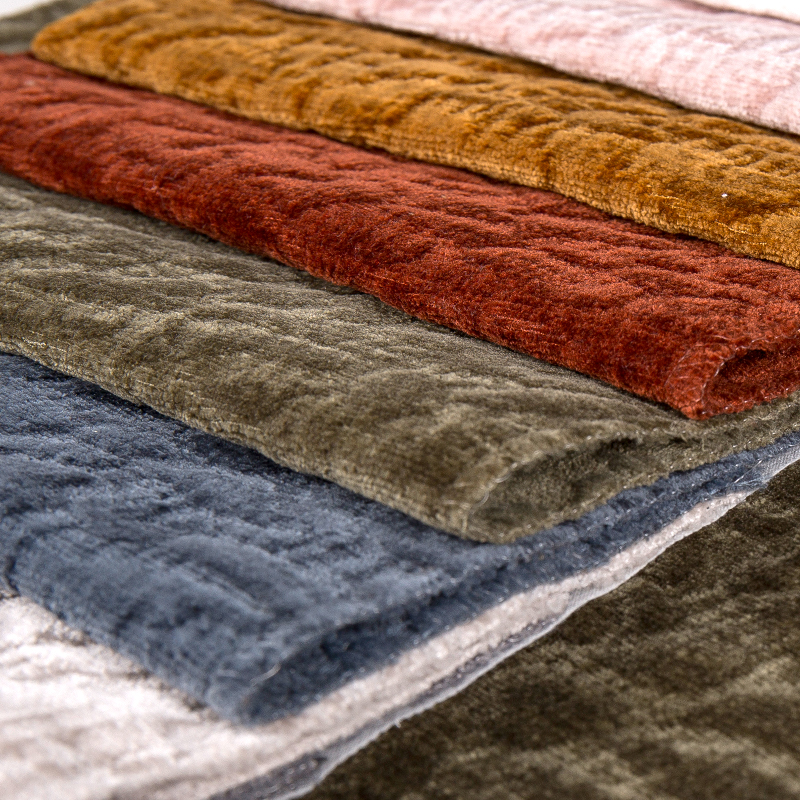
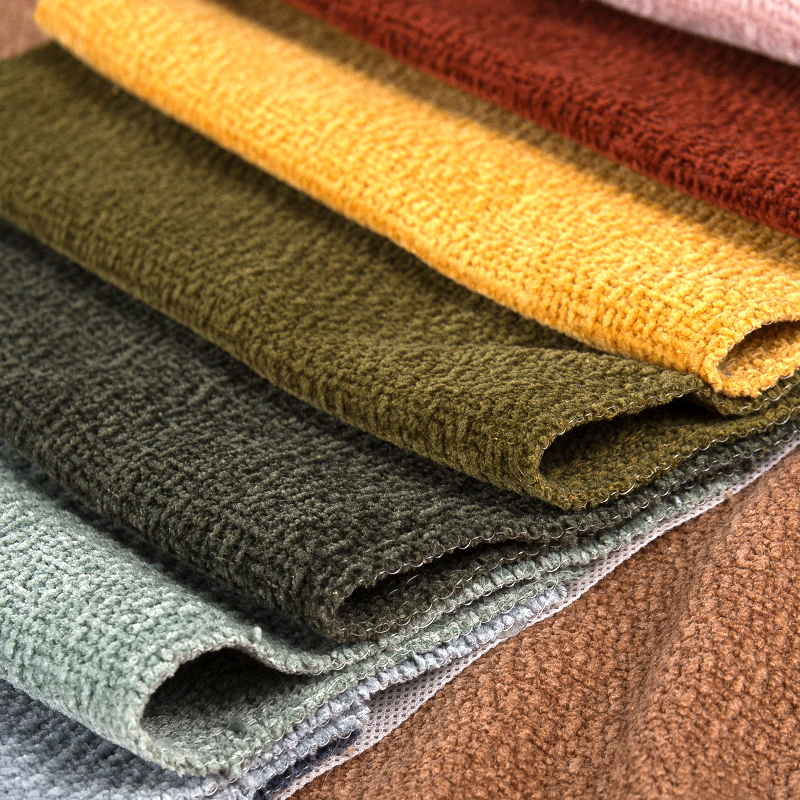
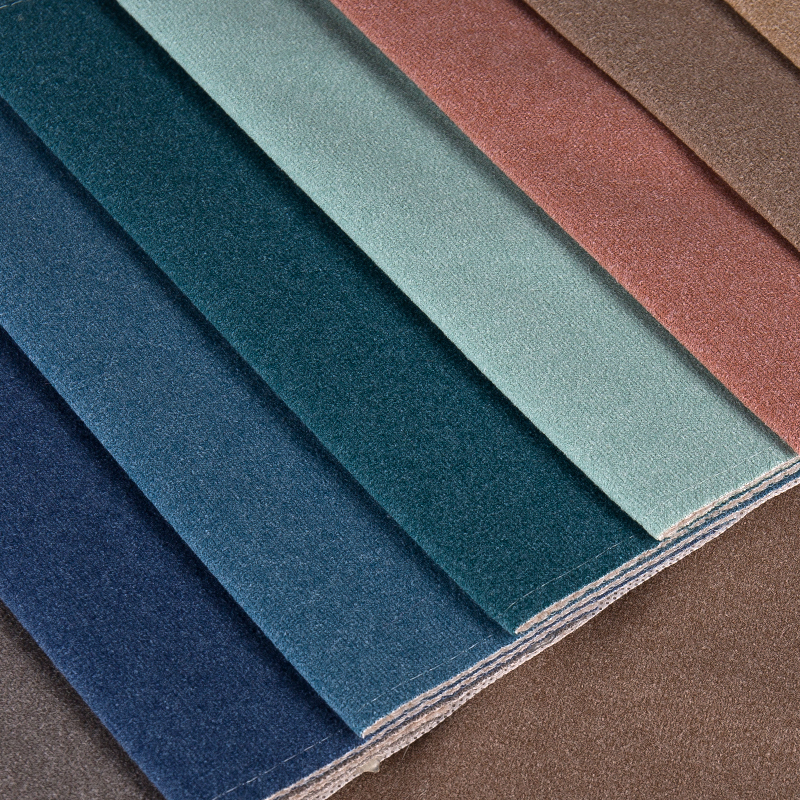 Two-Tone Velvet Sofa Upholstery FabricA two-color, cashmere-like tricot with a soft short pile, 140 cm wide at 400 g/sm, suited to sofa upholstery and easy-care expectations.View Product →
Polyester has a moisture regain of roughly 0.4%, so it sheds water quickly and dries fast. It is also oleophilic, which is why oil and hand-cream stains need a surfactant rather than water alone.
A 1 to 3 mm pile crushes under pressure, heat and friction. Crushing is reversible with steam in most cases, but pile that has been heat-set flat against a hot drum is far harder to lift.
Elastane in the ground improves stretch recovery but softens around 60°C. A hot wash permanently loosens a knit ground and the cover will no longer sit tight on the cushion.
Before anything else, read the care code on the label. W means a water-based method is approved, S means solvent only, WS means either is acceptable, and X means vacuum only. The code outranks any generic advice, including this article.
Comparison for typical polyester velour; the sewn-in care label always overrides these values, and any blend containing wool or silk should be treated as solvent-only.
Two practical notes on detergent. Fabric softener coats the pile and reduces its ability to spring back, so skip it for anything with a nap. Biological powders containing protease can dull the surface sheen of a polyester pile over repeated washes, which is why a neutral liquid is the safer default.
Pile crush is the most common visible defect after cleaning, so it is worth ranking methods by how much flattening risk they carry. The pattern is consistent: the more mechanical action and heat, the greater the loss of loft.
The jump between 30°C and 40°C is not linear, because a hotter wash usually comes with a longer cycle and a faster spin. If you have followed the same care practices used for polyester knit sofa fabric, you already know that the spin stage does as much damage as the water temperature.
The same fibre behaves differently depending on whether it is sewn into a removable cushion cover or a fixed sofa body. Removable covers can be washed; fixed upholstery can only be cleaned in place, and in-place cleaning means very little water and no rubbing at all.
Cut-pile velour, including the cut velvet upholstery fabric range used on contract seating, holds a denser face than looped pile but marks more easily, so cushion covers made from it benefit from washing inside out with the pile protected.
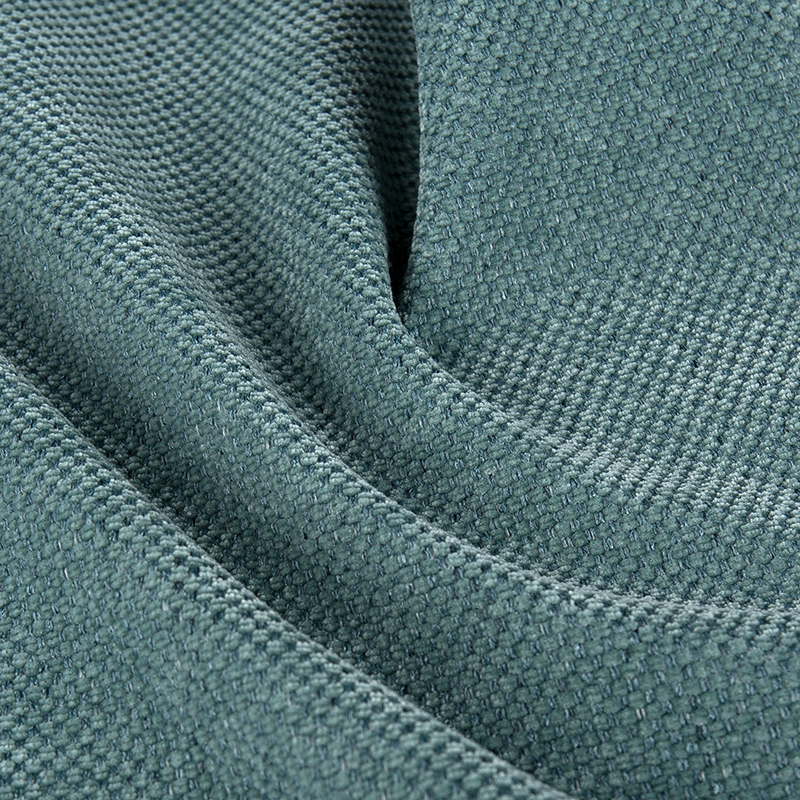
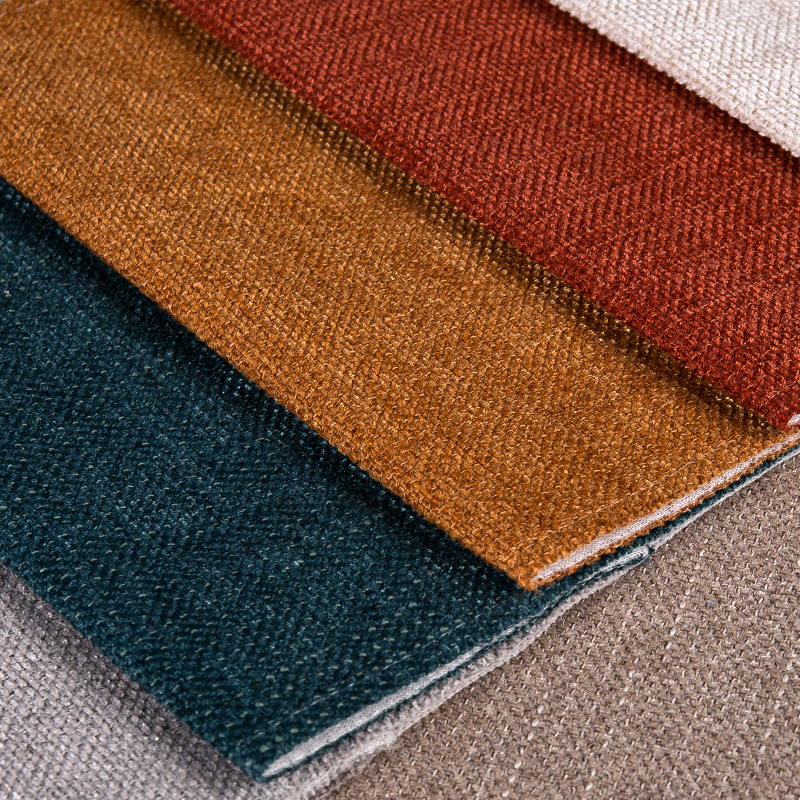
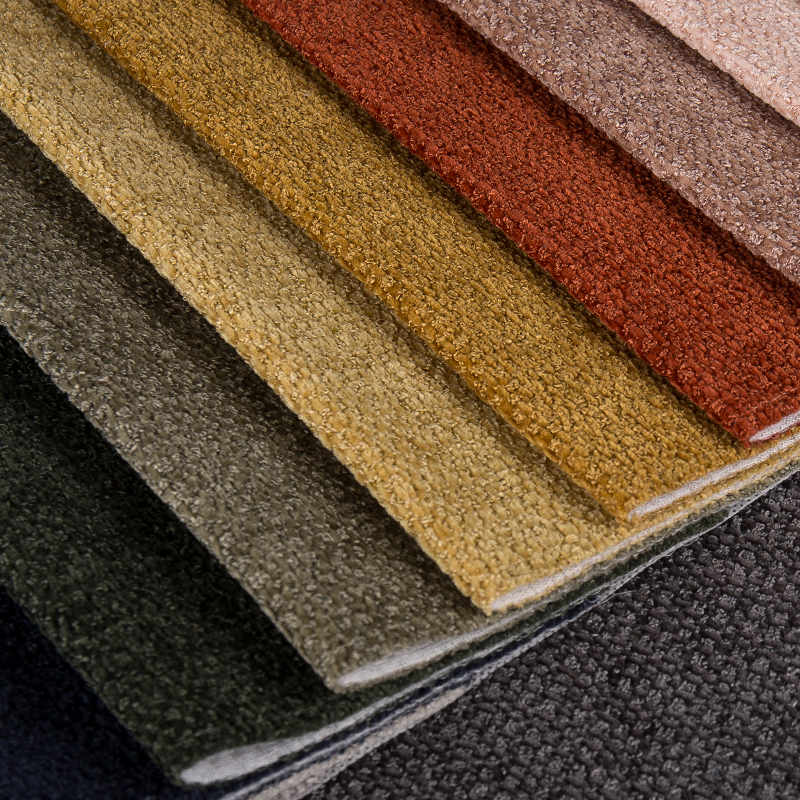
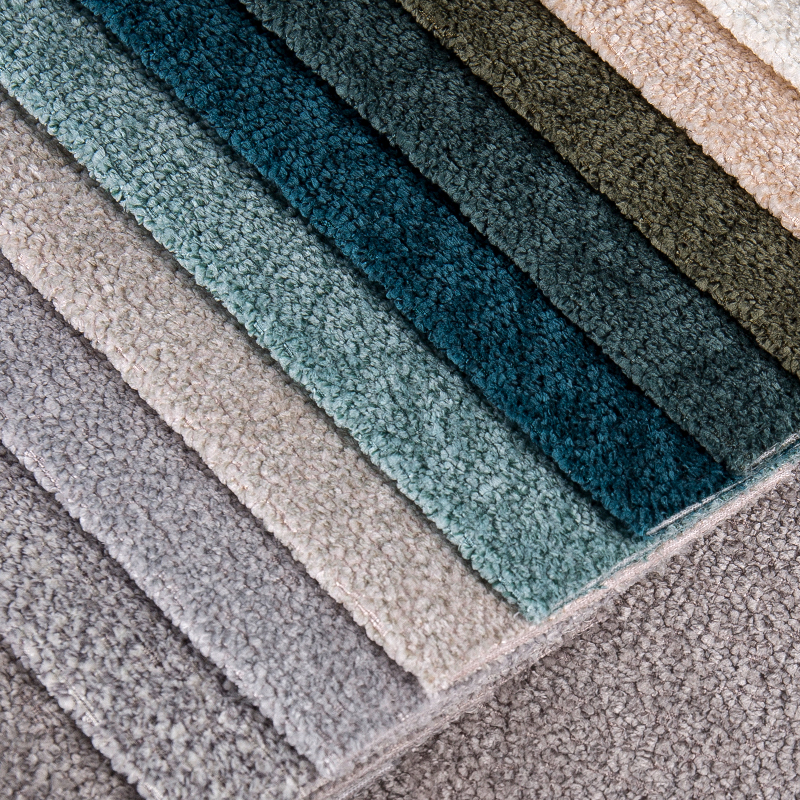 Linen Look Cut Velvet Sofa FabricAn affordable imitation cut-pile woven with multi-color effect and soft velvet hand, 140 cm wide at 370 g/sm for sofa upholstery.View Product →
1. Read the care code. W, S, WS or X decides whether water is allowed at all. Confirm whether the cover is removable before you plan anything else.
2. Lift loose soil first. Vacuum with a soft upholstery brush or run a lint roller over the pile in one direction. Dust that goes into the water becomes mud in the base of the pile.
3. Spot test for five minutes. Use an inside seam or the back of a cushion. A faint ring after drying means the detergent is too alkaline or the rinse was too short.
4. Pre-treat stains by blotting. Dilute neutral detergent 1:20 with cool water, apply with a white cloth, leave 60 seconds and blot. Rubbing breaks pile fibres and creates a permanent bald patch.
5. Wash at 30°C for 5 to 10 minutes. Use roughly 5 ml of neutral liquid detergent per basin. Turn covers inside out and close zips so the pile cannot catch on itself.
6. Rinse at the same temperature. A cold rinse after a warm wash shocks the fibres and leaves tide marks that look like water stains. Two short rinses beat one long one.
7. Remove water without wringing. Press the item between two white towels, or roll it, then press again. Never twist a wet pile; the fibres set in the folded position as they dry.
8. Dry flat and brush at 80% dry. Keep the item out of direct sun and away from radiators. When it is still slightly damp, brush the nap in one direction with a soft bristle or velvet brush to reset the lie.
For crushed pile that has already dried, hold a garment steamer 15 to 20 cm from the surface, let the fibres relax for a few seconds, then brush with the nap. This recovers most of the loft on a polyester pile. On one of the denser jacquard-look velvets below, the same method works but needs a lighter touch because the pattern contrasts flatten faster than a solid shade.
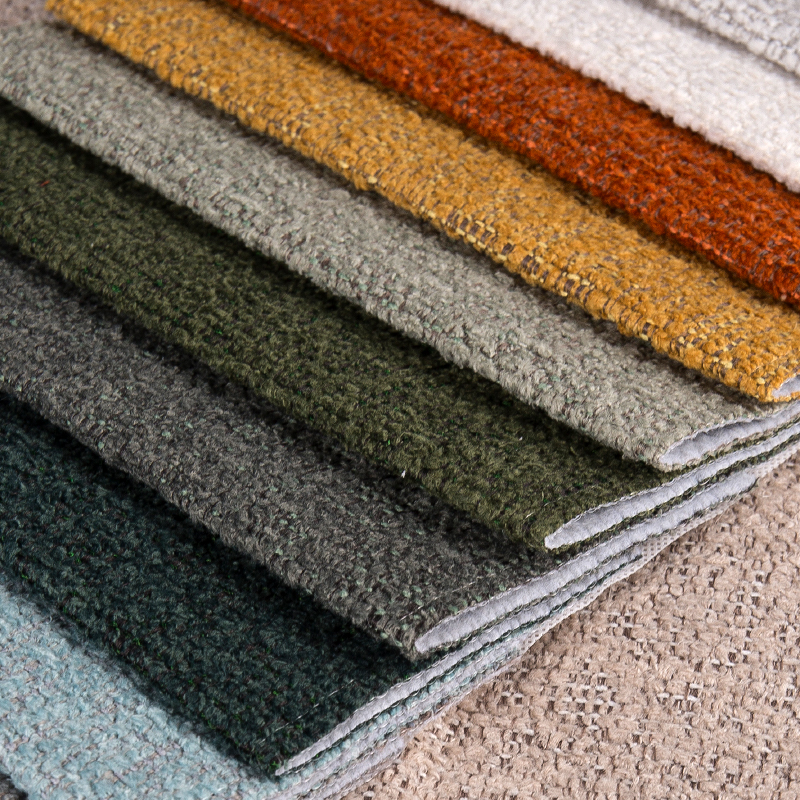
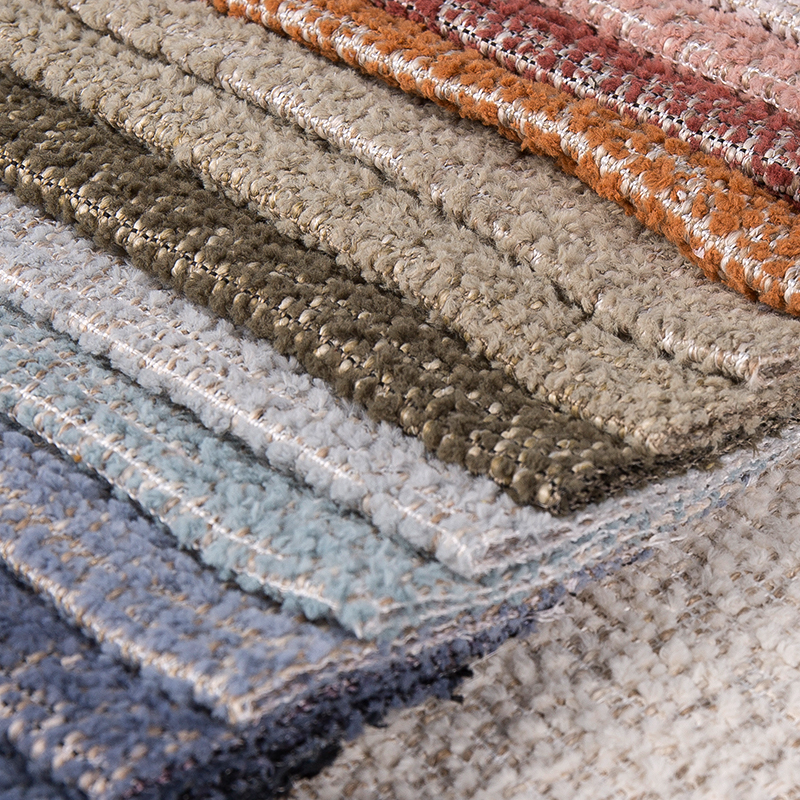
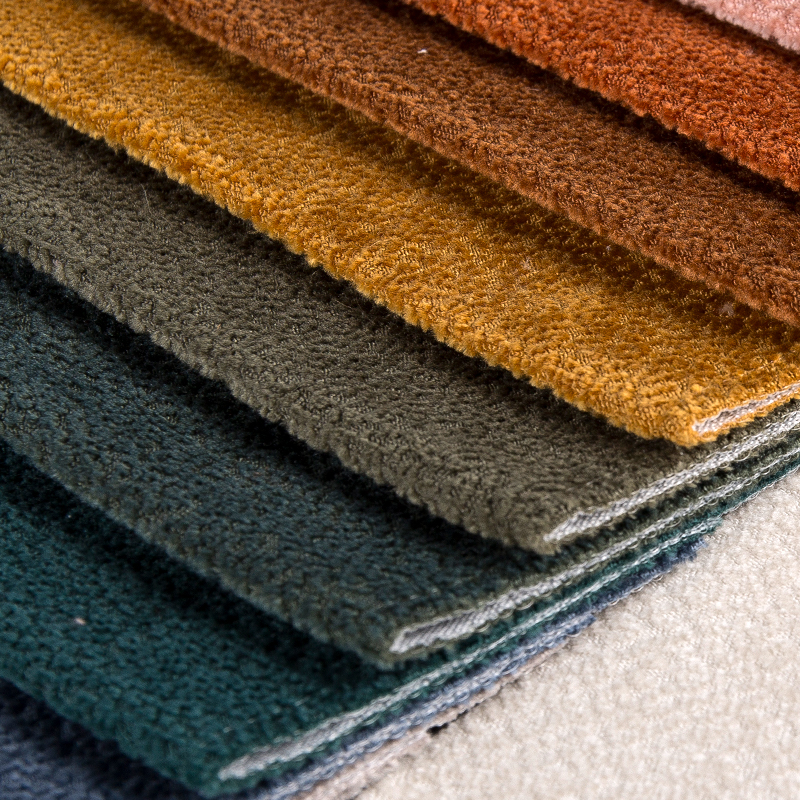 Copper Coin Jacquard-Look Velvet Sofa FabricAn economical warp-knit sofa fabric with a retro-modern copper coin pattern, soft hand and microlight effect, 140 cm by 400 g/sm.View Product →
Between washes, a light schedule is more effective than an occasional deep clean. Vacuum weekly with a soft attachment and no beater bar. Rotate and turn cushions monthly so wear and light exposure stay even. Blot any spill within the first minute, because a water-based stain that wicks into the backing is far harder to remove than one sitting on the surface. Keep seating out of direct afternoon sun; polyester is reasonably colourfast but the pile face fades unevenly over years.
For anyone specifying or reselling velour upholstery, two documents matter as much as the cleaning method. The first is an accurate care label, since fibre content and cleaning instructions are legally regulated in most major markets and an incorrect W or S code creates liability when a customer follows it. The second is the test evidence behind the fabric: colourfastness to water and rubbing, dimensional stability after washing, and for contract seating, flammability performance under the relevant national schedule. Ask suppliers for those reports before the fabric goes on a washable cover, not after the first complaint.
Washed correctly, velour keeps its depth of colour and its soft hand for years. The rule to remember is straightforward: cool water, mild detergent, matched rinse temperature, no wringing, no heat, and a brush once the nap is nearly dry.
Related Products

Contact us
Address
Hangfu Road 106#, Chongfu Town, Tongxiang City, Zhejiang, China
Phone
+86-15067379939
linachen@climbingtex.com / zac@climbingtex.com
lianniu@climbingtex.com
Fax/Tel
+86-573-88385698
products
QR CODE
 Home Textile Manufacturers
Sofa Fabric Factory
 English
 Español
 عربى