Nov 16, 2026
A sofa fabric that beads water in a showroom can still fail at the seam after six months of cleaning. The practical answer is to specify water repellency by end use, then verify the seam and abrasion package; a can of spray is not a specification.
Bottom line: For residential sofas, a mill-applied, PFAS-free DWR with a spray rating of 80+ and a tested seam is usually the best balance of hand feel, cost, and repairability. For contract or healthcare seating, use a laminated or coated backing rated to the hydrostatic head your cleaning regime requires, and tape or seal seams. DIY wax and oil treatments suit canvas and outdoor covers, not chenille or cut velvet.
Content
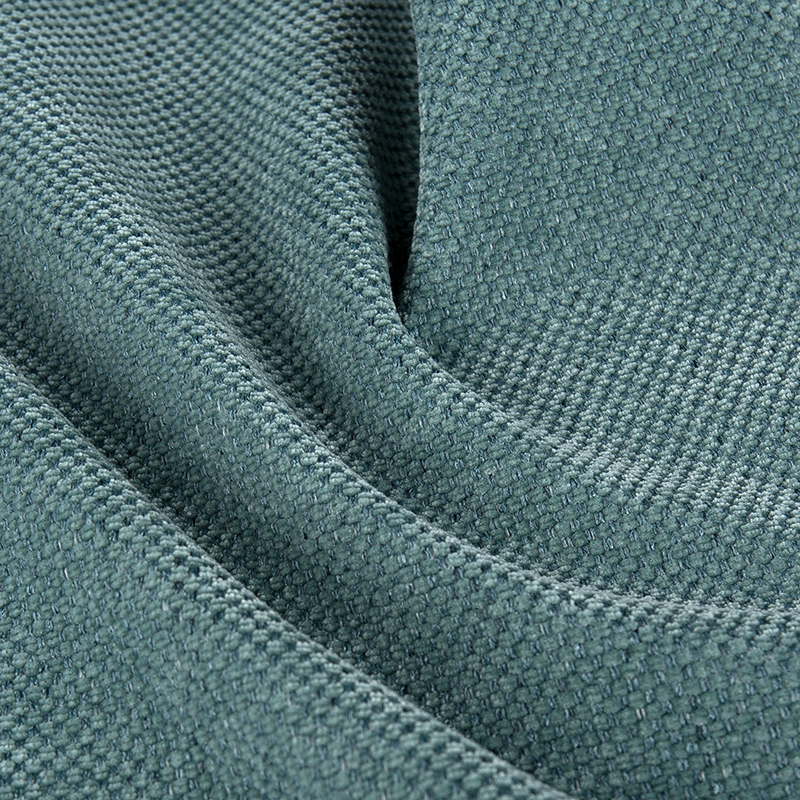
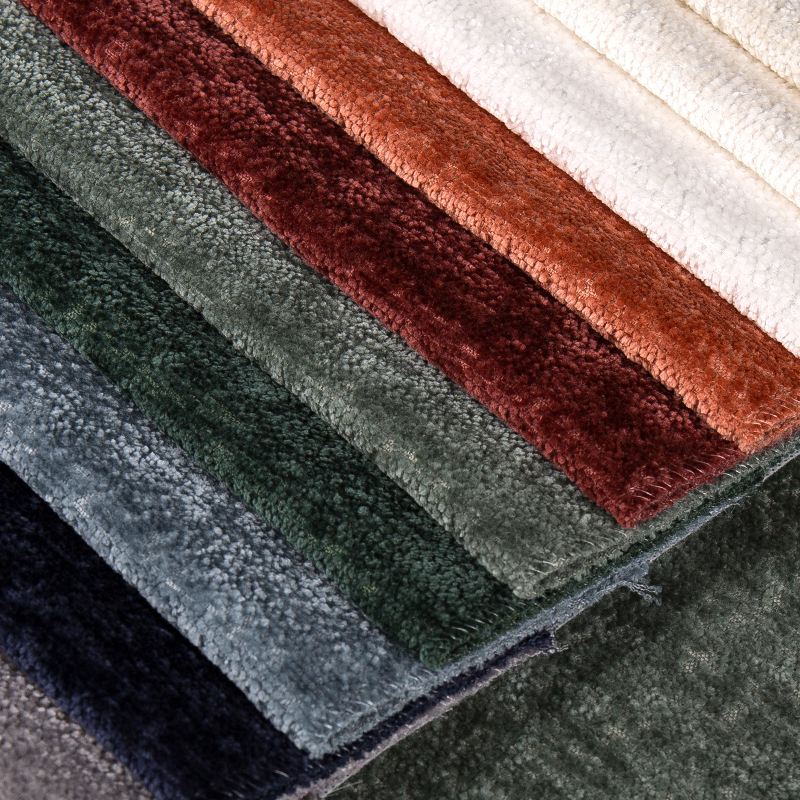
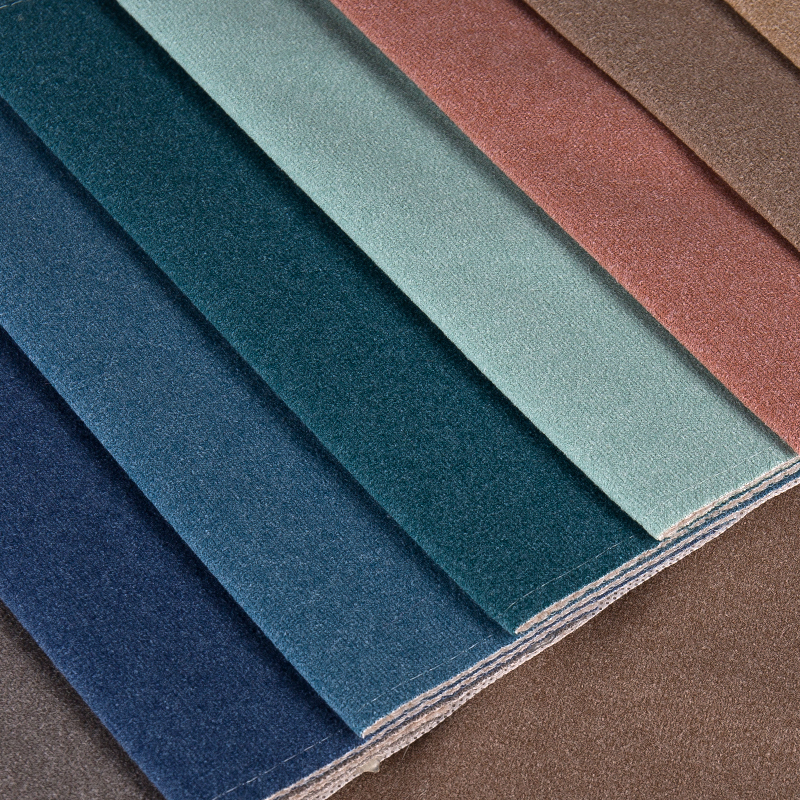
Waterproofing begins with yarn, density, pile, and finish. A tight woven polyester holds a DWR more evenly than a loose chenille, while a cut velvet has exposed pile that can crush and wick. Ask for base-fabric performance before coating: abrasion, pilling, crocking, and dimensional stability. If the substrate shifts, the coating cracks.
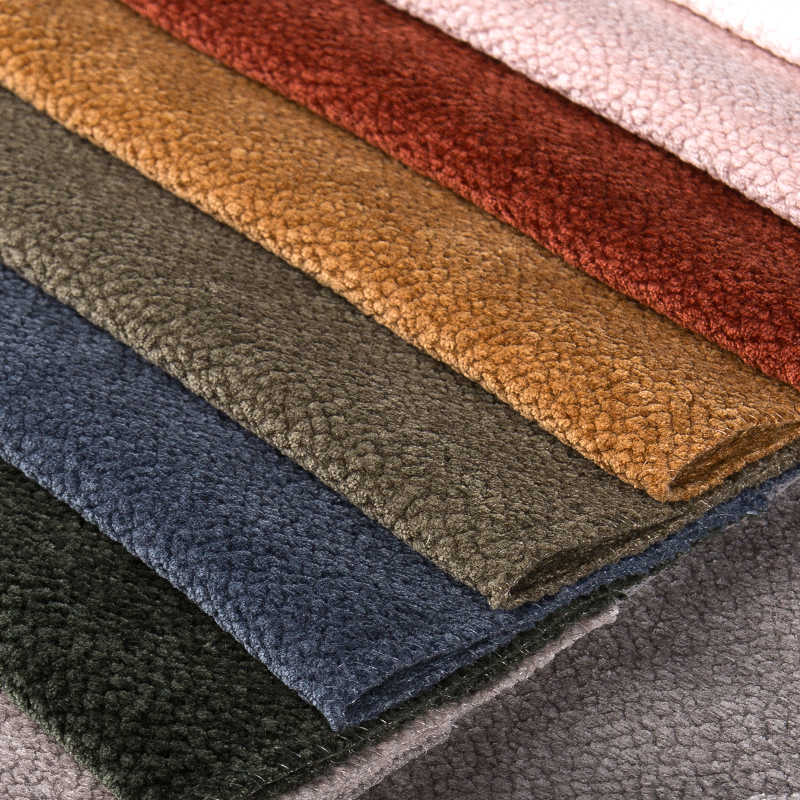
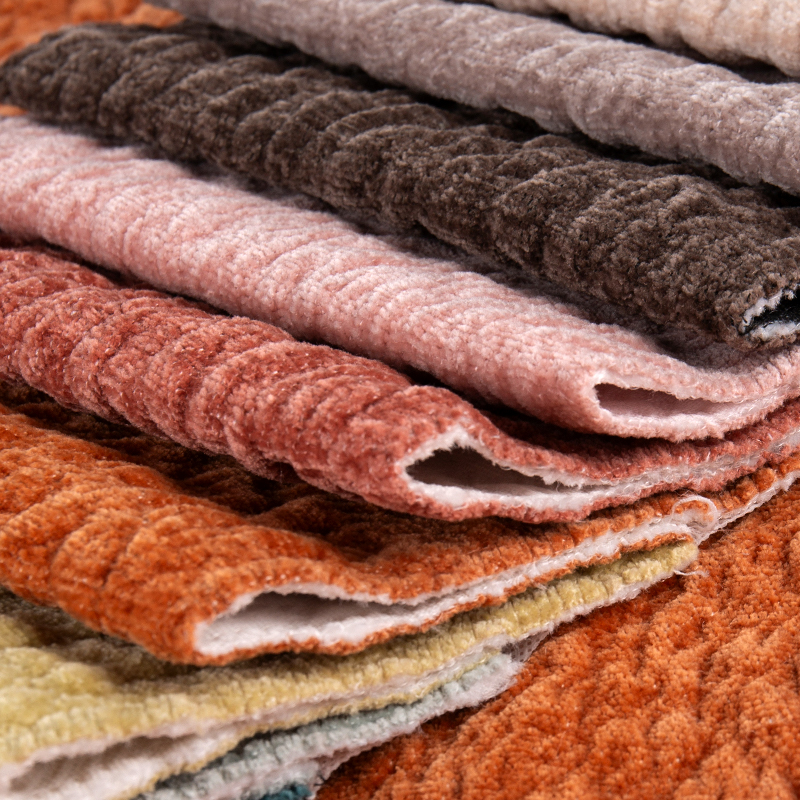
For sofa programs, chenille and boucle need a low-add-on finish to keep softness; embossed surfaces need enough coating to avoid flattening the pattern. A useful reference point is polyester chenille upholstery, where hand feel is part of the product promise, so the finish recipe must be chosen with the same care as the yarn.
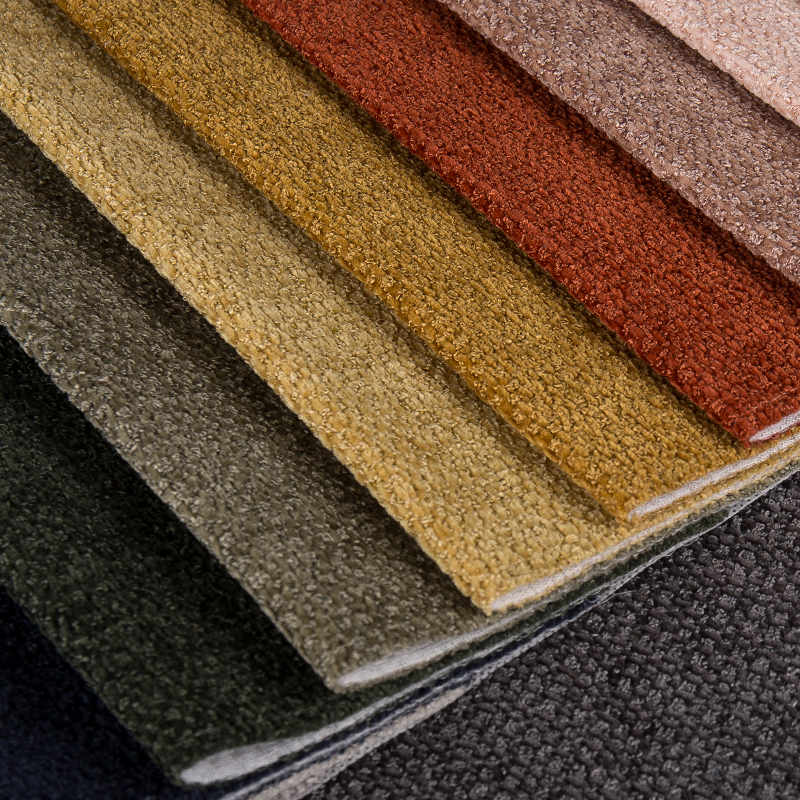 Soft Chenille Sofa Upholstery FabricClassic polyester chenille upholstery at 140 cm and 440 g/sm, suited to sofa programs where soft hand feel and durable pattern matter.View Product →
Surface resists wetting; AATCC 22 spray ratings of 80 to 100 are common for a new finish. It is not a barrier under pressure.
No liquid water penetration under a stated pressure, usually measured by ISO 811 hydrostatic head. Seams must be sealed too.
Oil and water roll-off plus soil release. This supports cleaning but does not replace a waterproof backing.
In upholstery, “waterproof” often means a spill stays on top long enough to blot. For a full barrier, a PU or TPU film or coating adds roughly 20 to 80 g/m² and can change drape, noise, and breathability. Specify a hydrostatic head in millimetres, a spray rating after cleaning, and a seam leakage test. A 1,000 mm laminate may handle occasional spills; 5,000 mm and above is more relevant to frequent wetting or commercial cleaning. Water-based extraction can strip DWR, while solvent cleaning may attack coatings, so test to the actual care method.
Seams fail before panels. A needle hole is a channel; water crosses it by wicking. For waterproof claims, use taped or welded seams. For water-repellent upholstery, use a small needle, tight stitch, and a compatible seam sealer. Arm rests and seat fronts also abrade the finish, so a spray rating on a flat lab sample is not enough.
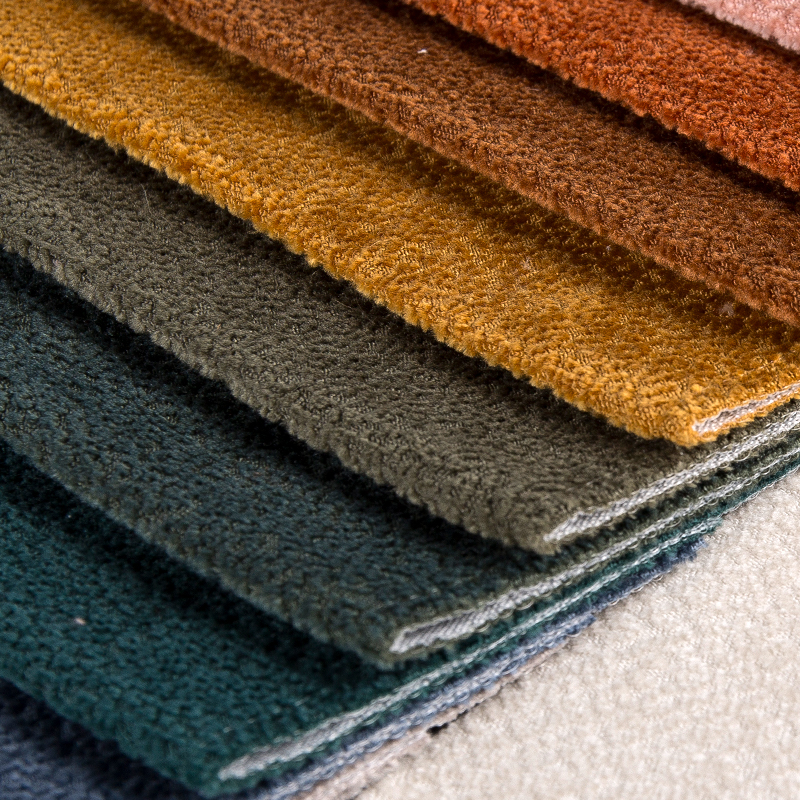
Loop constructions such as boucle can hold cleaning residue and crush at the seat edge, so they need a finish that does not rely on a thick surface film.
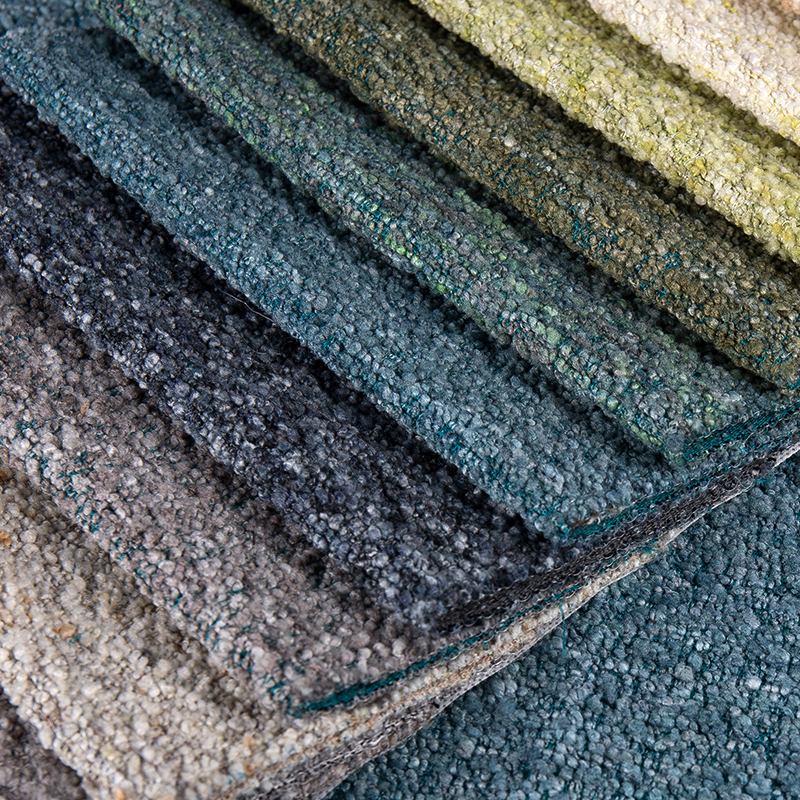 Yarn-Dyed Boucle Sofa Upholstery FabricHeavyweight 660 g/sm yarn-dyed boucle chenille with clear textured particles, relevant where loop upholstery needs careful finish specification.View Product →
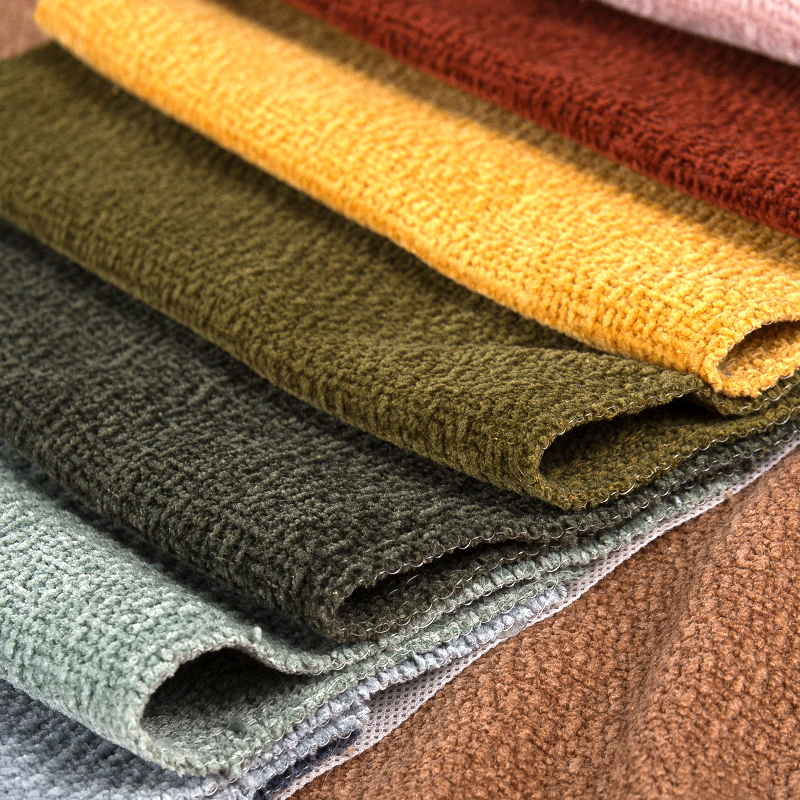
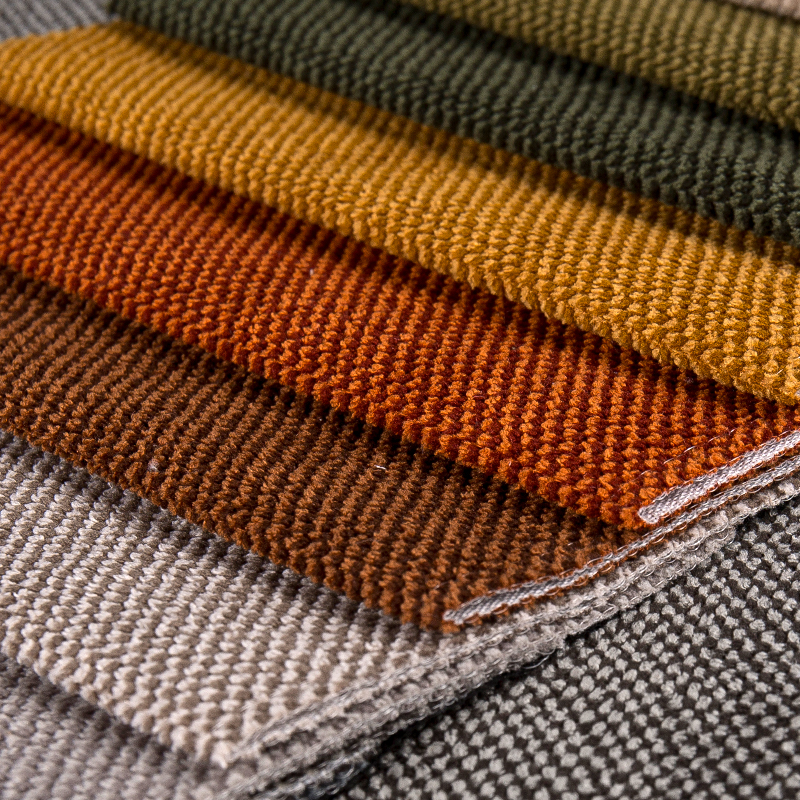
ROI is usually won at the specification stage. A small finish cost increase is cheap compared with reupholstery or a service call. If one in twenty sofas needs a $150 cleaning or repair visit, that is $3,750 across 500 sofas; a tested mill finish at under $1 per metre on a four-metre sofa is often the lower-risk path. Embossed surfaces need extra pilot care because heat and pressure can flatten the pattern.
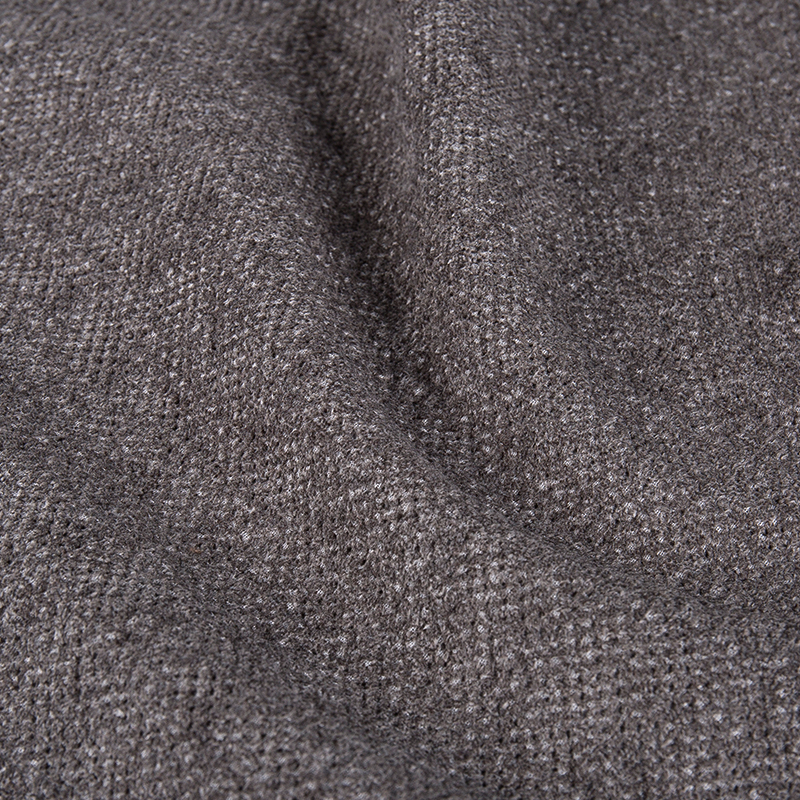 Solid Color Grain Embossing Sofa FabricPlain embossed sofa upholstery at 140 cm and 460 g/sm, with cationic yarn for a two-color effect and a textured, comfortable feel.View Product →
Maintenance protects the finish as much as the fabric. Vacuum before soil works into the pile, blot spills rather than rub, use mild soap, and avoid high-pressure steam on coated surfaces. Reapply aftermarket protection only with a product compatible with the original finish, and document the cleaning method so later complaints can be traced. For EU programs, check REACH status, PFAS restrictions, EN 1021-1 or EN 1021-2 flammability where contract seating applies, VOC limits, and care labelling. Request AATCC 22, ISO 811, and Martindale reports on the final construction, not just the greige fabric.
The technical detail matters because a finish that passes a flat-sample spray test can still fail at the seam or after extraction cleaning. Review finishing treatments and coatings alongside your own cleaning and flammability requirements before approving a bulk order.
The one rule worth remembering is that waterproofing is a system: fibre, finish, seam, and cleaning. Specify it the same way you specify abrasion and colourfastness, and the sofa will behave predictably long after the showroom sample has been forgotten.
Related Products

Contact us
Address
Hangfu Road 106#, Chongfu Town, Tongxiang City, Zhejiang, China
Phone
+86-15067379939
linachen@climbingtex.com / zac@climbingtex.com
lianniu@climbingtex.com
Fax/Tel
+86-573-88385698
products
QR CODE
 Home Textile Manufacturers
Sofa Fabric Factory
 English
 Español
 عربى