Nov 13, 2026
Two pile velvet swatches can look identical under showroom lighting and behave like different materials after six months of use. One recovers when you run a hand across it; the other keeps a flattened track where a cushion sat. The difference is rarely the color or the fiber name on the label. It is the pile structure, the pile height and density, the ground cloth, and the finishing route taken by the mill.
If you are specifying pile velvet for a sofa program, treat it as an engineered surface rather than a decorative one. The face is what the customer sees. The ground is what keeps the sofa from failing at the seam.
The short version: pile velvet is defined by a raised yarn face above a ground cloth. Cut pile gives depth and sheen, uncut pile gives resilience and a firmer hand, and knit pile gives stretch for curved shapes. For polyester sofa velvet, the four numbers that predict failure are pile crush recovery, seam slippage, pilling grade and lightfastness. Ask for them before you approve a hanger.
Content
Velvet is not a fiber. It is a construction in which a portion of the yarn stands away from the ground cloth to form a pile. The ground does the structural work: it carries tensile and seam loads, holds the pile upright, and determines whether the fabric will creep or bag on a frame. The pile does the visible work: it creates sheen, hand, color depth and the abrasion surface.
That split matters in upholstery because a beautiful pile on a weak ground will fail at the seam long before the pile wears through. A 40,000-cycle abrasion result means little if the fabric slips 8 mm at a 200 N seam load.
Woven face-to-face on a double-cloth loom. Wires form the pile; a cut wire gives cut pile, a withdrawn wire gives loop pile. Most sofa velvet in this class is warp pile because density and pile height can be controlled closely.
Pile yarns are inserted across the width and cut after weaving. It is often lighter and more affordable, which suits decorative cushions and lighter residential pieces more than heavy contract seating.
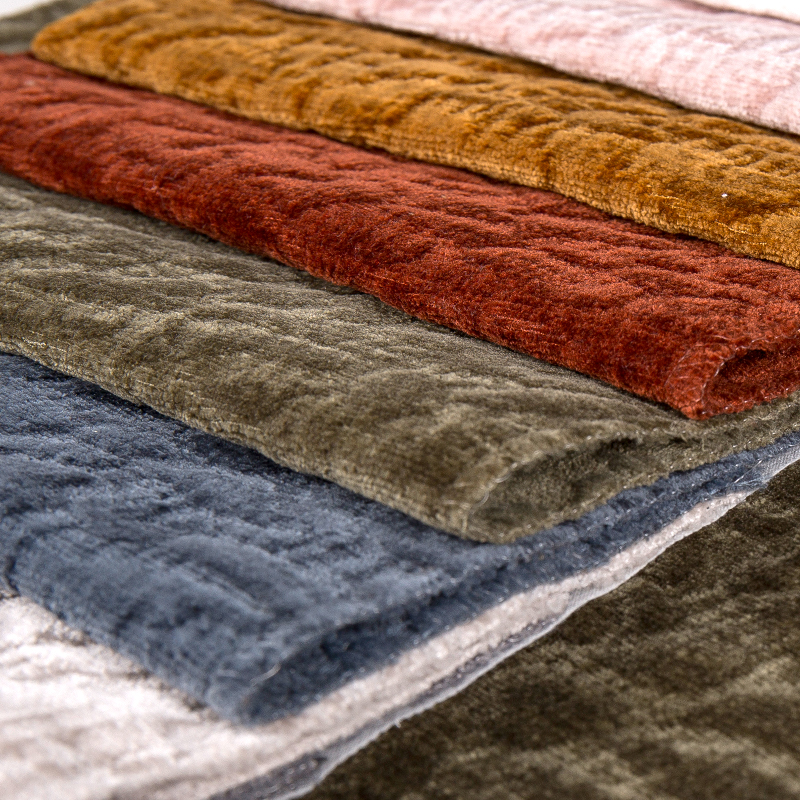
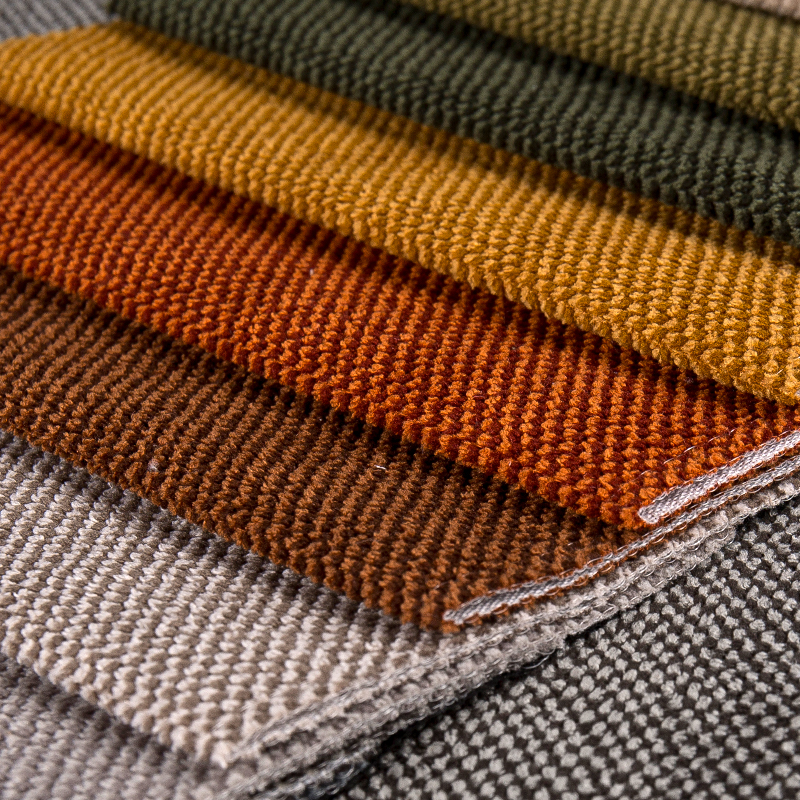
Pile is raised on a warp-knit base. The stretch helps on curved arms and tight upholstery, but the backing must be stable or seam strength drops. A jacquard-look knit velvet can mimic woven structure at a lower cost.
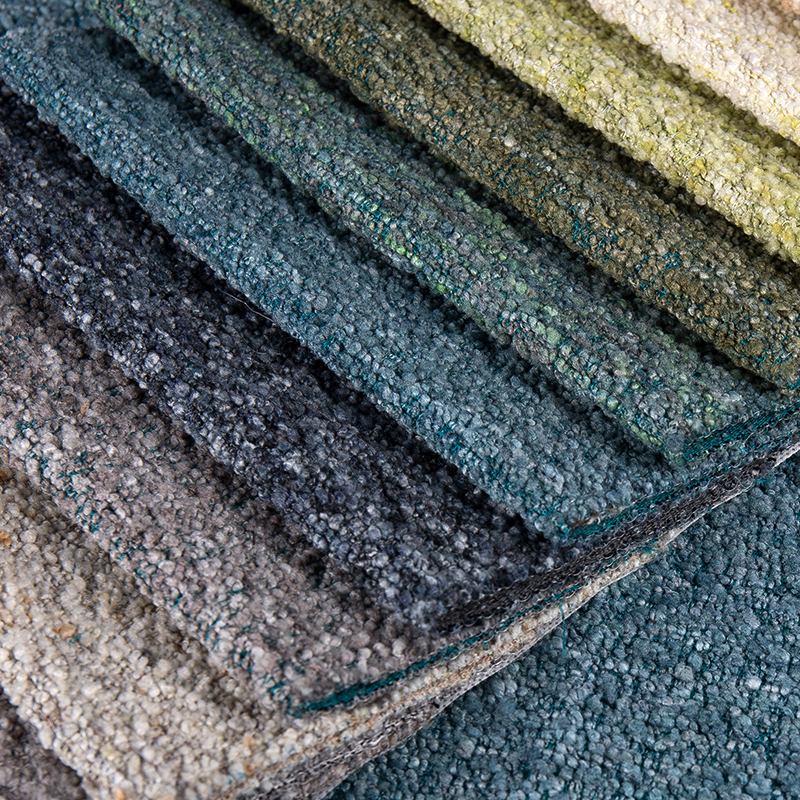
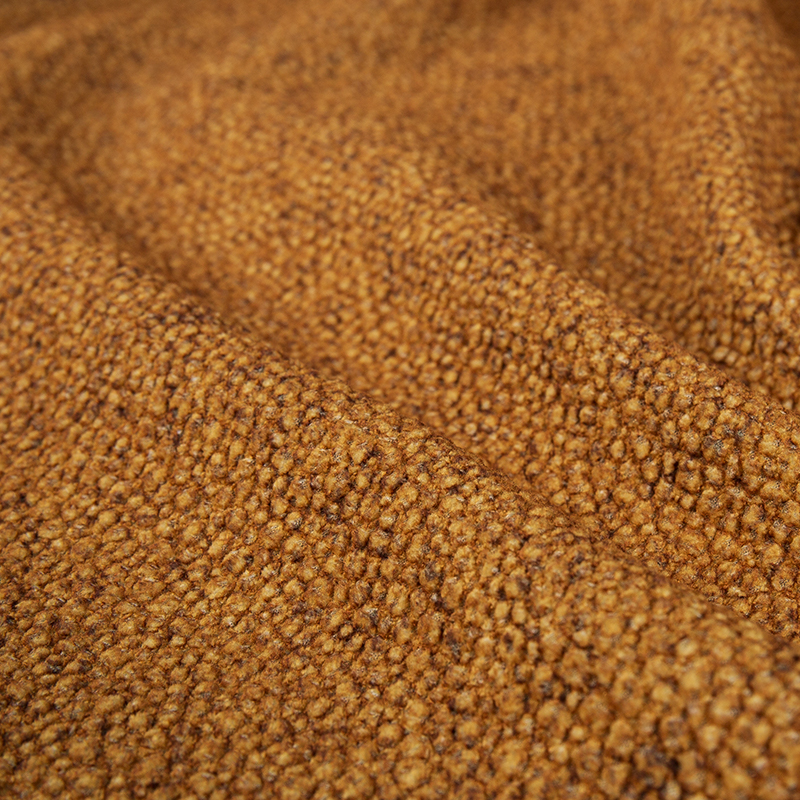
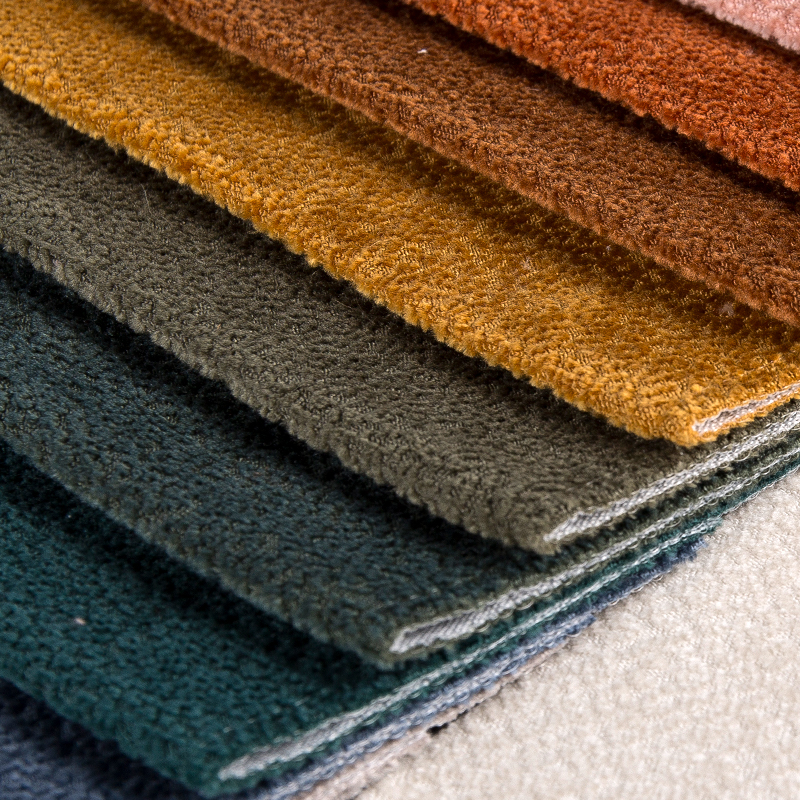 Jacquard-Look Warp-Knit Velvet Sofa FabricA warp-knit polyester sofa velvet with an imitation jacquard copper-coin pattern and soft hand, relevant where woven-look structure is wanted at lower cost.View Product →
Cut pile is the velvet most buyers picture: loops are sliced, the yarn ends stand open, and the surface reflects light with a directional nap. It feels softer and looks deeper, but open ends crush more easily and shade differently when brushed in opposite directions. Uncut pile keeps the loops intact. It feels firmer, resists flattening better, and shows fewer pressure marks, which is why loop and uncut constructions appear in high-traffic seating and contract work. Pile-on-pile uses two or more pile heights in the same cloth; the taller pile is usually cut and the shorter loop stays intact, producing a sculpted pattern without printing.
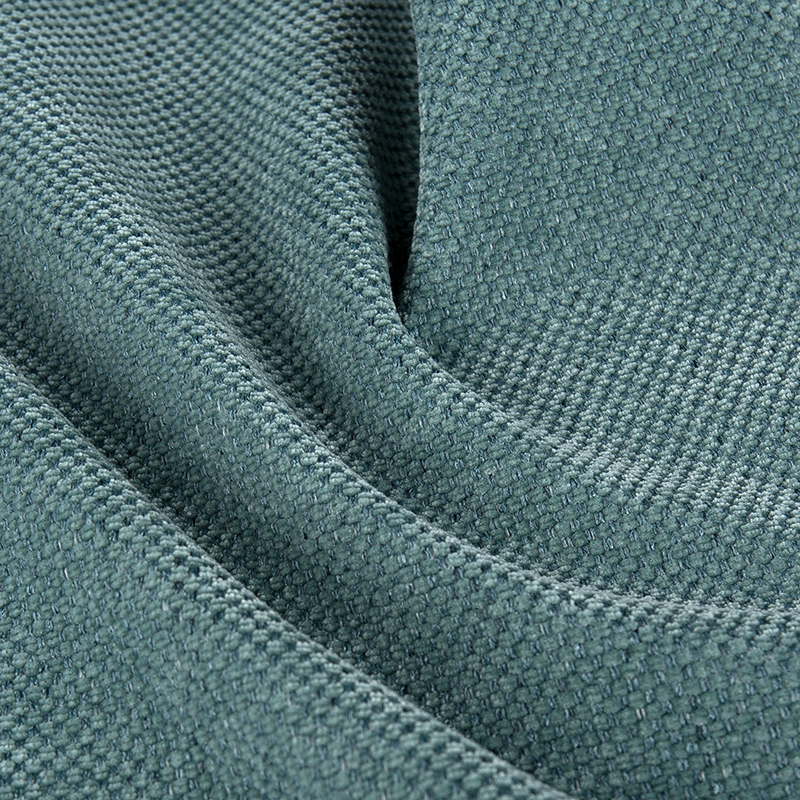
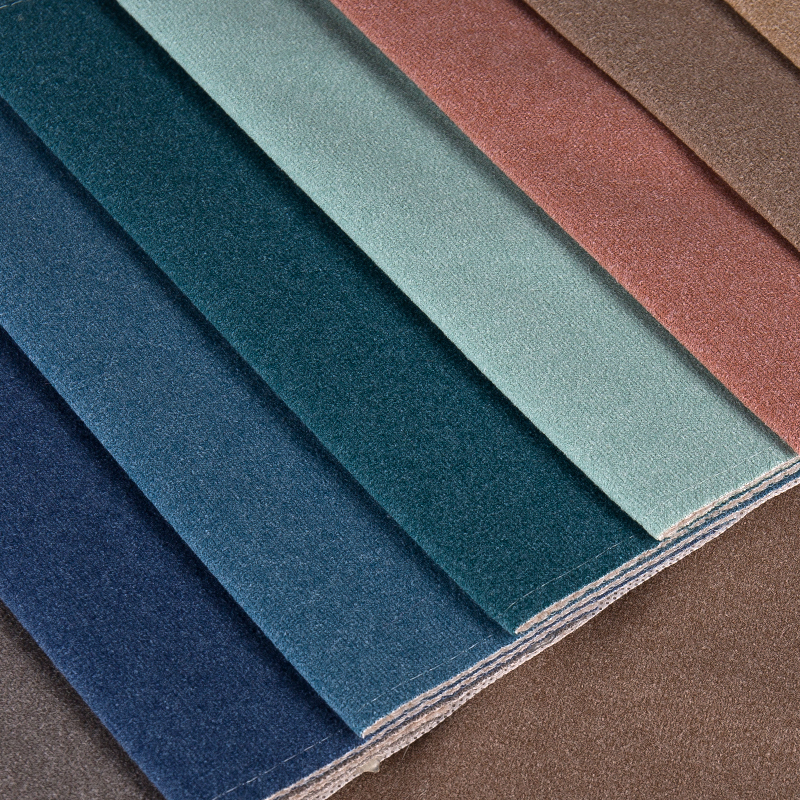
A linen-look cut velvet is a useful reference point for residential programs: the pile is cut for softness, but the surface is engineered to read drier and less glossy than a classic silk-effect velvet, which hides crush marks better in everyday use.
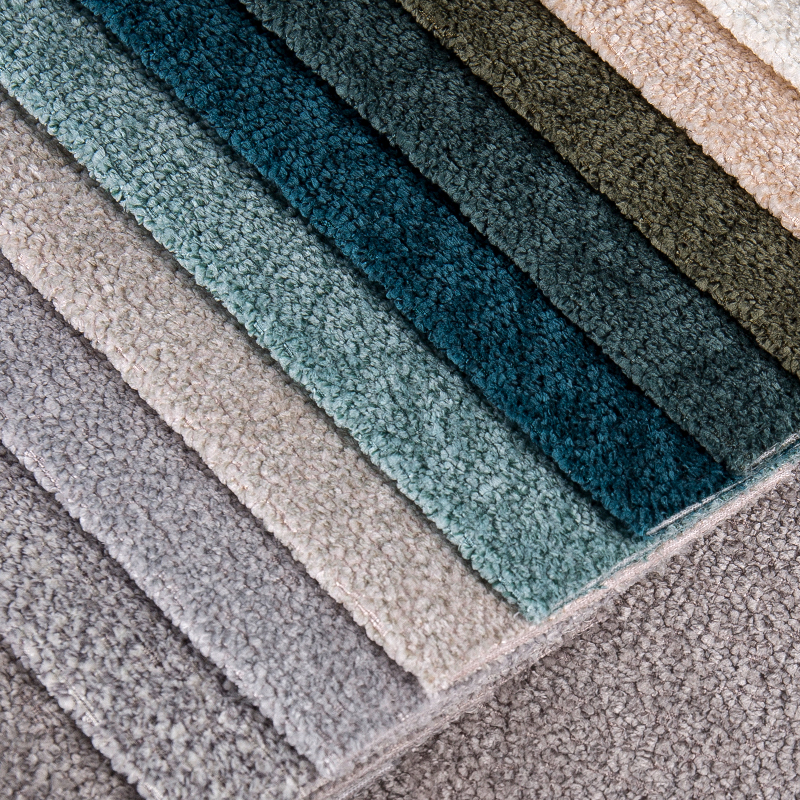 Linen-Look Cut Velvet Sofa Upholstery FabricAn imitation cut-pile polyester velvet with a drier, less glossy linen-like surface, offered as an affordable alternative for residential sofa upholstery.View Product →
Polyester is the default pile fiber for mainstream sofa velvet for three unglamorous reasons: it holds color, resists abrasion, and its supply is predictable. A well-made polyester cut velvet can reach 40,000 Martindale cycles and still return a grade 4 pilling result, which is why it appears in both residential and contract programs. The trade-off is real: polyester is hydrophobic, so spills sit on the surface longer, and short-staple pile can pill and shed if the mill pushes yield too far.
When you specify, separate the pile from the ground and ask for both:
Typical procurement thresholds are 25,000 Martindale cycles for residential seating and 40,000 or more for contract. Pilling should hold grade 4 after 2,000 rubs, lightfastness should reach grade 4 to 5 after 40 hours, and rub fastness should be grade 4 or better. These are not luxury extras; they are the minimum evidence that the pile will not look tired before the frame does.
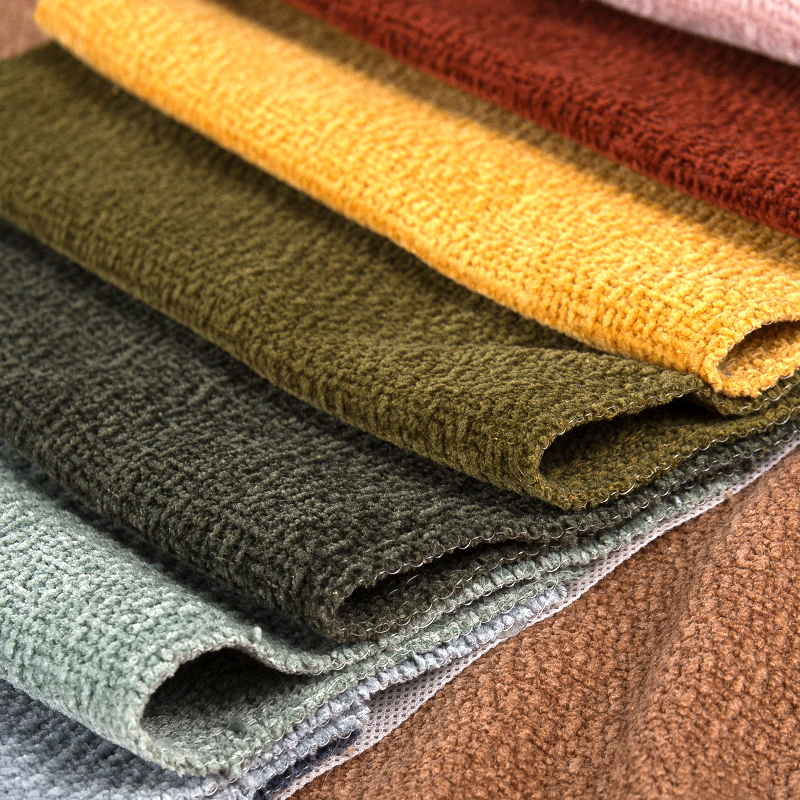
Finishing changes pile velvet more than most buyers expect. Shearing levels the surface and removes loose fibers, which reduces pilling. Brushing raises the pile and softens the hand but can increase shade directionality. Embossing uses heat and an engraved roll to press a pattern into the pile; the pattern is permanent only if the fiber is thermoplastic, which is why polyester embosses well. Bronzing transfers a metallic foil onto the pile tips and creates a high-sheen surface that needs a rub-fastness check before it goes on a seat.
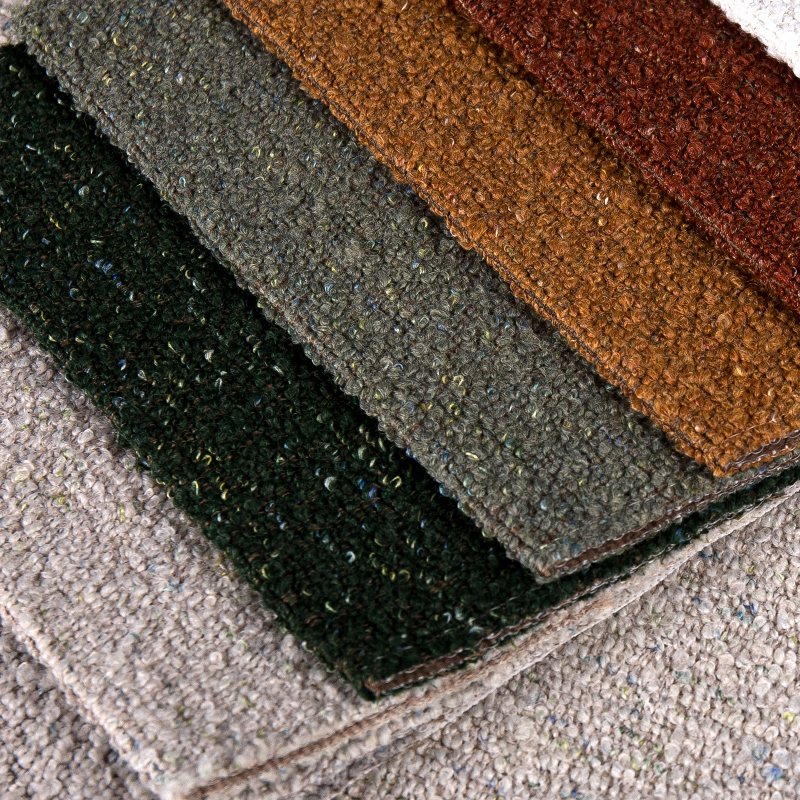
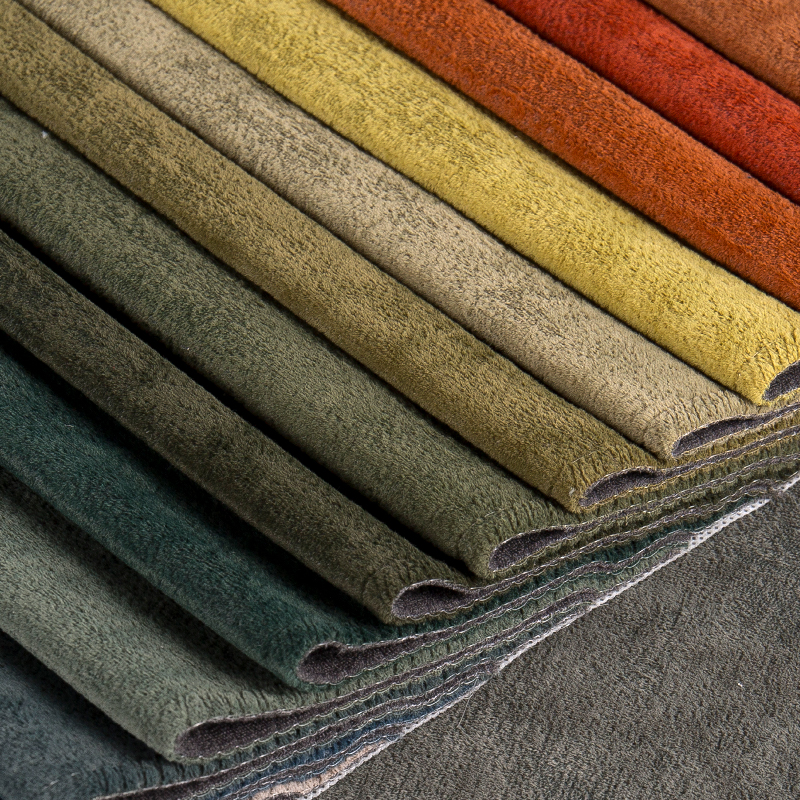 Soft Polyester Bronzing Velvet for Sofa UpholsteryA high-weight polyester bronzing velvet with a subtle classic texture and soft hand, suited to sofa upholstery where a metallic-sheen finish is being evaluated.View Product →
Once the finish is fixed, test the fabric as a system. The chart below uses a relative index to show where pile velvets typically lose points before the pile itself wears out.
Most pile velvet still goes into residential sofas, but the contract share is growing because polyester pile velvet can be engineered to meet EN 1021 and BS 5852 without a backcoating that stiffens the hand. Headboards and decorative cushions absorb a smaller share, and they usually tolerate a lighter pile because they see less abrasion.
Set the abrasion, pilling and flammability standard before you look at color. A residential sofa and a hotel lobby should not share the same pile specification.
Request pile height, pile density and ground construction in writing. Use a practical sofa fabric selection guide to align the pile with the frame and cushion build.
Check shade under D65 and under the store lighting. Measure Delta E rather than trusting the eye, and keep a signed hanger from the approved lot.
Run 30 to 50 sofas, then inspect seam grin, pattern match at the arm, and recovery after two weeks of showroom use. Fix the specification before the purchase order, not after.
Pile velvet is cleanable, but not indestructible. A simple routine keeps the face from matting:
Compliance is a separate conversation from hand. Confirm the exact test standard, the test lab and the report date. A fire-retardant claim without a standard reference is not a specification. For contract work, ask for EN 1021-1 and EN 1021-2 at minimum, and BS 5852 crib 5 where the project requires it. Review fire-resistant and commercial-grade upholstery fabric requirements before you approve a contract hanger.
The specification sheet should carry the pile type, pile and ground fiber, pile height, density or gsm, usable width, shade tolerance, Martindale result, pilling grade, lightfastness, rub fastness, seam slippage limit, flammability standard and cleaning code. If a supplier cannot put those numbers on paper, treat the swatch as a sample, not a specification.
The practical rule is simple: approve the pile and the ground together, with numbers, and test the finished fabric as a system. That is what separates a velvet sofa that looks good in the showroom from one that still looks good after two winters of daily use.
Related Products

Contact us
Address
Hangfu Road 106#, Chongfu Town, Tongxiang City, Zhejiang, China
Phone
+86-15067379939
linachen@climbingtex.com / zac@climbingtex.com
lianniu@climbingtex.com
Fax/Tel
+86-573-88385698
products
QR CODE
 Home Textile Manufacturers
Sofa Fabric Factory
 English
 Español
 عربى