Feb 05, 2026
Content
Polyester knitted fabrics represent one of the most versatile and widely-used textile categories in modern manufacturing, distinguished by their loop-based construction method that creates fabrics with superior stretch, recovery, and comfort properties. Unlike woven fabrics that interlace yarns at right angles, knitted polyester fabrics are produced by interlocking loops of polyester yarn in horizontal or vertical directions, resulting in a flexible structure that can stretch in multiple directions. This fundamental construction difference gives polyester knits their characteristic elasticity, wrinkle resistance, and ability to conform to body contours, making them ideal for athletic wear, activewear, lingerie, and performance garments.
The knitting process for polyester fabrics can be executed on various machine types, with the two primary categories being weft knitting and warp knitting. Weft knitting machines, including circular and flat-bed knitters, create fabrics by forming loops in a horizontal direction, with each course of loops supported by the previous one. This method produces familiar fabrics like jersey, rib, and interlock. Warp knitting machines, conversely, form loops vertically along the length of the fabric simultaneously, creating more stable structures like tricot and raschel fabrics. The choice between these methods significantly impacts the fabric's final characteristics, including stretch properties, dimensional stability, production speed, and end-use suitability.
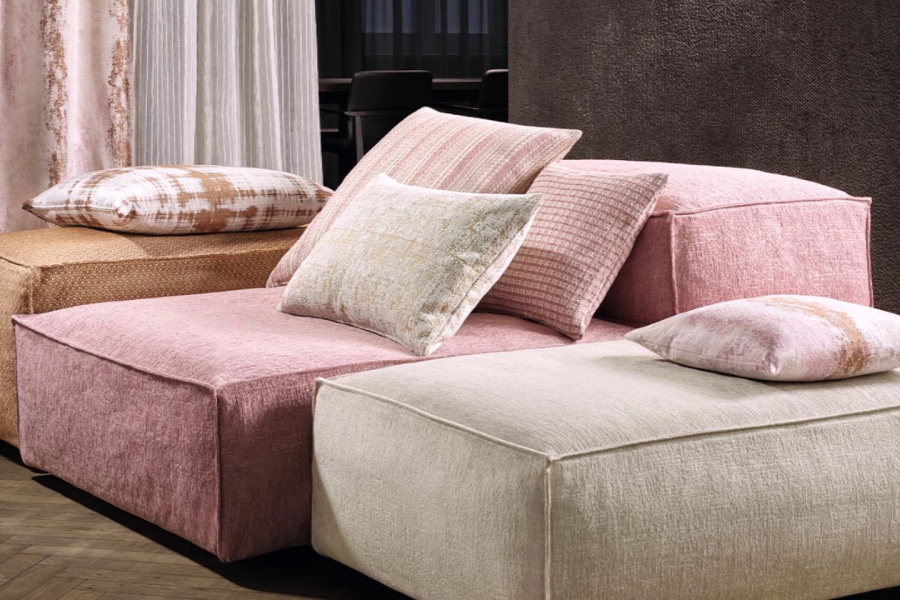
Polyester knitted fabrics encompass a diverse range of structures, each engineered for specific performance requirements and applications. Single jersey, the most fundamental weft-knitted structure, features a smooth face side with visible vertical wales and a textured reverse showing horizontal courses, offering excellent drape and moderate stretch primarily in the width direction. This fabric weight typically ranges from 120 to 200 GSM (grams per square meter) and finds extensive use in t-shirts, sportswear, and linings. Double knit structures, including interlock and rib variations, create fabrics with identical or similar appearances on both sides, providing enhanced stability, opacity, and dimensional retention compared to single jersey.
Warp knitted polyester fabrics provide superior dimensional stability and run-resistance compared to weft knits, making them preferred choices for applications requiring consistent shape retention and durability. Tricot, the most common warp knit, features fine vertical wales on the face with horizontal ribs on the back, offering minimal stretch lengthwise but considerable crosswise elasticity. These fabrics typically range from 80 to 150 GSM and excel in lingerie, swimwear linings, and athletic wear where stability during intense movement is crucial. Raschel warp knits accommodate heavier yarns and can create openwork or textured surfaces, finding applications in outerwear, technical textiles, and decorative fabrics with weights extending from 200 to 600 GSM.
Polyester, chemically known as polyethylene terephthalate (PET), possesses inherent molecular characteristics that fundamentally influence the performance of knitted fabrics. The polymer's high tensile strength, typically ranging from 4.5 to 7.0 grams per denier, provides excellent durability and abrasion resistance to finished fabrics, allowing them to withstand repeated laundering cycles and intensive use without significant degradation. Polyester's hydrophobic nature, with moisture regain of only 0.4% at standard conditions, creates fabrics that dry rapidly and resist water-based staining, though this same property can result in static electricity buildup and reduced initial comfort in high-humidity conditions.
The thermal properties of polyester significantly affect processing parameters and end-use performance of knitted fabrics. With a glass transition temperature around 70-80°C and melting point between 255-265°C, polyester fabrics can be heat-set to stabilize dimensions and create permanent pleats or textures, a crucial advantage in manufacturing wrinkle-resistant garments. However, this moderate melting point requires careful temperature control during ironing, with recommended settings not exceeding 150°C to prevent fiber damage or glazing. Polyester's excellent elastic recovery, maintaining 95% of its original length after 5% extension, contributes to the dimensional stability and shape retention that makes polyester knits superior to many natural fiber alternatives in active and performance wear applications.
| Property | Polyester Value | Impact on Knitted Fabric |
| Tenacity | 4.5-7.0 g/denier | High durability and abrasion resistance |
| Moisture Regain | 0.4% | Quick drying, requires moisture management finishes |
| Elastic Recovery | 95% at 5% extension | Excellent shape retention and wrinkle resistance |
| Melting Point | 255-265°C | Enables heat setting and permanent texturing |
| UV Resistance | Good to Excellent | Suitable for outdoor applications with color stability |
The production of polyester knitted fabrics involves multiple precisely controlled stages, beginning with polyester fiber preparation where continuous filament yarns or spun staple yarns are wound onto cones or beams suitable for knitting machine feeding systems. For weft knitting, yarns are typically supplied on cones that feed through tension-controlled delivery systems to ensure consistent loop formation, while warp knitting requires yarns to be wound onto sectional beams with precise tension uniformity across hundreds of ends. Yarn preparation may include texturing processes such as false-twist texturing or air-jet texturing to create bulk, stretch, and improved hand feel in the final fabric, with textured yarns typically exhibiting 15-30% crimp contraction that enhances fabric softness and thermal insulation properties.
The knitting process itself demands rigorous control of multiple parameters to achieve consistent fabric quality and minimize defects. Machine gauge, measured in needles per inch, directly determines fabric density and appearance, with finer gauges (18-28 needles per inch) producing smoother, more compact fabrics suitable for intimate apparel, while coarser gauges (7-14 needles per inch) create more open structures for athletic mesh or outerwear. Stitch length, controlled by cam settings and take-down tension, critically affects fabric weight, stretch properties, and coverage, with shorter stitches creating tighter, heavier fabrics and longer stitches yielding lighter, more extensible structures. Modern computerized knitting machines monitor and adjust tension, speed, and yarn feed in real-time, detecting broken needles, yarn breaks, or tension variations that could produce fabric defects.
Quality control throughout polyester knit production involves continuous monitoring and testing at each stage to ensure finished fabrics meet specifications. Greige fabric inspection identifies knitting defects including dropped stitches, holes, streaks, or contamination before costly dyeing and finishing operations. Physical testing encompasses fabric weight measurement (typically ±5% tolerance), dimensional stability assessment through shrinkage testing per AATCC 135 or ISO 5077 standards, and stretch and recovery evaluation using ASTM D2594 protocols. Color quality control employs spectrophotometry to verify dye lot consistency within ΔE values of 0.8-1.2 for commercial acceptability, while colorfastness testing to washing, light, perspiration, and crocking ensures durability standards are met for the intended application category.
Polyester knitted fabrics demonstrate exceptional performance characteristics that make them preferred materials for technical and performance applications. The inherent quick-drying property, resulting from polyester's hydrophobic nature and the knitted structure's high surface area, enables fabrics to release moisture rapidly through evaporation, with typical drying times 3-4 times faster than cotton equivalents. This characteristic, combined with polyester's ability to wick moisture away from skin through capillary action when engineered with appropriate fiber cross-sections and fabric constructions, creates excellent comfort in active wear applications. Modern polyester knits often incorporate specialized fiber cross-sections including trilobal, pentalobal, or channeled profiles that enhance wicking performance and reduce fabric-to-skin contact area, improving breathability and moisture transport.
The dimensional stability of polyester knits represents a significant advantage over natural fiber alternatives, particularly after proper heat-setting during finishing. Well-processed polyester knitted fabrics exhibit residual shrinkage of less than 3% in both length and width directions after five home launderings per AATCC 135, maintaining garment fit and appearance throughout extended use. The wrinkle resistance inherent to polyester's elastic recovery properties, combined with the flexible loop structure of knits, creates fabrics that resist creasing and maintain smooth appearance even after compression during storage or wear. This easy-care characteristic reduces or eliminates ironing requirements, saving energy and time in garment maintenance while preserving fabric integrity over hundreds of laundry cycles.
| Finish Type | Mechanism | Performance Benefit |
| Moisture Management | Hydrophilic polymer coating on fiber surface | Enhanced wicking and spreading for rapid moisture evaporation |
| Antimicrobial | Silver ions or quaternary ammonium compounds | Bacterial growth inhibition reducing odor development |
| UV Protection | Ceramic nanoparticles or organic UV absorbers | UPF 50+ sun protection for outdoor applications |
| Anti-Pilling | Resin treatment or enzymatic surface modification | Reduced surface fiber entanglement and pill formation |
| Water Repellency | Fluorocarbon or silicone-based hydrophobic coating | Water beading and resistance for outerwear applications |
| Anti-Static | Conductive polymers or topical antistatic agents | Static charge dissipation preventing cling and discomfort |
Athletic and activewear represents the largest and fastest-growing market segment for polyester knitted fabrics, driven by the materials' superior moisture management, durability, and stretch properties essential for performance during physical activity. Single jersey and double-knit constructions dominate this category, with fabric weights ranging from 120-200 GSM for running shirts and base layers to 220-280 GSM for training tops and yoga wear. Advanced moisture-wicking finishes, combined with engineered knit structures featuring mesh zones for ventilation and compression areas for muscle support, create garments that enhance athletic performance while maintaining comfort during intense exercise. The integration of elastane (2-10% by weight) with polyester in these knits provides four-way stretch capability essential for unrestricted movement, with recovery properties maintaining garment fit through repeated wear and laundering cycles.
Fashion and apparel applications leverage polyester knits' versatility, ease of care, and ability to accept diverse finishing treatments for creating trendy, durable garments. Interlock and pique structures serve the polo shirt and casual wear markets, offering refined appearance with practical performance characteristics including wrinkle resistance and color retention. Textured polyester knits including brushed back fleece, spacer fabrics, and jacquard patterns provide aesthetic variety and functional benefits for sweatshirts, athleisure wear, and casual outerwear. The fashion industry increasingly appreciates polyester knits' capability to accept digital printing, sublimation dyeing, and embossing treatments that enable rapid style changes and customization without significant production system modifications, supporting fast-fashion business models while maintaining acceptable quality standards.
The environmental impact of polyester knitted fabric production has driven significant industry efforts toward sustainability improvement, with recycled polyester (rPET) emerging as a crucial material innovation. Recycled polyester derived from post-consumer PET bottles or post-industrial polyester waste reduces petroleum consumption by approximately 59% and energy usage by 32% compared to virgin polyester production, while diverting plastic waste from landfills and oceans. The mechanical recycling process involves collecting, sorting, cleaning, and shredding PET materials, followed by melting and extrusion into fibers suitable for textile applications. Modern recycling technologies achieve fiber properties nearly identical to virgin polyester, with tensile strength, elongation, and dyeing characteristics meeting specifications for knitted fabric production across most application categories.
Chemical recycling technologies, including glycolysis, methanolysis, and hydrolysis, represent advanced approaches that break polyester down to monomeric components for repolymerization into virgin-quality material, enabling infinite recycling loops without quality degradation. These processes remove dyes, finishes, and contaminants that limit mechanical recycling effectiveness, producing rPET suitable for food-contact applications and technical textiles requiring certification to virgin material specifications. The knitting industry increasingly specifies recycled polyester content in fabric orders, with major brands committing to 25-100% recycled content targets for polyester knit garments by 2025-2030, driving supply chain development and technology advancement in recycling infrastructure globally.
Proper care of polyester knitted fabrics maximizes garment lifespan and maintains performance characteristics throughout extended use. Washing polyester knits in warm water (30-40°C) with mild detergent effectively removes soil and body oils without damaging fibers or degrading functional finishes, though higher temperatures up to 60°C may be employed for heavily soiled items or sanitization requirements. The hydrophobic nature of polyester causes oily stains to adhere tenaciously, requiring pre-treatment with stain removers or dish soap before laundering to achieve complete removal. Fabric softeners should be avoided on performance polyester knits as they coat fibers and reduce moisture-wicking effectiveness by up to 70%, compromising the technical functionality that justifies material selection for athletic and activewear applications.
Drying polyester knitted garments requires attention to temperature limits and mechanical action to prevent damage and maintain appearance. Tumble drying on low to medium heat (60-70°C maximum) effectively removes moisture while minimizing energy consumption and heat exposure that could potentially affect fiber properties or cause shrinkage in poorly stabilized fabrics. Line drying represents an energy-free alternative that eliminates heat exposure risks, though extended sunlight exposure may gradually degrade certain dye colors, particularly lighter shades susceptible to photofading. The inherent wrinkle resistance of polyester knits typically eliminates ironing requirements, but when pressing is desired for crisp appearance, steam iron settings should not exceed 150°C and direct iron contact with printed or embossed areas should be avoided to prevent glazing or design distortion.
| Issue | Cause | Prevention/Solution |
| Pilling | Fiber abrasion creating surface tangles | Wash inside-out, use fabric shaver, select anti-pill finished fabrics |
| Static Cling | Low humidity and fiber insulation properties | Add vinegar to rinse cycle, use anti-static spray, increase humidity |
| Odor Retention | Bacterial growth in hydrophobic fiber structure | Wash promptly after use, add baking soda, choose antimicrobial finishes |
| Snags | Loop structure vulnerable to catching | Separate from Velcro/rough items, pull snag to reverse side |
| Color Fading | UV exposure or harsh detergent | Wash in cold water, avoid chlorine bleach, limit sun exposure |
Evaluating polyester knitted fabric quality requires comprehensive testing across physical, dimensional, and appearance characteristics to ensure materials meet application requirements and performance expectations. Fabric weight measurement, expressed in grams per square meter (GSM) or ounces per square yard, represents a fundamental specification affecting drape, opacity, durability, and cost, with standard testing per ASTM D3776 requiring accurate sample conditioning at 65% ±2% relative humidity and 21°C ±1°C before weighing. Thickness measurement using pressure-foot gauges per ASTM D1777 provides insight into fabric hand, insulation properties, and compressibility, with typical polyester knit thickness ranging from 0.3mm for lightweight single jersey to 3.0mm or greater for fleece and spacer constructions.
Dimensional stability testing evaluates fabric shrinkage and growth tendencies under laundering conditions, critical for maintaining garment fit and appearance throughout consumer use. AATCC Test Method 135 or ISO 6330 protocols subject fabrics to specified washing and drying cycles, measuring dimensional changes in length and width directions, with acceptable performance typically defined as less than 3% change in either direction for apparel fabrics and less than 5% for home furnishing applications. Stretch and recovery testing per ASTM D2594 quantifies fabric extensibility and elastic return, essential specifications for activewear and form-fitting garments requiring consistent performance, with quality polyester/elastane blends demonstrating 20-40% elongation at 3 kg load with greater than 90% recovery after 30 seconds relaxation.
Related Products

Contact us
Address
Hangfu Road 106#, Chongfu Town, Tongxiang City, Zhejiang, China
Phone
+86-15067379939
linachen@climbingtex.com / zac@climbingtex.com
lianniu@climbingtex.com
Fax/Tel
+86-573-88385698
products
QR CODE
 Home Textile Manufacturers
Sofa Fabric Factory
Home Textile Manufacturers
Sofa Fabric Factory
 English
 Español
 عربى
عربى