Jun 09, 2026
Content
A sofa that looked sharp in the showroom can tell a different story after two years of daily use. The fabric sags at the seat cushion edges. The cover pulls unevenly at the corners. The surface feels warmer and less comfortable than it did. None of these problems are inevitable — they are typically the result of a fabric whose structure was not well matched to the demands of upholstery from the start.
Upholstery fabric operates under a specific set of stresses that most textile applications don't face. It is stretched over frames and cushions under sustained tension. It is compressed and released repeatedly. It is exposed to body heat and moisture for hours at a time. The fabric that performs well under these conditions is not simply one that is soft or attractive — it is one whose construction gives it dimensional control, edge integrity, and enough openness in its structure to manage heat and moisture at the surface.
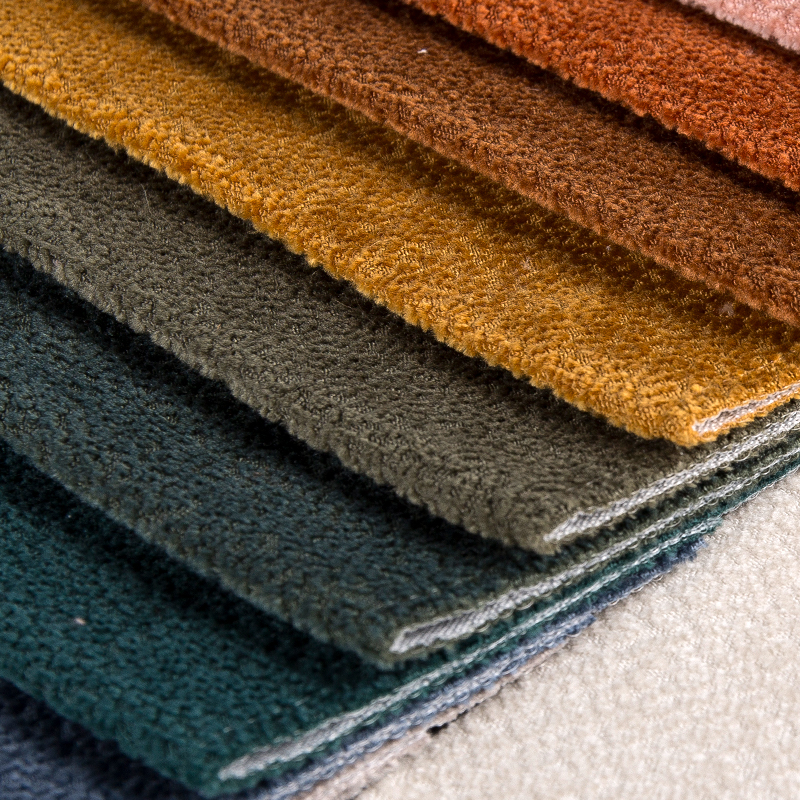
Warp knit upholstery fabric addresses all three of these requirements through its knitting structure rather than through chemical treatments or finishing layers that degrade with use. Understanding why requires a closer look at what the warp knitting process actually produces — and where other fabric types fall short.
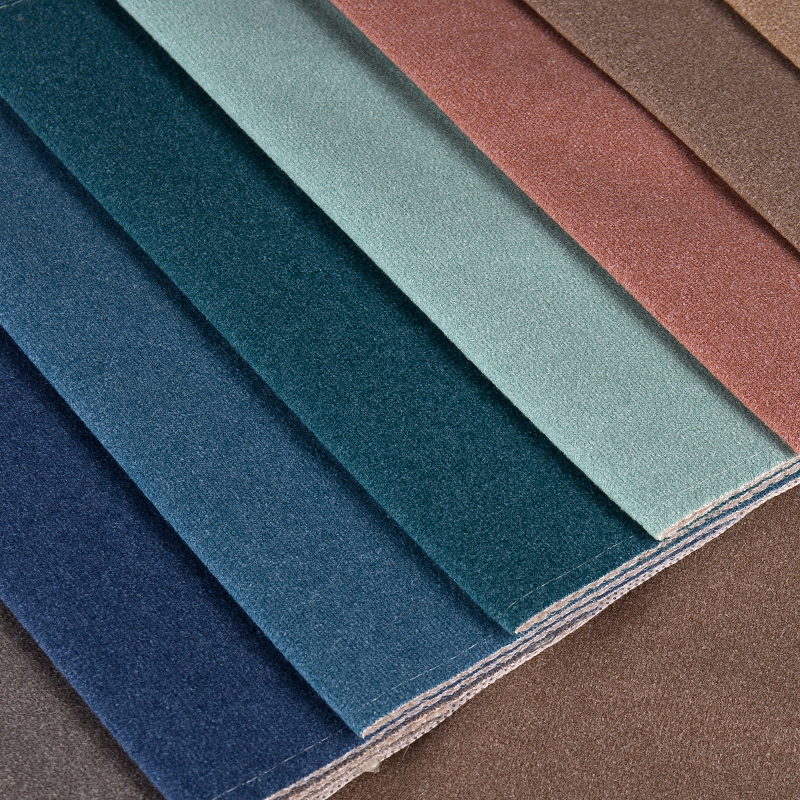
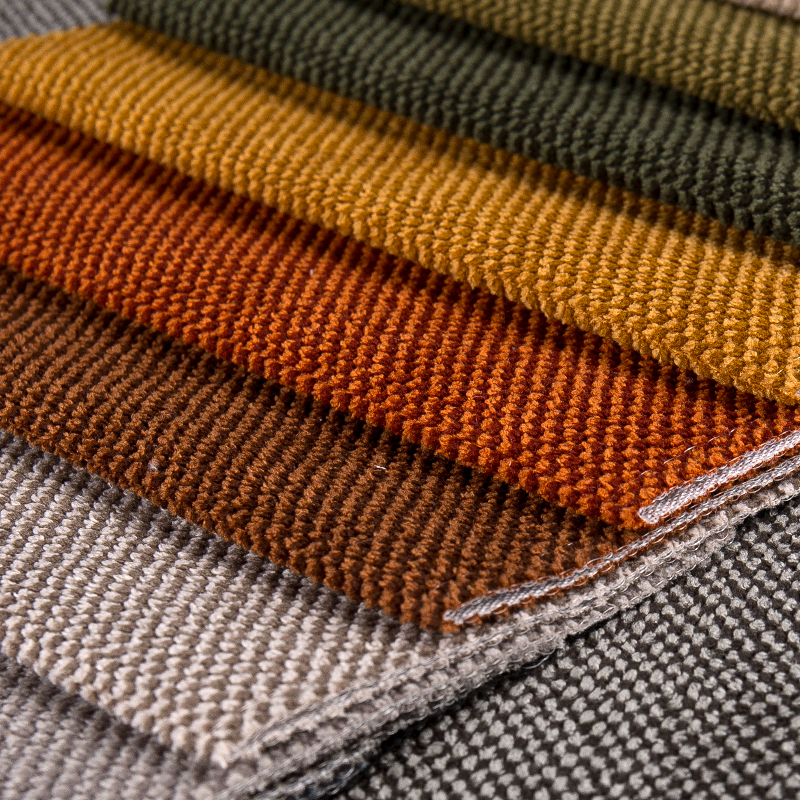
In warp knitting, one or more groups of parallel-arranged yarns are fed simultaneously onto all working needles of the machine and looped together in a single operation. Every yarn runs in the longitudinal direction — along the length of the fabric — and the interlocking of these parallel yarn systems creates a structure that resists elongation in that direction under sustained load.
This is what is meant by longitudinal dimensional stability: the fabric does not stretch out along its length when placed under the kind of tension that sofa upholstery routinely experiences. When a cover is pulled over a seat frame and held at the base, or when a cushion cover is filled and closed, the fabric is under longitudinal tension. A fabric that gives under that tension will gradually lose its fit — creating the bagging and sagging that makes furniture look worn long before it actually is.
Warp knit fabrics resist this because the parallel yarn alignment in the warp direction creates an inherently stable load path. The structure does not rely on friction between crossing yarns, as woven fabrics do, or on the elasticity of looped courses, as weft-knit fabrics do. The stability is built into the knitting geometry itself.
For furniture manufacturers and upholstery workshops, this translates into covers that maintain their fit across the service life of the piece — not just in the first season. Polyester warp knit flat sofa fabric produced on precision warp knitting machines holds its longitudinal dimensions even after years of use, preserving the clean lines and tailored appearance that the original design intended.
Edge curling is one of the most frustrating properties a fabric can have in a production environment. Cut a panel of fabric that curls at its edges and you immediately have a handling problem: the panels shift during sewing, seam allowances become inconsistent, and the finished cover may pucker or pull at the seams once fitted to the furniture.
Many knitted fabrics curl because of the way their loop structure stores internal stress. When the fabric is cut, the loops at the edge are no longer constrained by neighbouring courses or wales, and the stored stress causes the edge to roll inward or outward. This is particularly common in weft-knit fabrics and in lighter-weight knit constructions where the loop tension is high relative to the yarn stiffness.
Warp knit flat sofa fabric does not curl at cut edges. The reason lies in the same parallel yarn structure that provides longitudinal stability: because the yarns run continuously in the warp direction and are interlocked at every course, cutting across the fabric does not release significant stored stress in the remaining structure. The edge stays flat, which means panels can be stacked, handled, and sewn without the additional steps — stay-stitching, edge-taping, or immediate serging — that curling fabrics require.
For upholstery manufacturers producing at volume, this is not a minor convenience. It directly affects cutting accuracy, sewing speed, and the quality consistency of finished pieces. A fabric that behaves predictably at the cutting stage reduces waste, reduces rework, and makes it easier to maintain tight production tolerances across large orders.
It also affects the finished product. Seams in non-curling fabric lie flat and stay flat. There is no tendency for the fabric to pull at stitch lines or create visible ridges at panel joins — details that matter in the premium furniture segment where buyers examine construction quality closely.
Breathability has become a widely used term in fabric marketing, applied to products ranging from athletic wear to car seats. In the context of sofa upholstery, it has a specific and practical meaning: the ability of the fabric to allow air to circulate through and across its surface, preventing the buildup of heat and moisture that makes extended sitting uncomfortable.
The breathability of warp knit flat sofa fabric is a direct consequence of its open loop structure. Unlike woven fabrics, where warp and weft yarns cross over and under each other to form a relatively dense interlacement, warp knit structures create an interconnected network of loops with defined spaces between them. These spaces are not random gaps — they are consistent and controlled features of the knitting geometry, and they remain open under the compression and tension of normal upholstery use.
The practical result is that body heat and moisture are not trapped at the fabric surface. Air moves through the fabric rather than being held against the skin, which maintains comfort across extended periods of sitting — particularly relevant in warmer climates or in living rooms without air conditioning. Polyester knitted sofa fabrics with this open structure maintain their breathability throughout the fabric's service life because the property is structural, not dependent on a finish or coating that can wear away.
Compare this to the two most common alternatives. Genuine leather and bonded leather are essentially non-breathable: they form a continuous surface that traps heat and moisture completely, which is why leather sofas can feel cold in winter and sticky in summer. Microfiber fabrics are denser and more tightly constructed than warp knits, offering less air passage through the fabric surface. For buyers in climates where thermal comfort is a priority, or for brands positioning their furniture in the comfort segment, warp knit upholstery fabric's structural breathability is a genuine differentiator.
The performance differences between upholstery fabric types become clear when evaluated against the specific demands of sofa use. The table below compares warp knit flat fabric against the most common alternatives across the properties that matter most in furniture applications.
| Property | Warp Knit Flat Fabric | Woven Polyester | Velvet / Chenille | Leather / Bonded Leather | Microfiber |
|---|---|---|---|---|---|
| Longitudinal Dimensional Stability | Excellent | Good | Moderate | Excellent | Good |
| Edge Curling on Cut | None | None | Low to Moderate | N/A | Low |
| Breathability | Good | Moderate | Moderate | Poor | Low to Moderate |
| Pilling Resistance | Good | Good | Moderate | Excellent | Good |
| Ease of Sewing / Production | Excellent | Good | Moderate | Requires specialist equipment | Good |
| Maintenance | Easy | Easy | Moderate | Regular conditioning needed | Easy |
| Cost per Metre (relative) | Moderate | Moderate | Moderate to High | High | Moderate |
Warp knit flat fabric leads across the three properties most critical to long-term upholstery performance — dimensional stability, edge integrity, and breathability — while remaining competitive on cost and significantly easier to work with in production than velvet or leather. For furniture manufacturers targeting the mid-to-premium segment, this combination of performance and processability is difficult to match with alternative constructions.
Not all warp knit upholstery fabric performs equally. The properties described above — longitudinal stability, no-curl edges, structural breathability — depend on specific decisions made during yarn selection, machine setup, and finishing. Buyers sourcing at volume should evaluate suppliers against several concrete criteria.
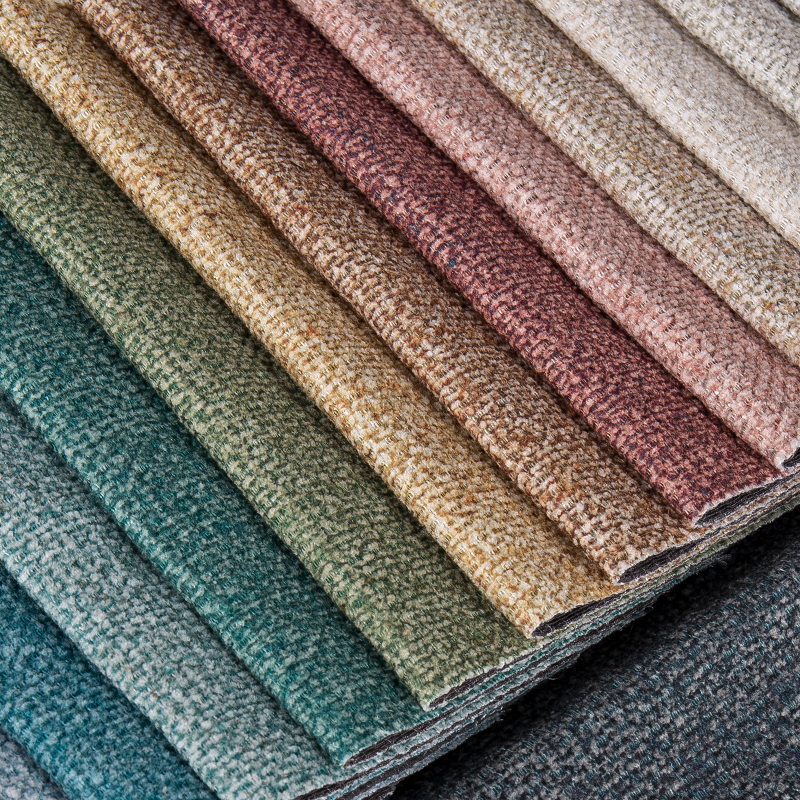
Tongxiang Climbing Textile has specialised in sofa fabric development and production since 2018, with a product range covering warp knit flat fabrics, chenille, velvet, embossed, and printed upholstery textiles. As an OEM and ODM supplier focused on the European market, the company operates under stringent quality control standards and can support custom fabric development from specification through production. Explore the full range of polyester sofa upholstery fabrics or contact the team directly to discuss sourcing requirements.
Related Products

Contact us
Address
Hangfu Road 106#, Chongfu Town, Tongxiang City, Zhejiang, China
Phone
+86-15067379939
linachen@climbingtex.com / zac@climbingtex.com
lianniu@climbingtex.com
Fax/Tel
+86-573-88385698
products
QR CODE
 Home Textile Manufacturers
Sofa Fabric Factory
Home Textile Manufacturers
Sofa Fabric Factory
 English
 Español
 عربى
عربى