May 20, 2026
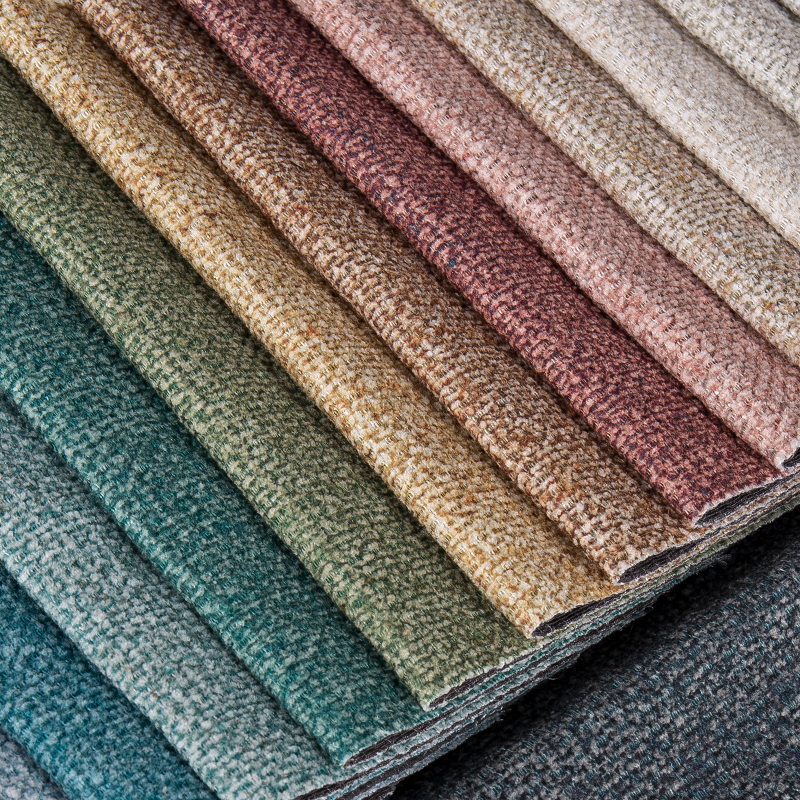
There is a reason soft chenille fabric keeps appearing on sofas in living rooms, hotel lobbies, and furniture showrooms around the world. It is not just about how it looks — it is about what happens the moment you sit down. The pile sinks slightly under pressure, rebounds when you shift position, and never feels cold or stiff against skin. That combination of tactile warmth, visual depth, and day-to-day durability is what makes chenille sofa fabric one of the most consistently chosen upholstery materials across both residential and commercial interiors.
This guide explains where that softness actually comes from, how chenille compares to competing sofa fabrics, what the main texture varieties offer, and how to select and maintain a chenille sofa fabric that will perform over years of regular use.
Content
The softness of chenille is not a finishing treatment applied to the surface — it is built into the yarn construction itself. Chenille yarn is made by twisting short lengths of fiber (called pile fibers) perpendicularly around two core yarns, locking them in place so they radiate outward in all directions. When this yarn is woven into fabric, the projecting pile fibers create a raised, three-dimensional surface that compresses softly under touch and springs back when pressure is released.
The density of that pile — how many fibers per centimeter of yarn, and how tightly the yarn is woven — determines the degree of softness and plushness in the finished fabric. Higher pile density produces a richer, more cushioned hand feel. This is why quality soft chenille sofa fabric feels noticeably different from entry-level versions: the difference is in the pile count and yarn weight per square meter, not in any coating or treatment.
For polyester chenille — the dominant material in upholstery applications today — the fiber itself contributes a smooth, slightly silky surface quality. Polyester pile fibers have lower friction coefficients than cotton or acrylic fibers, which means the surface registers as softer to the fingertip even at the same pile density. This is why polyester chenille sofa fabric has largely replaced cotton chenille in commercial upholstery: it achieves equivalent or superior softness at higher durability and lower maintenance cost.
Choosing a sofa fabric means comparing how different materials perform across the same set of daily demands: comfort, durability, visual appeal, and ease of maintenance. Chenille holds a specific position in this landscape that is worth understanding clearly.
| Fabric | Softness | Durability (double rubs) | Visual Depth | Maintenance |
|---|---|---|---|---|
| Soft Chenille | High — raised pile, plush hand feel | 15,000–30,000+ | High — pile creates light-and-shadow texture | Moderate — vacuum regularly, spot clean |
| Velvet | Very high — dense, smooth pile | 10,000–25,000 | Very high — directional sheen | Higher — shows crushing, needs brushing |
| Linen | Medium — smooth but can feel stiff | 20,000–40,000 | Low-medium — natural texture, matte | Low — easy to clean, washes well |
| Cotton | Medium — breathable, natural feel | 10,000–20,000 | Low — flat surface, limited depth | Low — machine washable in many cases |
| Microfiber | Medium-high — tight weave, smooth | 30,000–50,000+ | Low — uniform, little visual interest | Very low — highly stain resistant |
The table illustrates where chenille's value proposition sits: it delivers higher tactile softness than linen, cotton, or microfiber, with more visual texture and warmth than any of them, at durability ratings that are entirely appropriate for household sofa use. Velvet is the only common fabric that rivals chenille on softness, but it requires more careful maintenance and shows directional crushing more visibly. For households that want a fabric that looks and feels elevated without demanding high-maintenance care, chenille sofa fabric occupies an unusually strong position.
Surface softness and sitting comfort are related but not identical. A fabric can feel soft to the fingertip but register as warm and clammy after thirty minutes of contact, or feel slightly rough once it has been washed a few times. Understanding how chenille's softness performs in extended daily use is more useful than a simple material ranking.
The raised pile of chenille creates a surface with micro air pockets between the fiber tips and the woven base. These pockets provide a degree of thermal insulation — the fabric does not feel cold on first contact the way leather or tightly woven synthetics do — while still allowing some air movement through the pile. The result is a surface that feels comfortable both in summer and winter without the temperature extremes of leather upholstery.
The pile also acts as a secondary cushioning layer over the sofa's structural padding. When you sit on a chenille sofa, the pile compresses fractionally before the underlying cushion takes the load, creating a sensation of greater softness than the cushion alone would provide. This is particularly noticeable with cashmere-look chenille sofa fabric, where longer, denser pile amplifies this cushioning effect and creates a distinctly luxurious seating sensation.
One practical softness concern worth noting: chenille pile can flatten in areas of concentrated use — typically the center seat cushion and armrests — over time. This is a normal characteristic of pile fabrics, not a defect. Regular rotation of cushions and occasional gentle brushing with a soft upholstery brush will maintain the pile's loft and keep the surface feeling as soft as it did when new.
Chenille sofa fabric is not a single texture — it is a broad family of woven structures that range from fine and smooth to chunky and tactile. The texture type affects both how the fabric feels under hand and how it reads visually in a room.
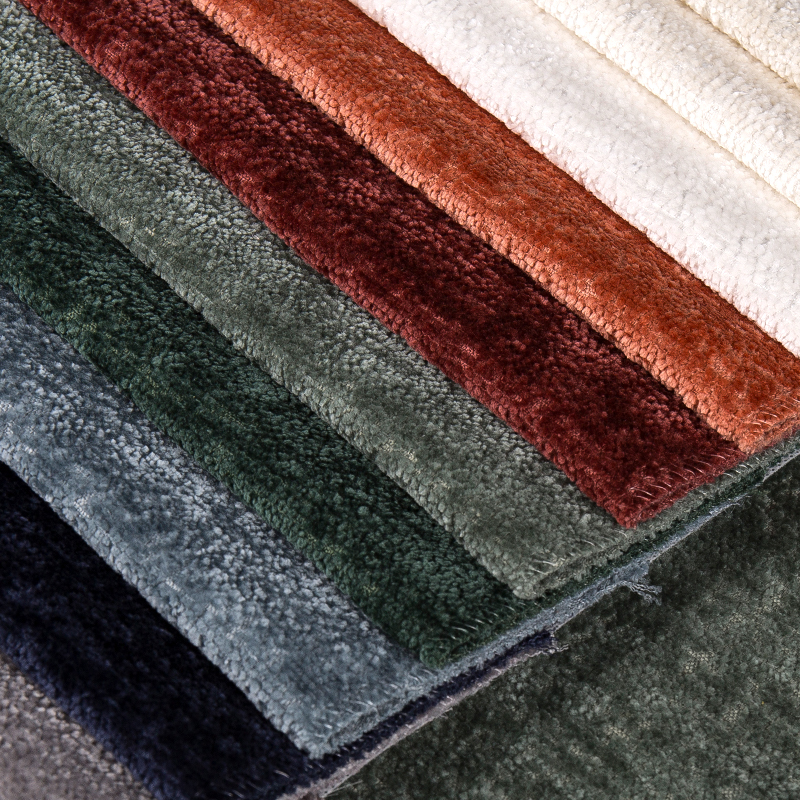
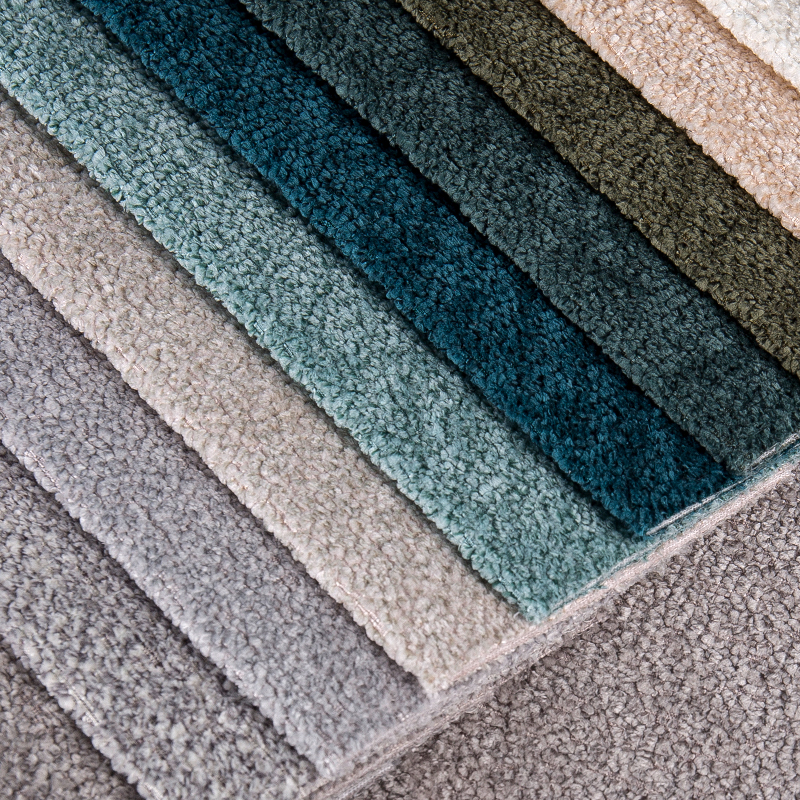
Smooth and Concise Chenille uses finely spun chenille yarn in a tight, regular weave to produce a clean, even surface with a gentle sheen. The pile is short and uniform, making the fabric feel smooth rather than fuzzy. This type suits contemporary and minimalist interior styles and is the most versatile across different sofa silhouettes. The soft chenille sofa fabric in this category delivers a refined, polished surface that photographs well and wears evenly across high-use areas.
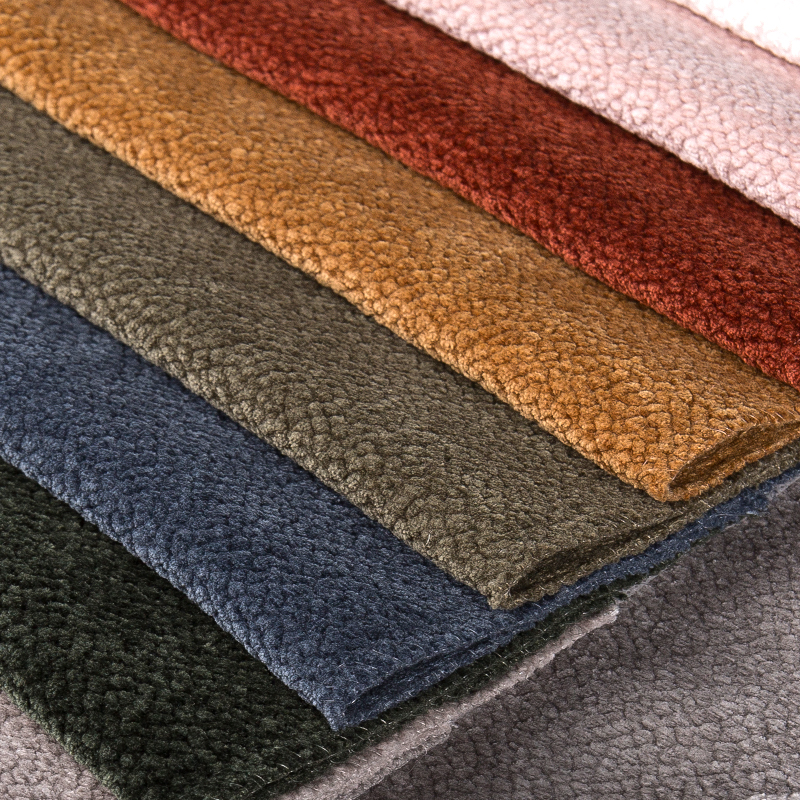
Grainy Chenille incorporates slight surface variation into the weave structure, creating a tactile grain that adds depth and informality without being overtly textured. The soft grainy chenille sofa fabric is particularly well suited to relaxed living room environments where a casual, inviting feel is the design priority.
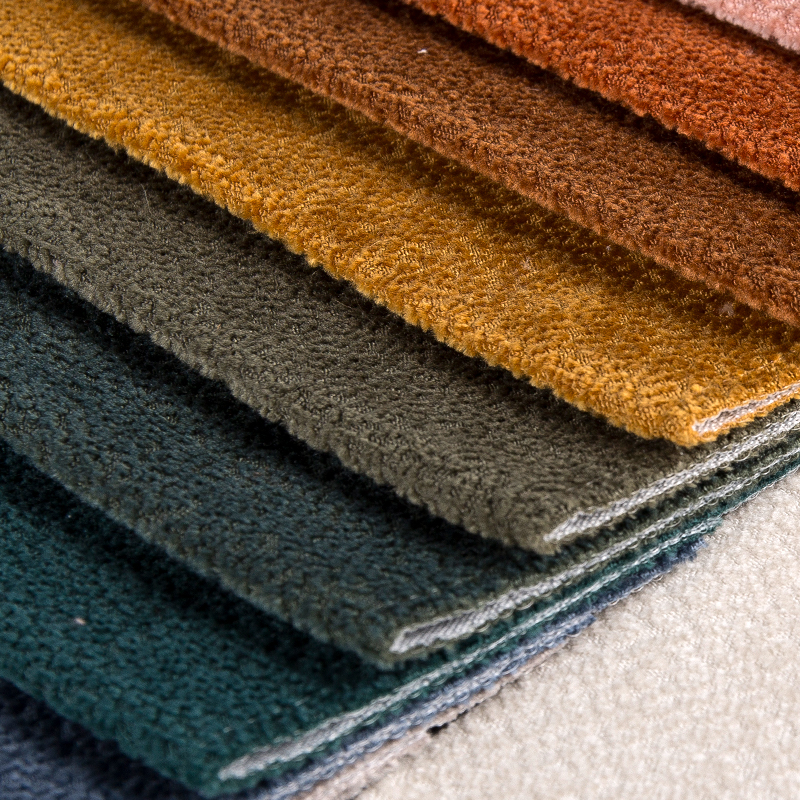
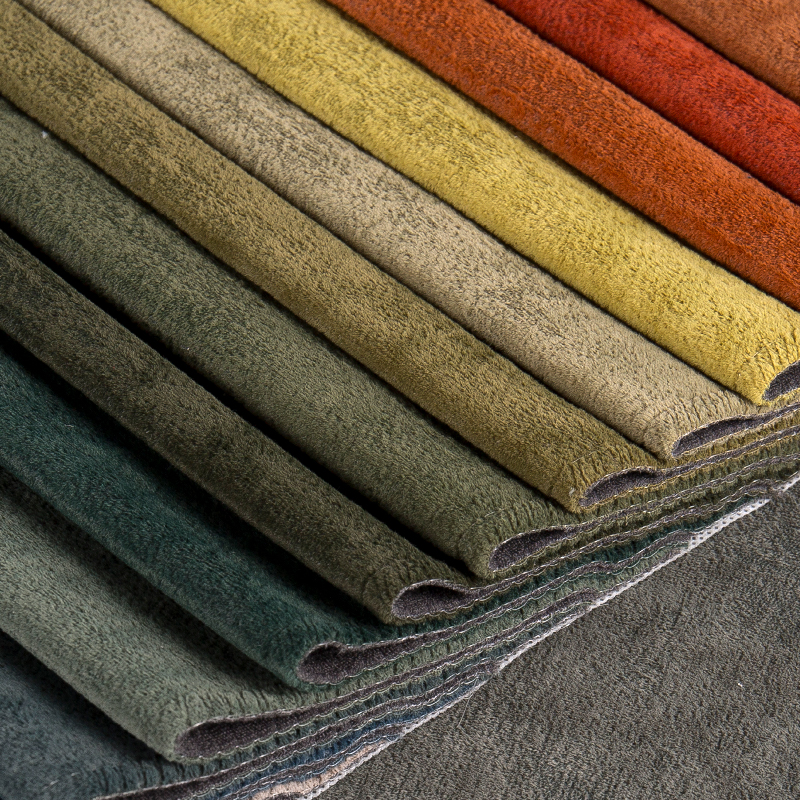
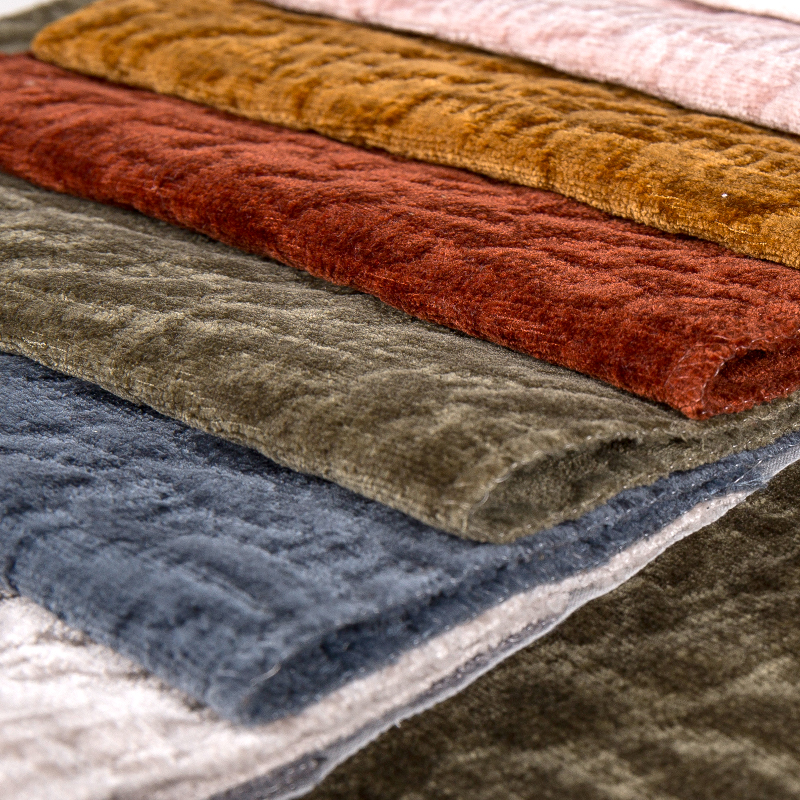
Cashmere-Look Chenille uses longer pile yarn to mimic the airy softness of cashmere wool. The pile sits higher off the base fabric, creating a cloud-like surface that is noticeably more plush than standard chenille. This is the softest-feeling variant in the chenille family and is typically chosen for premium residential sofas where comfort is the primary specification.
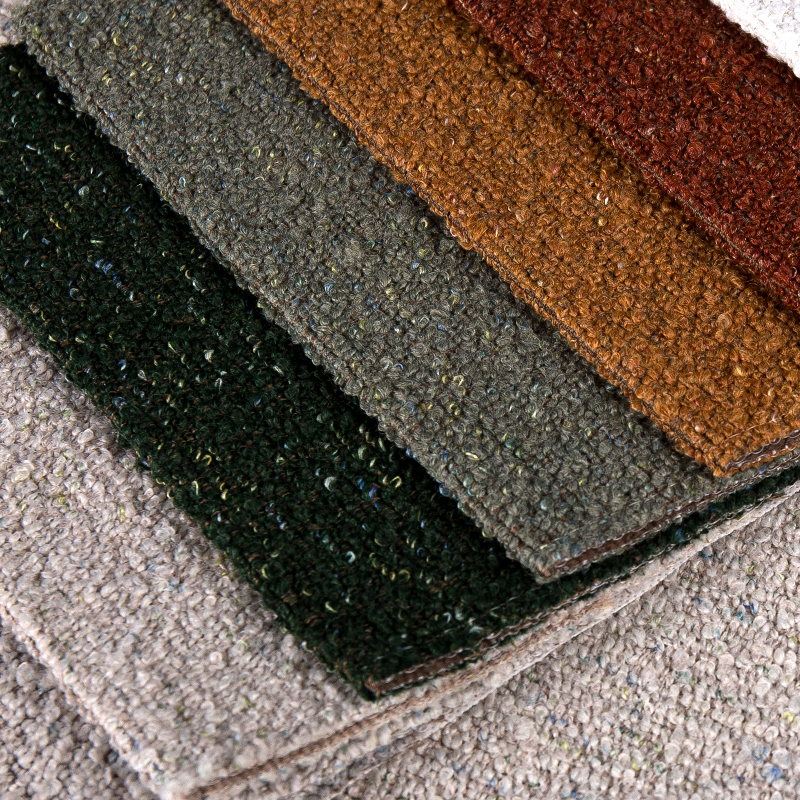
Small Boucle Chenille combines chenille pile yarn with looped boucle construction to produce a subtly irregular surface with organic visual interest. The loops create a three-dimensional texture that is fashionable in contemporary interiors and pairs well with natural material palettes — wood, stone, and matte metals.
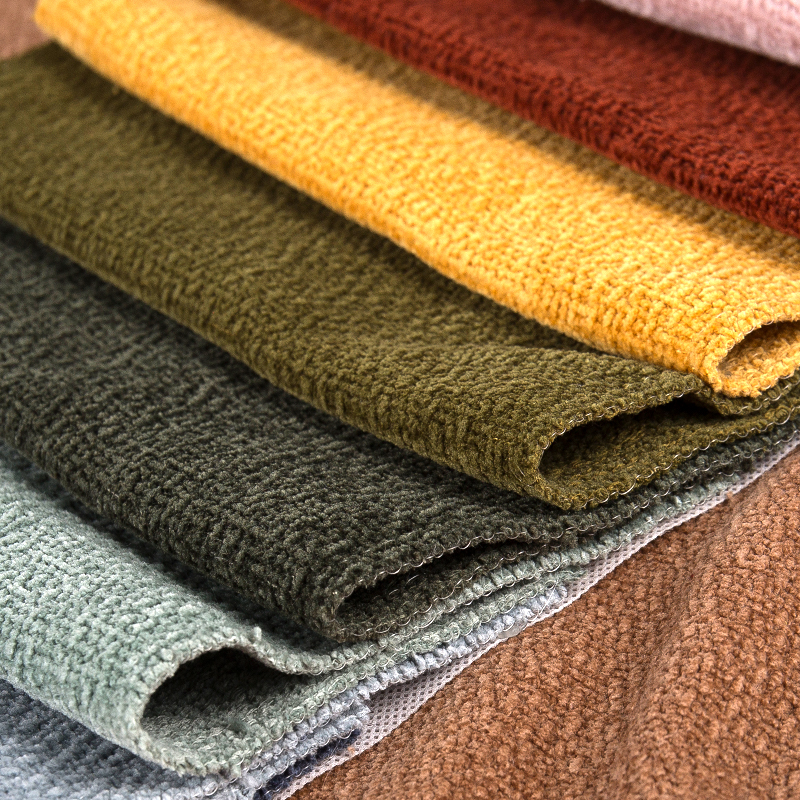
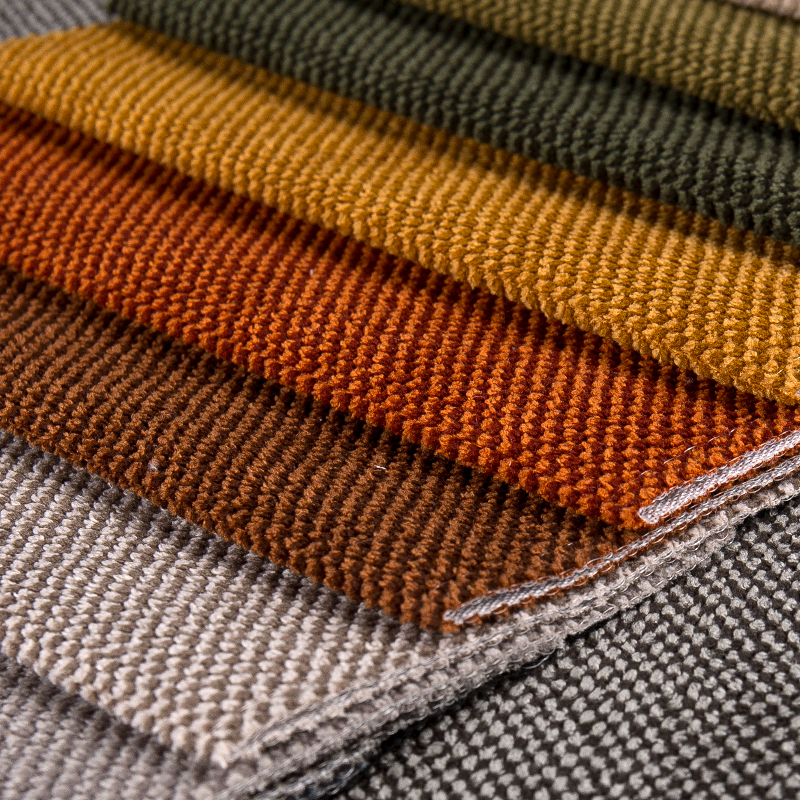
Linen-Look Chenille weaves chenille yarn in a structure that replicates the linear texture of linen while retaining the softness of polyester pile. This gives the fabric a natural, understated appearance that appeals to buyers who want the organic aesthetic of linen with the tactile comfort that linen itself cannot deliver.
Selecting a chenille sofa fabric involves matching the fabric's physical properties to the conditions it will face in use. The following parameters are the most important to evaluate:
Maintaining the softness and appearance of a chenille sofa fabric over time requires consistent but straightforward care. The pile structure that gives chenille its softness is also what makes it susceptible to certain types of wear if not properly maintained.
Regular vacuuming is the single most effective maintenance step. Use a soft brush attachment on low suction, moving in the direction of the pile, to remove dust and loose debris before it settles into the pile base. Vacuuming against the pile can loosen fibers and accelerate shedding in chenille fabrics that have not been fully set during manufacturing.
Spot cleaning should be done immediately when spills occur. Blot — do not rub — with a clean, dry cloth to absorb as much liquid as possible before it reaches the backing. For water-based stains, a mild upholstery cleaner diluted in water and applied with a soft cloth is sufficient for most chenille constructions. Always test any cleaning solution on a hidden area first, as some chenille fabrics with viscose content can water-spot if over-wetted.
Pile restoration after flattening in high-use areas can be done with a soft upholstery brush or a clean, soft-bristle clothes brush. Brush gently in multiple directions to loosen flattened fibers, then smooth in the pile's natural direction. Steam from a garment steamer held at distance (not direct contact) can help release stubborn pile compression without wetting the fabric.
Sunlight exposure fades all upholstery fabrics over time, but the dimensional pile structure of chenille can make color variation from uneven fading more visible than on flat-woven fabrics. Position chenille sofas away from direct window light or use UV-filtering window treatments to extend color life.
Related Products

Contact us
Address
Hangfu Road 106#, Chongfu Town, Tongxiang City, Zhejiang, China
Phone
+86-15067379939
linachen@climbingtex.com / zac@climbingtex.com
lianniu@climbingtex.com
Fax/Tel
+86-573-88385698
products
QR CODE
 Home Textile Manufacturers
Sofa Fabric Factory
Home Textile Manufacturers
Sofa Fabric Factory
 English
 Español
 عربى
عربى