Oct 13, 2026
A container of sofa covers gets rejected in month two because the pile has flattened on the seat cushions and the replacement panels no longer match the approved swatch. The hardwood frame is fine. The foam is fine. The fabric was bought on price and colour alone, with no abrasion, pilling or colourfastness figure written into the purchase order.
That is the most common way money disappears in furniture materials procurement, and it is avoidable. Frame materials and covering materials fail for completely different reasons, on different timelines, and on a sofa the covering is almost always the first thing to go.
The short version: before you compare a single quotation, fix three numbers — Martindale abrasion in rubs, pilling grade after 5,000 rubs, and colourfastness to light and to rubbing. Choose the material family next. Colour, hand feel and price per metre stay negotiable; those three numbers do not.
Content
Frame materials — solid wood, plywood, steel, aluminium, rattan, glass, bamboo — set structural life, load capacity and repairability. Cover materials — woven polyester, knitted polyester, leather, microfibre — set cleaning, comfort, appearance retention and how quickly the sofa starts looking tired. Mixing the two up is expensive: a sofa with a beech frame and a 15,000-rub cover looks older at year three than a cheaper sofa with a plywood frame and a 40,000-rub cover.
The practical consequence is simple: frames usually outlive covers, so the cover sets the replacement date of the sofa. Leather and woven fabric sit at the top of the cover list for different reasons, and the choice has less to do with prestige than with how the sofa will be cleaned and how many people will sit on it daily — the trade-off is set out in this comparison of fabric versus leather upholstery.
On a typical three-seat sofa the cover is roughly 20 to 30 percent of material cost, yet it produces the majority of visible complaints in the first three years. Every one of those complaints maps back to something that should have been specified:
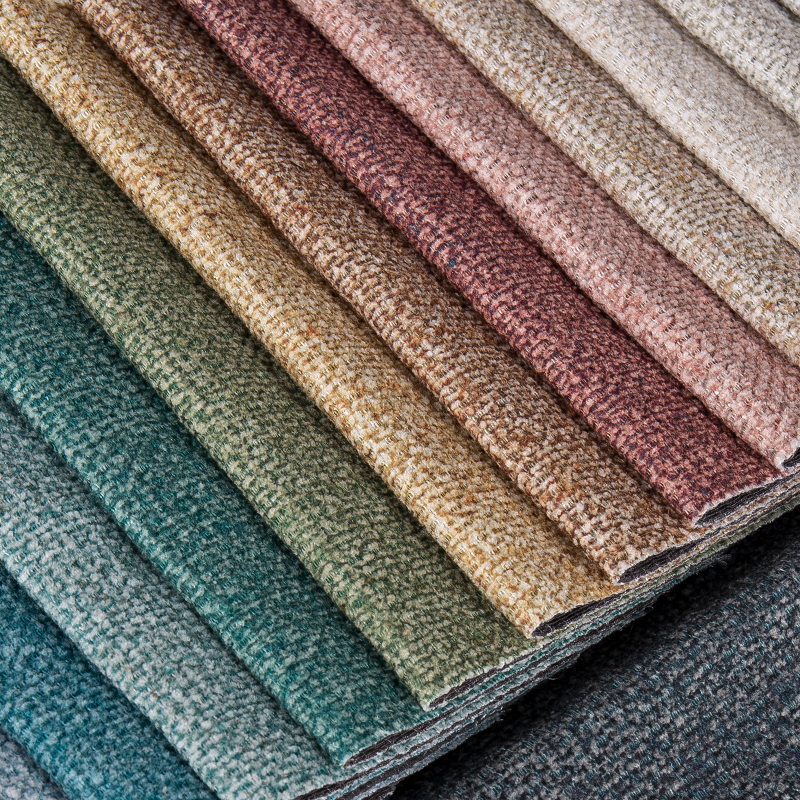
Most polyester sofa fabric on the market falls into seven constructions. The name describes the process, not the quality — quality comes from the numbers behind the name.
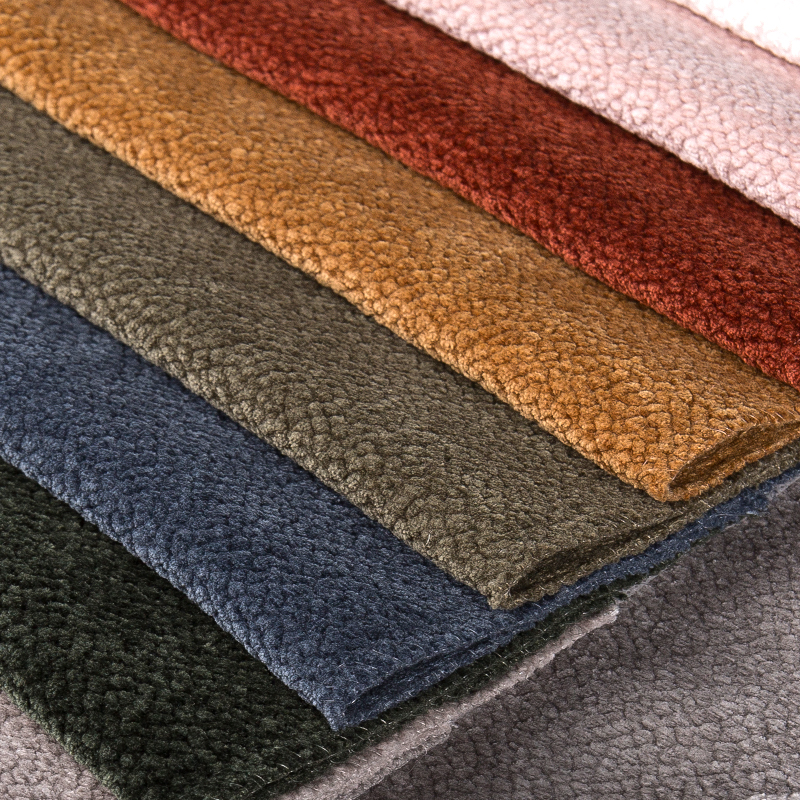
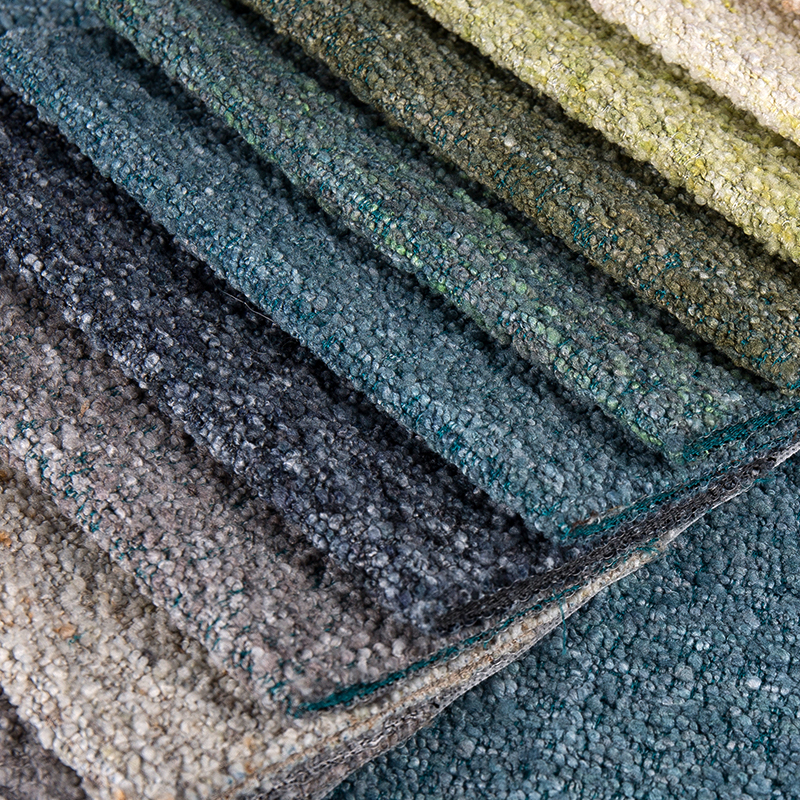
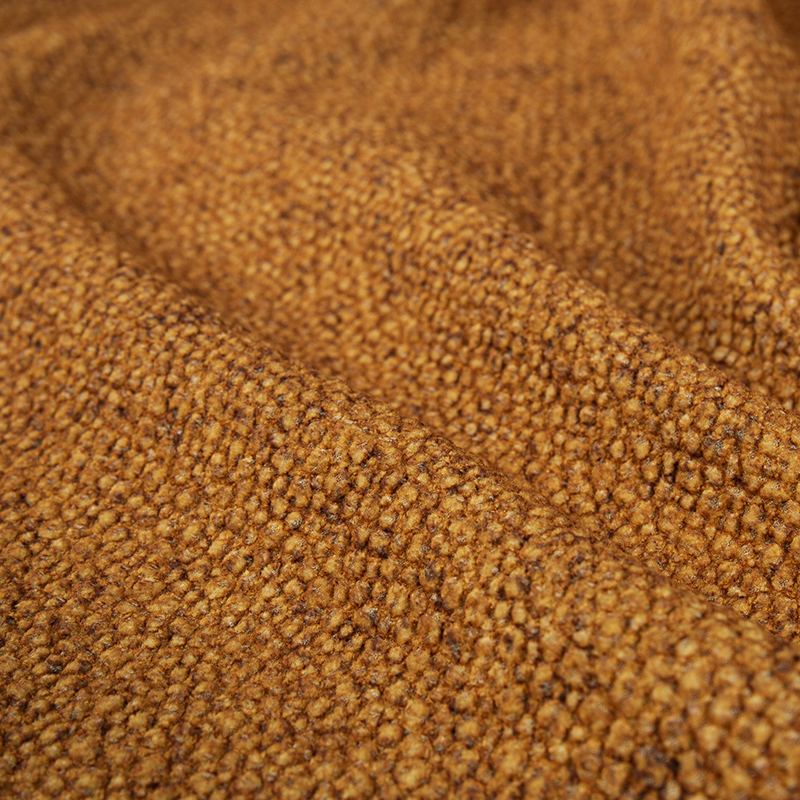
Soft, cashmere-look and linen-look variants at roughly 350 to 500 g/m². Deep hand feel and excellent at hiding weave irregularity. For seat panels, pile density and yarn twist matter more than total weight.
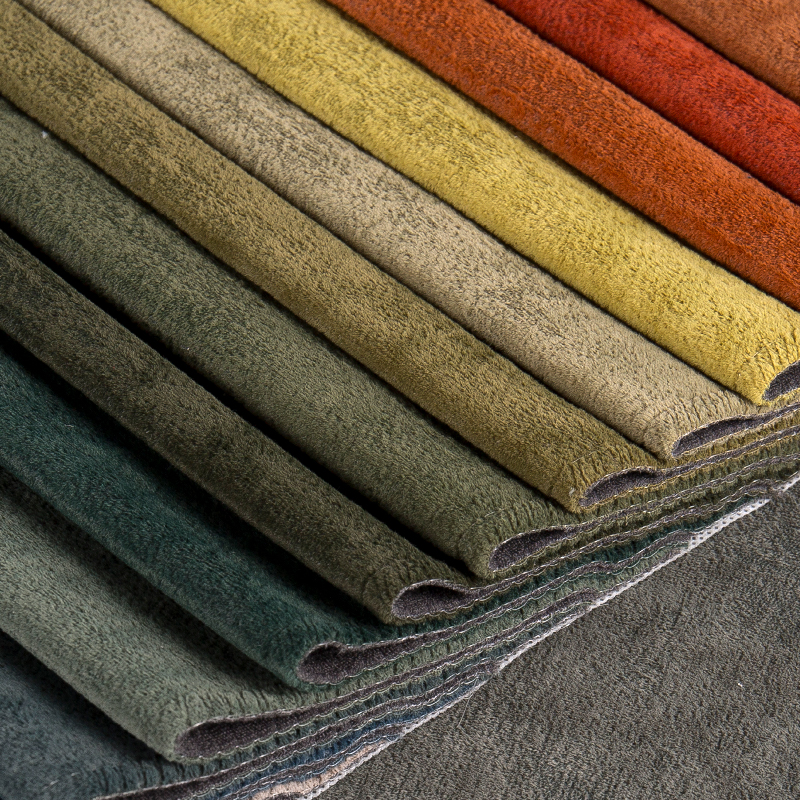
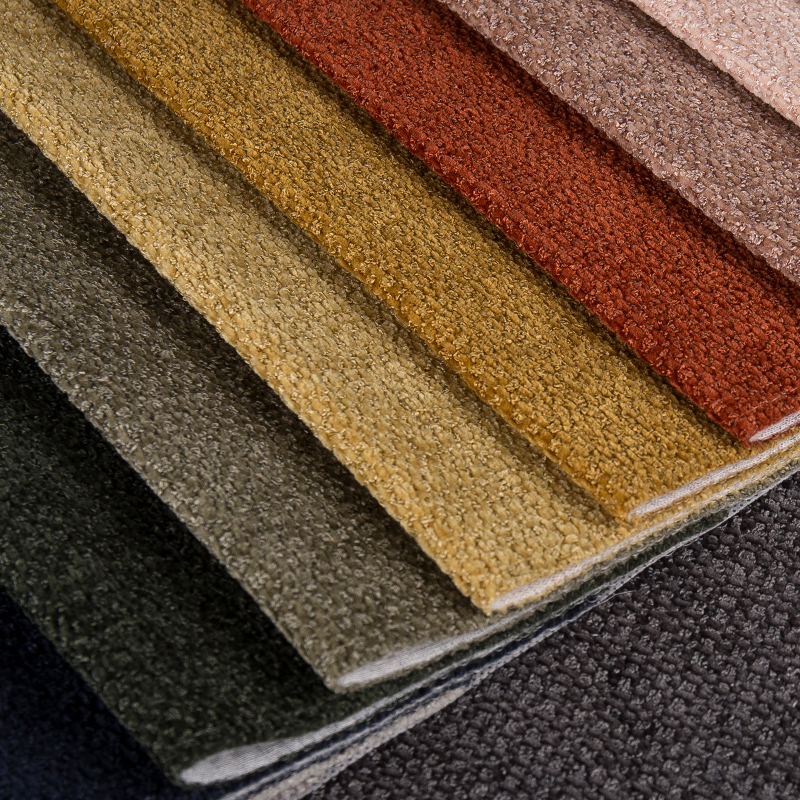
Short cut pile that reflects light differently depending on direction, so all panels must be cut in the same direction or the sofa looks patchy. Strong on backs and arms; crush marks appear early in corridors and concourse seating.
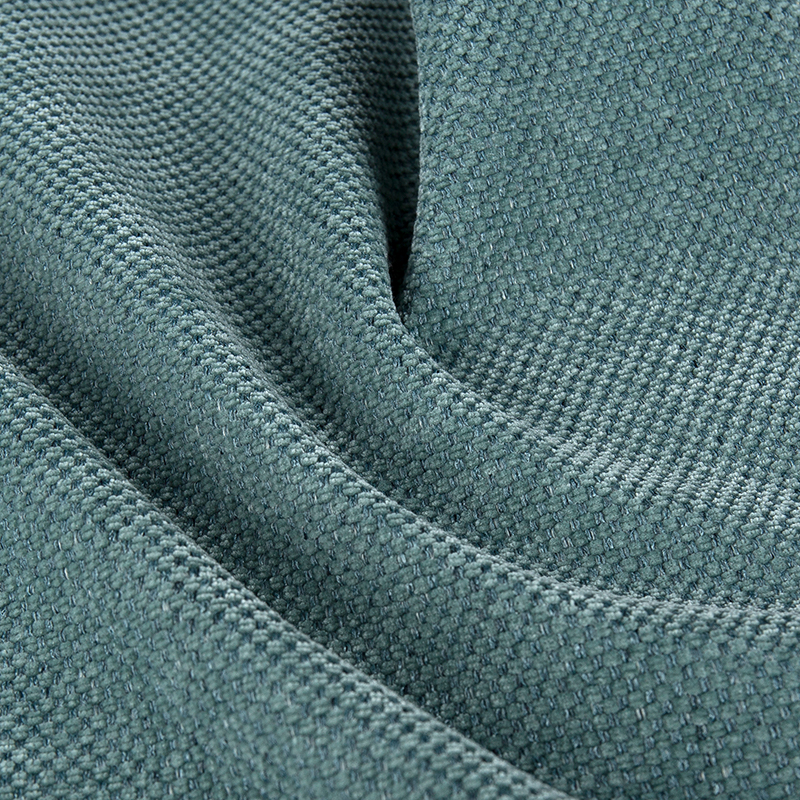
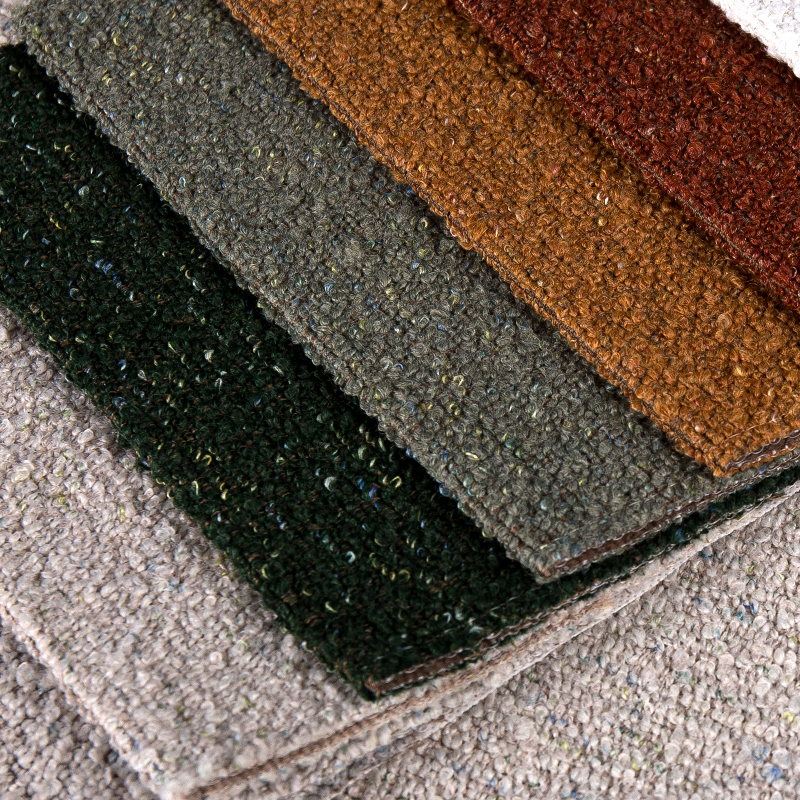
Colour is dyed into the yarn before weaving, so pattern depth and light fastness beat piece-dyed printing. Expect higher minimum order quantities and longer lead times, in exchange for more stable shade control across large projects.
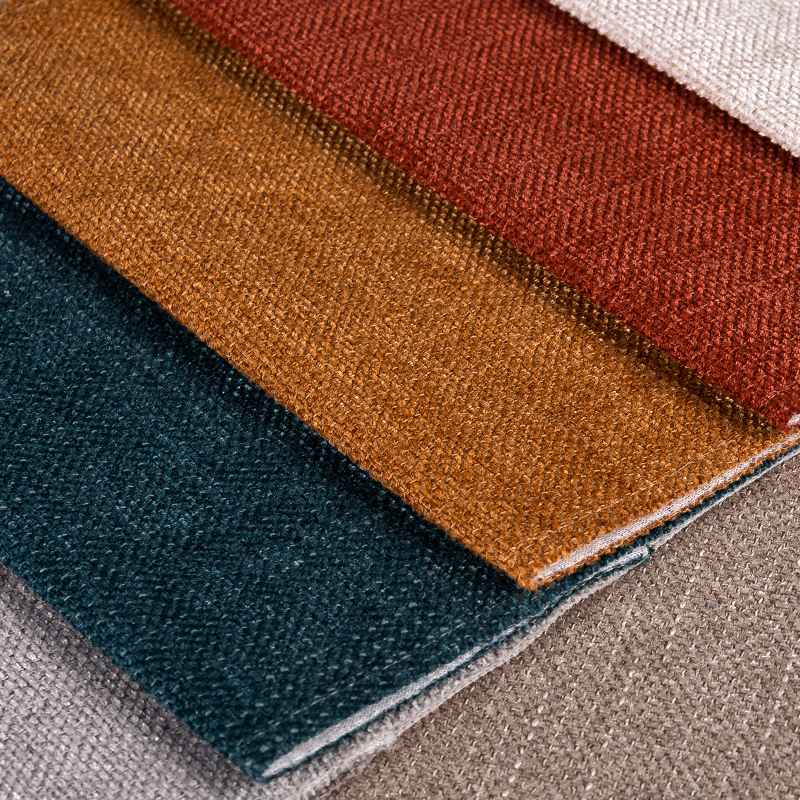
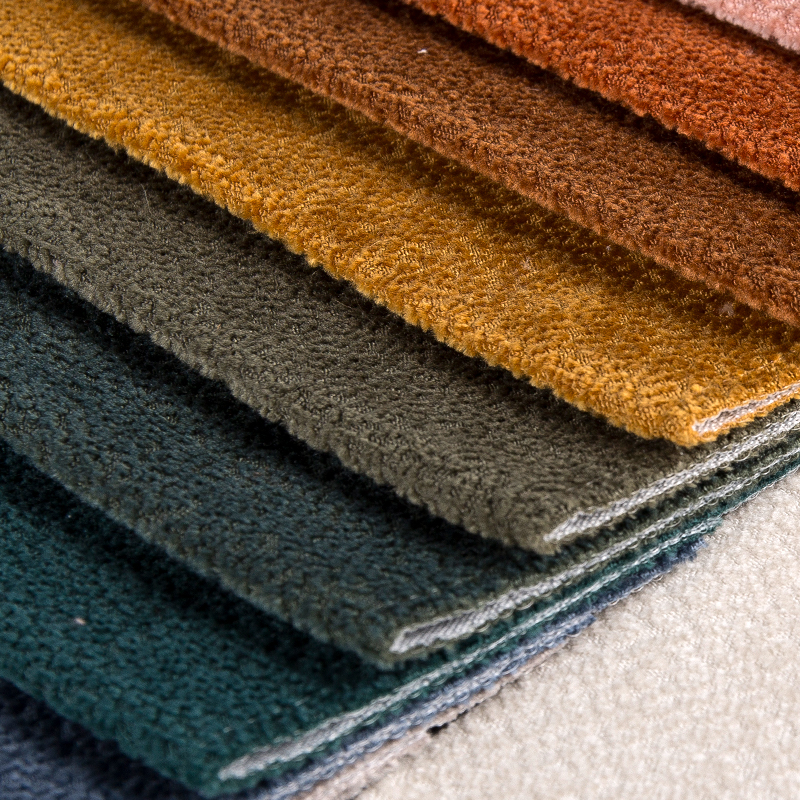
Two-tone velvet, jacquard-look and towel-look knits with mechanical stretch and recovery, which lets a tight curved shell be covered without wrinkling at the seams. Often the lowest-risk choice for shaped cushions.
Foil transfer over velvet gives a metallic sheen. Test the foil layer separately for abrasion and for stretch, because gloss loss usually shows up before pile loss.
Heat embossing creates texture without adding yarn, which lowers weight and cost. Confirm that the embossed pattern survives frame-stage heat setting and does not flatten on the seat.
 Soft Chenille Sofa Fabric, 140 cm, 440 gsmFor upholstery spec review, this classic chenille offers a comfortable hand in 140 cm width and 440 gsm, subject to stated ±3% tolerance.View Product →
Spec sheets are often written in marketing language: soft touch, durable, easy clean. None of that is measurable, and none of it lets a buyer reject a bad lot. Abrasion is the first figure to pin down, because it separates constructions far more than price does.
Typical Martindale abrasion results by polyester construction (thousands of rubs)
Abrasion is only one axis. A complete order should also state pilling after 5,000 rubs (grade 3-4 minimum), colourfastness to light (grade 4 or better for window-facing pieces), colourfastness to rubbing (dry 4, wet 3-4), dimensional stability within plus or minus 3 percent, and flammability performance to EN 1021 or BS 5852 Crib 5 where contract use applies.
Polyester upholstery demand is not evenly spread across furniture categories, and each segment pushes a different requirement to the front of the spec.
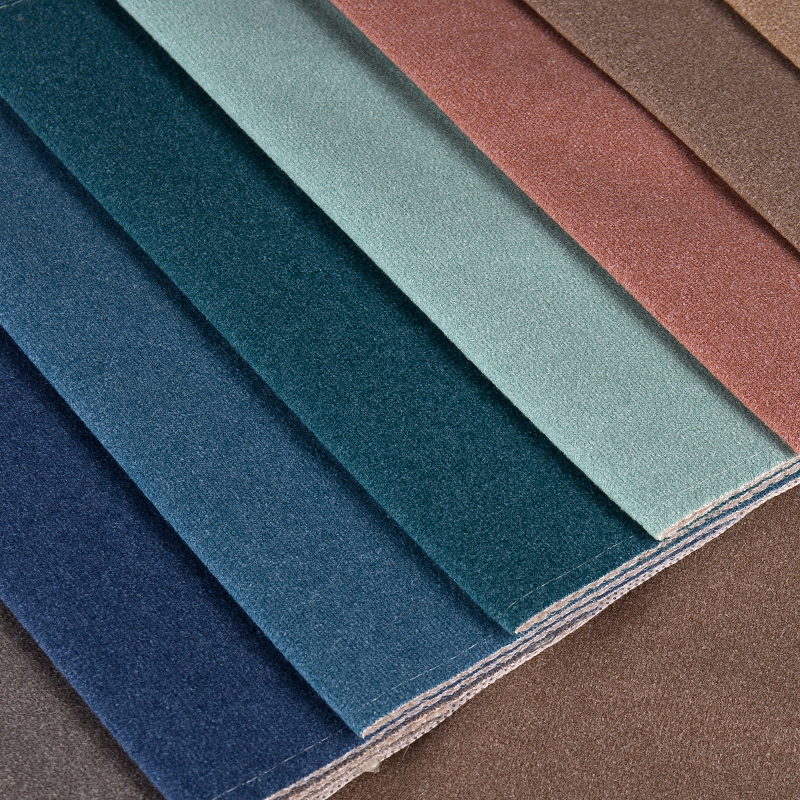 Two-Tone Velvet Short-Pile Sofa Fabric, 140 cmA two-color knitted velvet with short pile and easy-care hand, offered at 140 cm and 400 gsm for cost-conscious upholstery review.View Product →
Price per metre is the least useful number in upholstery sourcing until yield is known. A 140 cm usable width with a large pattern repeat and a 15 percent cut-and-sew waste rate can consume more metres than a 150 cm plain fabric at a higher unit price.
Step 1 — Set the performance envelope. Abrasion, pilling, colourfastness, flammability and cleaning code are agreed before a single sample is cut.
Step 2 — Match construction to panel. Seat, back, arm and skirt do not need the same rub count or the same g/m²; specifying one fabric for all four panels is where cost quietly climbs.
Step 3 — Lock the lot and the shade band. Approve a 1 to 2 Delta E tolerance, keep a retained sample per lot, and require the same pile direction on every panel.
Step 4 — Price the failure, not just the fabric. Work out the metre consumption per sofa including waste, then compare that against the cost of one warranty re-cover.
A worked example: a three-seat sofa using 7.5 running metres at 140 cm width, plus 15 percent waste, needs about 8.6 metres. A fabric at 6.50 euro per metre costs around 56 euro per unit; a cheaper short-spec fabric at 5.20 euro costs about 45 euro. One warranty re-cover — fabric, labour, transport and administration — typically lands between 180 and 260 euro, so a single avoided claim pays back the difference across 15 to 20 sofas, before counting the retail damage of a returned sofa.
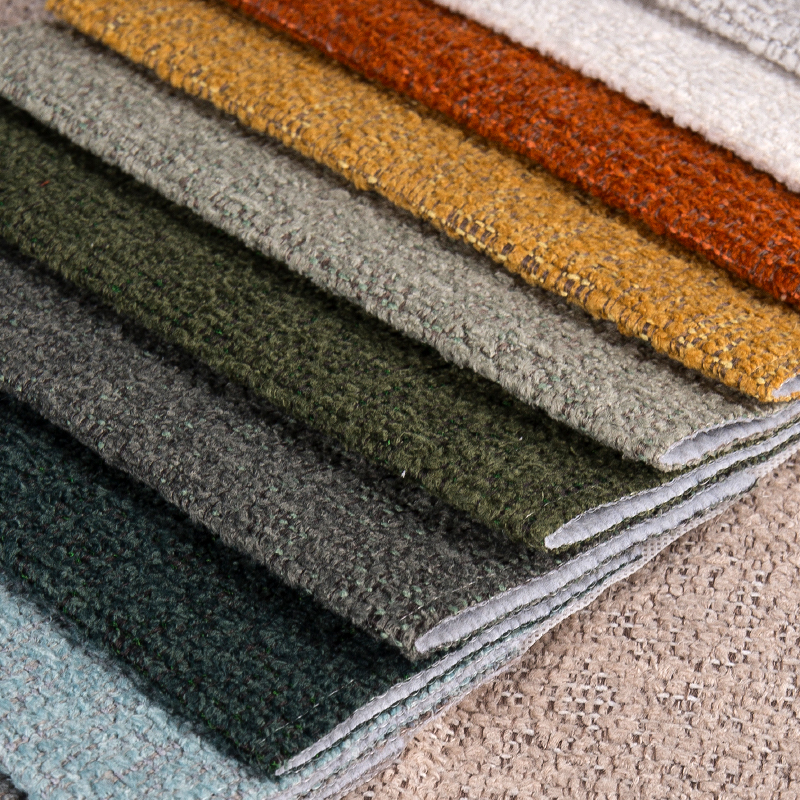
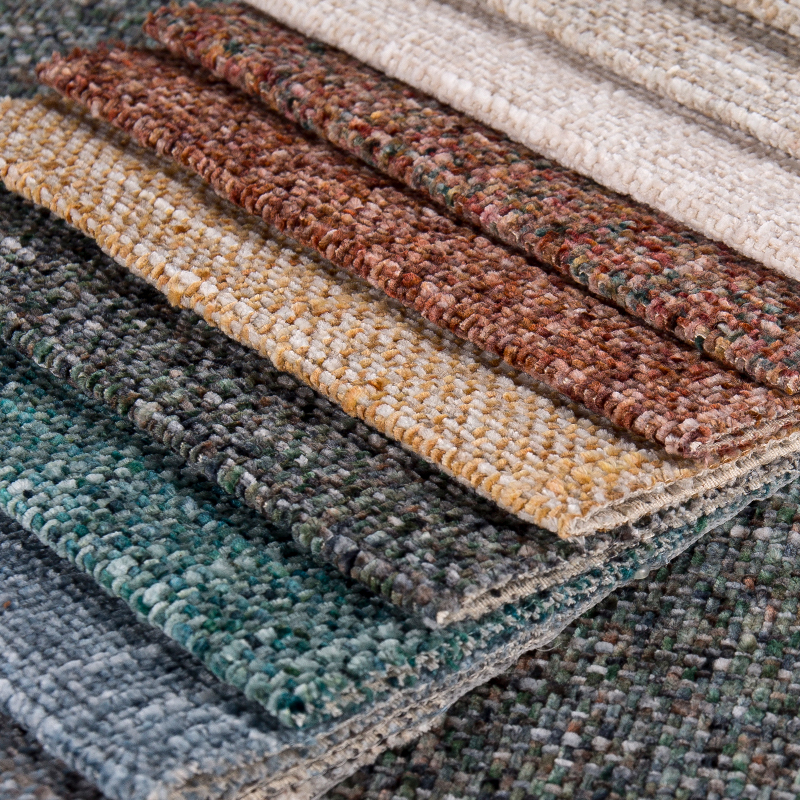 Yarn-Dyed Polychrome Chenille Sofa Fabric, 140 cmA multi-color yarn-dyed chenille at 140 cm and 430 gsm, suited to sofa upholstery where appearance retention and care labeling matter.View Product →
Appearance retention is decided at the point of sale as much as in production, because the care instruction printed on the label has to match the finish that was actually applied.
Repellency treatments deserve their own conversation during selection, because the choice of chemistry affects the cleaning code, the hand feel and the durability of the finish — the options and their limits are set out in this guide to stain-resistant and water-repellent sofa fabric treatments.
Furniture materials are a supply-chain decision before they are a styling one. The frame decides whether the sofa can be re-covered at all; the cover decides when that day arrives. Buyers who specify abrasion, pilling and colourfastness before they discuss colour end up with fewer claims, fewer returns and a shorter argument with their own production team.
Climbing Textile produces polyester sofa fabric for European furniture makers across chenille, cut velvet, yarn-dyed, warp-knit, bronzing, embossed and printed constructions, with lot-level traceability from incoming yarn through to the finished roll. If a specification needs a construction that does not exist yet, that is a development conversation rather than a catalogue search.
Related Products

Contact us
Address
Hangfu Road 106#, Chongfu Town, Tongxiang City, Zhejiang, China
Phone
+86-15067379939
linachen@climbingtex.com / zac@climbingtex.com
lianniu@climbingtex.com
Fax/Tel
+86-573-88385698
products
QR CODE
 Home Textile Manufacturers
Sofa Fabric Factory
Home Textile Manufacturers
Sofa Fabric Factory
 English
 Español
 عربى
عربى