Mar 11, 2026
Home textiles — the fabrics used across upholstery, bedding, curtains, cushions, throws, and floor coverings — are the largest single contributor to the tactile and visual character of a living space. Among the most widely specified home textile materials today, chenille sofa fabric and polyester knitted fabrics occupy complementary positions: chenille delivers the plush, velvety surface texture associated with premium upholstery and decorative soft furnishings, while polyester knits provide the stretch, durability, and cost efficiency that make them dominant in bedding, fitted covers, and performance home textiles. Understanding how each fabric is constructed, what differentiates quality grades within each category, and how they perform in real domestic use is the foundation of informed purchasing and specification decisions for homes, hospitality projects, and retail buyers alike.
Content
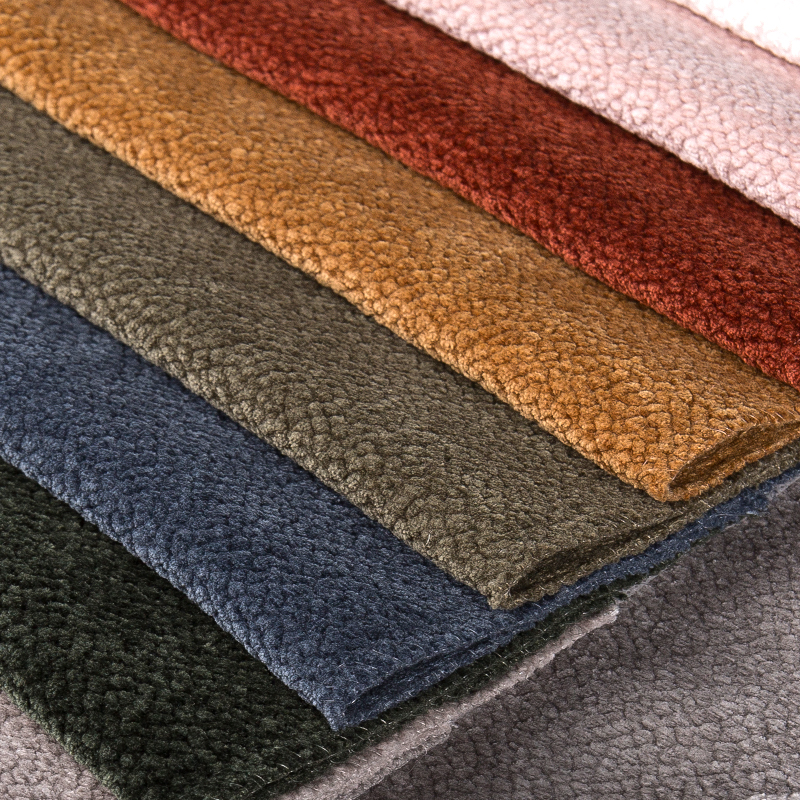
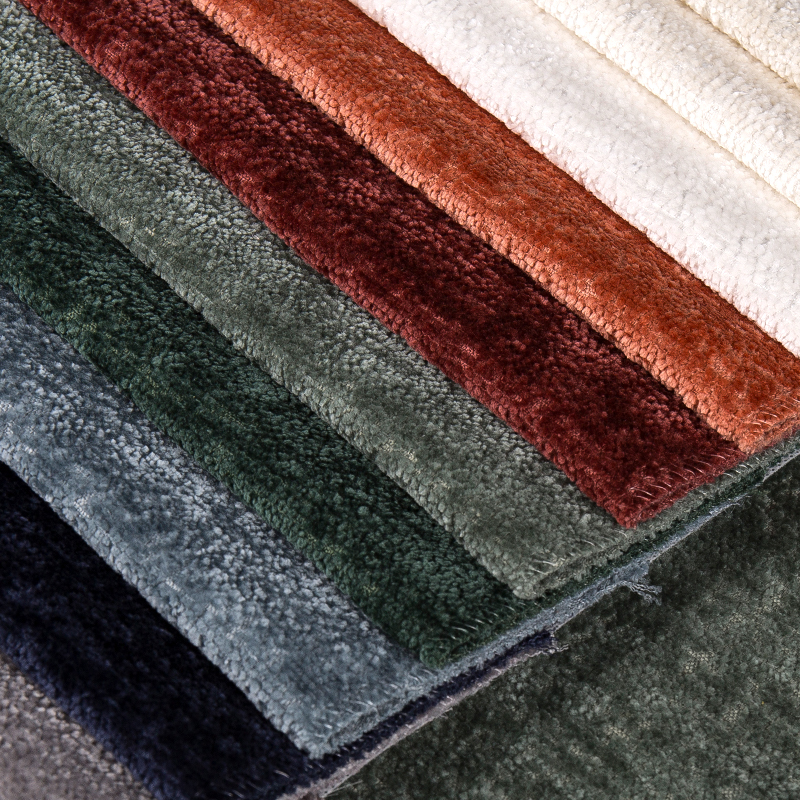
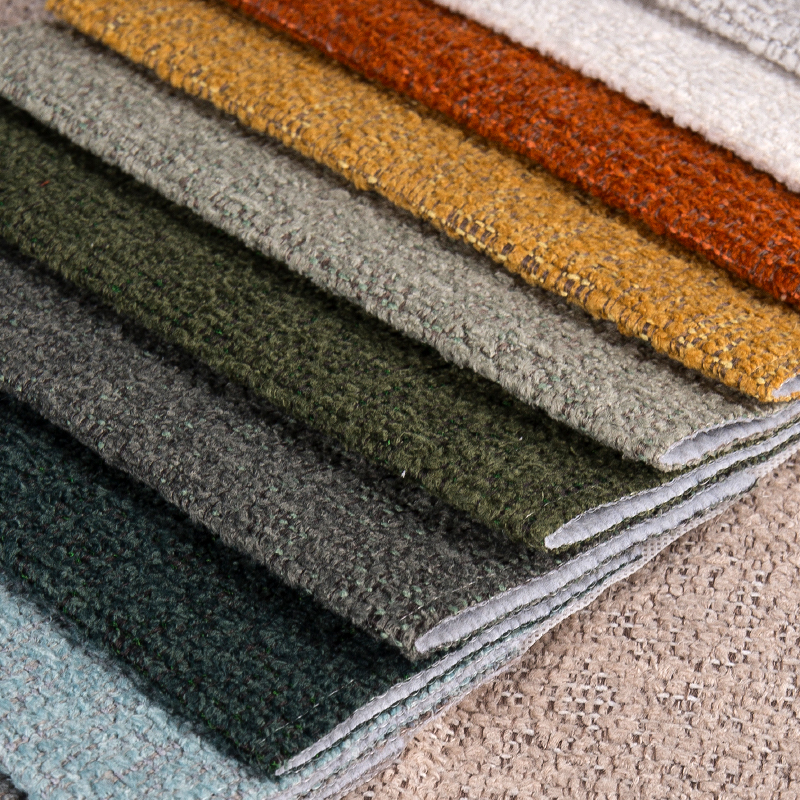
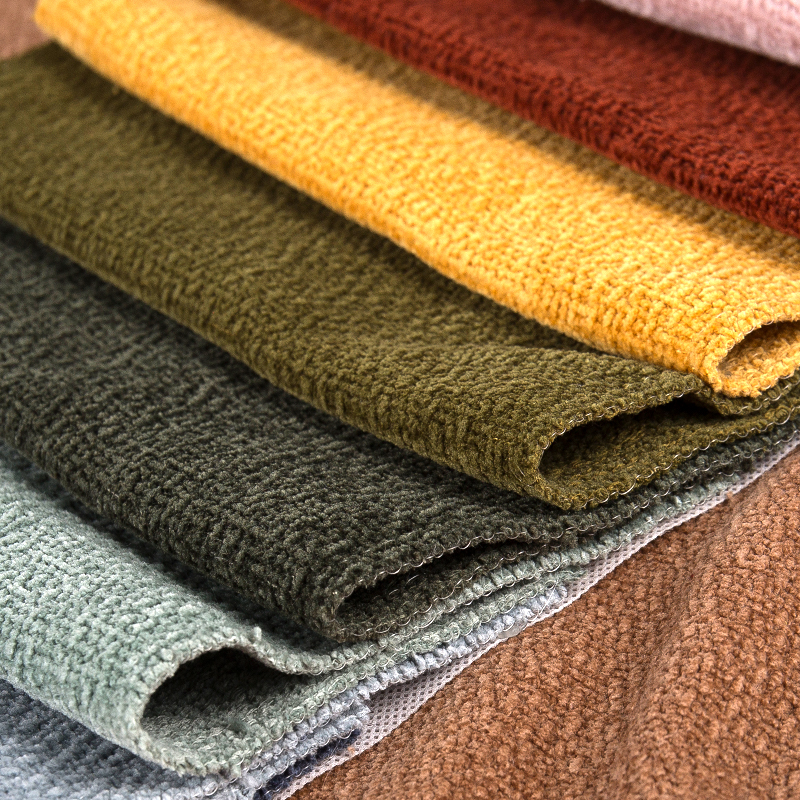
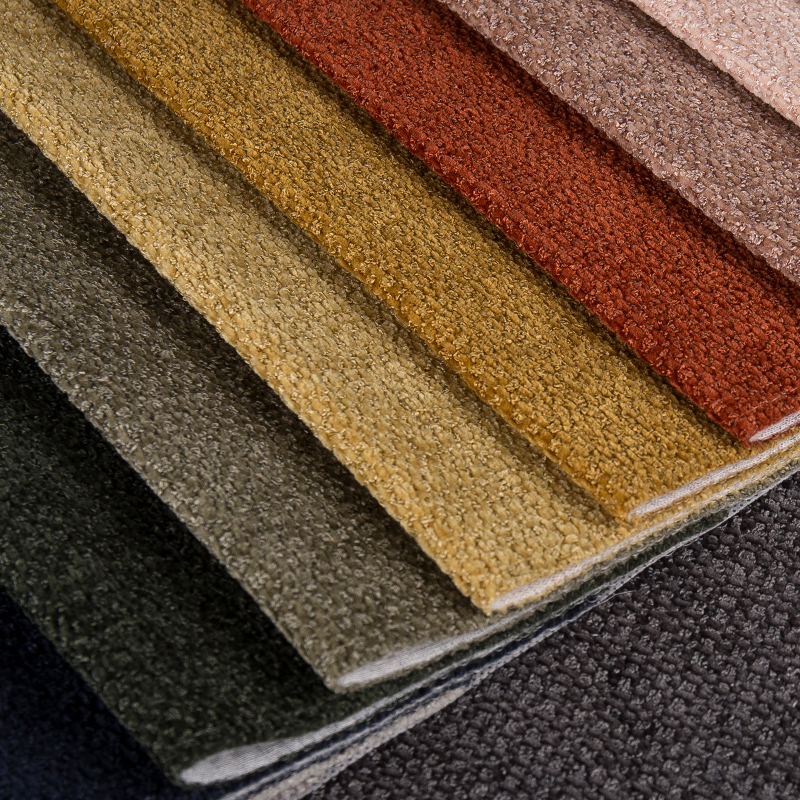
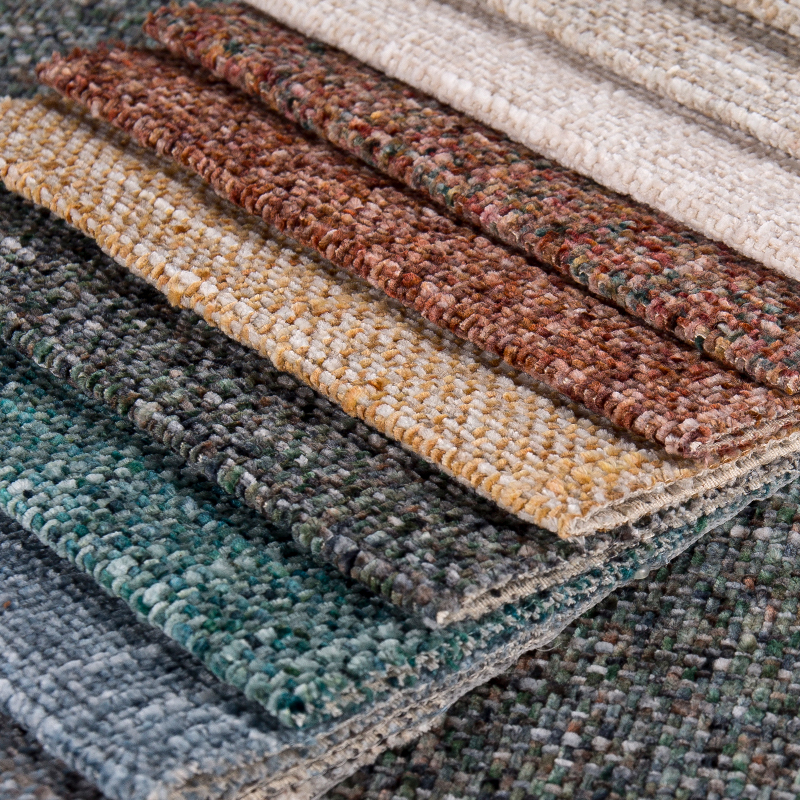
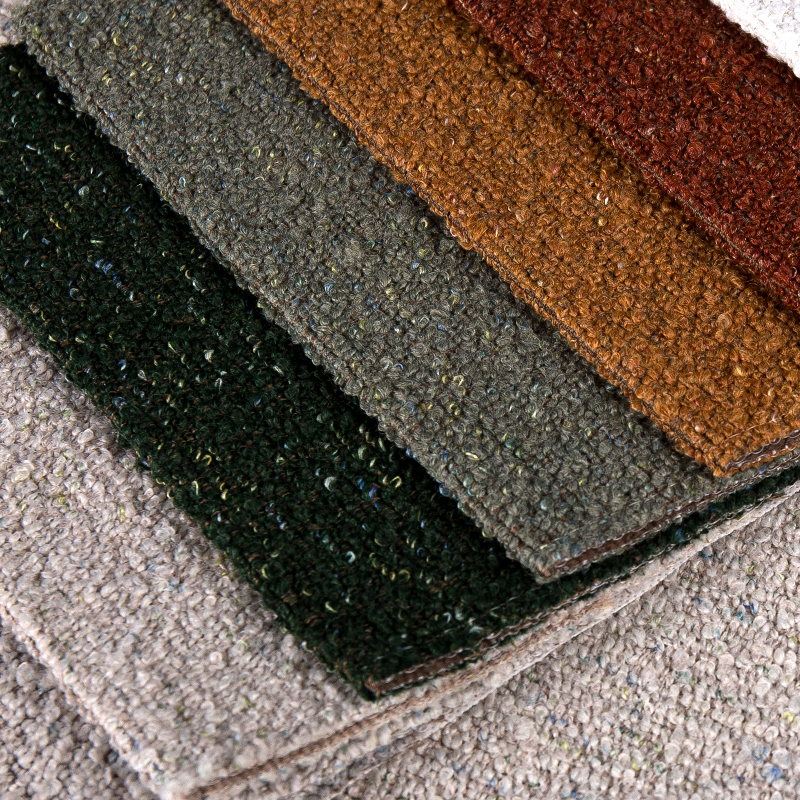
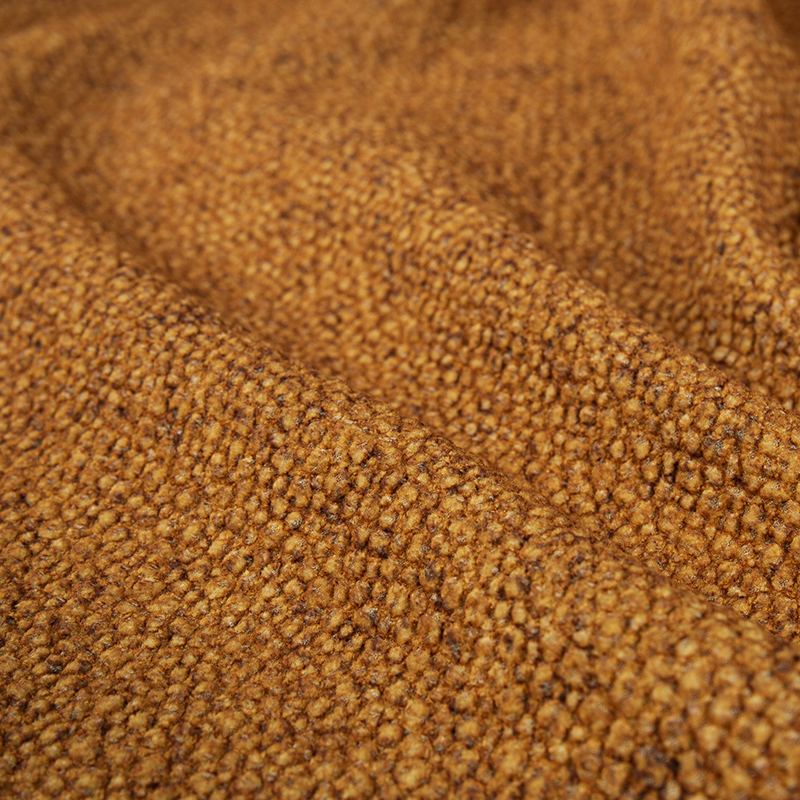
The word "chenille" derives from the French word for caterpillar — an apt description for the yarn's distinctive fuzzy, pile-covered appearance. Chenille is not a fiber type but a yarn construction: short lengths of fiber (the pile) are locked between two twisted core yarns, creating a yarn that looks and feels like a soft, dense brush. When woven into fabric, the protruding pile creates the characteristic velvety surface that has made chenille one of the most enduring upholstery fabric choices across residential and hospitality markets.
Chenille yarn production involves weaving a leno (gauze) fabric with spaced warp yarns and densely packed weft pile yarns, then cutting the fabric lengthwise between each pair of warp yarns. The cut strips become individual chenille yarns, with the warp yarns twisting to trap the cut weft pile fibers. The resulting yarn — fuzzy, directional, and slightly fragile compared to spun yarns — is then woven or tufted into fabric. Pile fiber length in the finished yarn typically ranges from 2–6 mm, with longer pile producing softer, more luxurious hand feel and shorter pile producing denser, more wear-resistant fabric.
The core yarns that hold the pile in place are critical to durability. High-quality chenille uses tightly twisted core yarns (cotton, polyester, or cotton-polyester blends) that grip the pile fibers firmly — preventing the "worming" or "shedding" that characterizes low-quality chenille where pile fibers pull out under friction. Chenille fabrics prone to worming typically have core yarns with insufficient twist per meter — a quality parameter not visible in the finished fabric but detectable by rubbing the fabric surface briskly and assessing pile loss.
Chenille sofa fabrics are produced in a wide range of fiber compositions, each with distinct performance and tactile characteristics:
| Fiber Type | Hand Feel | Abrasion Resistance | Fade Resistance | Pilling Risk | Relative Cost |
|---|---|---|---|---|---|
| 100% Polyester | Soft, consistent | High | Excellent | Moderate | Low–Medium |
| Cotton / Cotton-rich | Natural, breathable | Moderate | Moderate (fades over time) | Low | Medium |
| Acrylic | Wool-like, warm | Moderate–High | Good | High | Low–Medium |
| Viscose / Rayon blend | Silky, lustrous | Low–Moderate | Moderate | Moderate | Medium |
| Polyester-Cotton blend | Balanced soft feel | High | Good | Low–Moderate | Medium |
For most residential sofa upholstery applications where durability and colour retention are priorities, 100% polyester chenille or polyester-cotton blended chenille represents the best practical choice. Pure cotton chenille provides the most natural feel and breathability but fades noticeably faster and has lower abrasion resistance — making it better suited to decorative cushions than high-use sofa seating. Acrylic chenille has a pleasant hand feel similar to wool but pills more readily under friction, which becomes increasingly apparent on frequently used seat cushions.
When specifying or purchasing chenille sofa fabric — whether for a single domestic sofa or a hospitality bulk order — several measurable performance parameters determine whether the fabric will look good and remain functional over years of use.
The Martindale test (ISO 12947) measures how many cycles of abrasion a fabric can withstand before visible surface deterioration — pilling, fibre loss, or hole formation. For upholstery applications, the following benchmarks apply:
Most quality chenille sofa fabrics for residential use achieve 25,000–50,000 Martindale rubs. Chenille fabrics marketed with Martindale ratings below 20,000 for primary seating surfaces should be treated with caution for any high-use application.
Fabric weight (grams per square metre, gsm) is a useful proxy for fabric density and quality in chenille upholstery. Heavier chenille fabrics generally have more pile per unit area, producing a plusher, more luxurious feel and better wear resistance. For chenille sofa fabric:
Chenille sofa fabrics are rated for light fastness using the ISO 105-B02 blue wool scale (1–8, where 8 is maximum resistance). For furniture upholstery exposed to natural light through windows, a minimum rating of grade 4–5 is generally acceptable for domestic settings, and grade 5–6 should be specified for south-facing rooms with high sun exposure or for commercial/hospitality applications. Polyester pile chenille typically achieves grade 5–6 with solution-dyed or reactive dyeing processes; cotton pile chenille commonly achieves grade 4–5 with reactive dyes. Chenille with acrylic pile and basic dyestuffs may only achieve grade 3–4, making it unsuitable for bright or south-facing rooms.
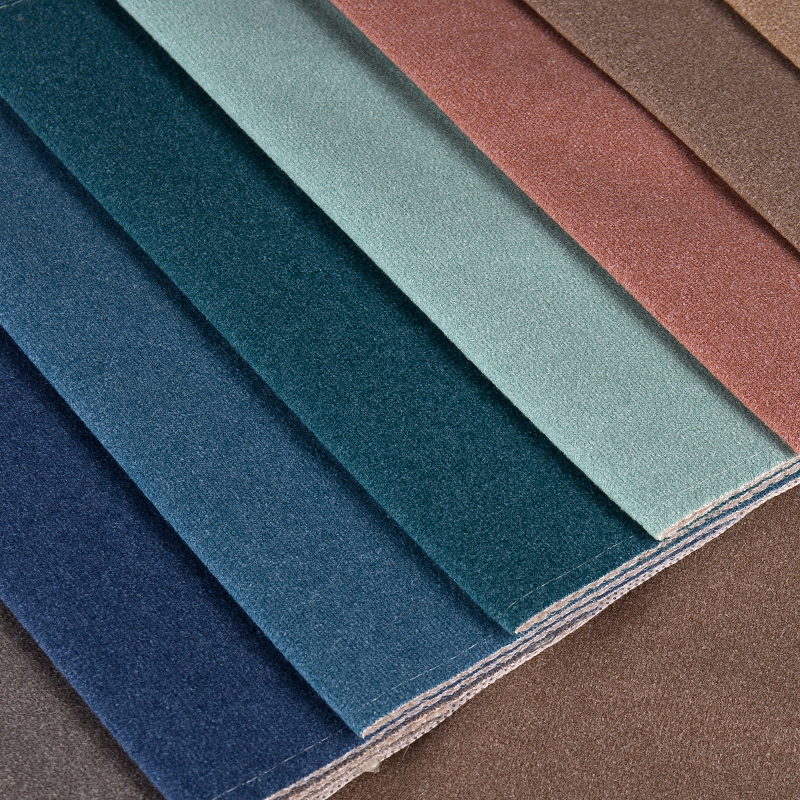
A distinctive characteristic of chenille fabric that buyers should understand is its directional shading — the pile lies in one direction and reflects light differently depending on viewing angle, creating the appearance of lighter and darker areas across a sofa when viewed from different positions. This is not a defect but an inherent property of pile fabrics. On a sofa, the transition between areas where pile has been compressed in different directions (typically visible along seat edges and cushion creases) can appear as a colour difference. Buyers who find this characteristic undesirable should consider chenille fabrics with shorter, denser pile (which shows less directional shading) or look for chenille weaves with cut and uncut pile combinations that reduce the directional effect.
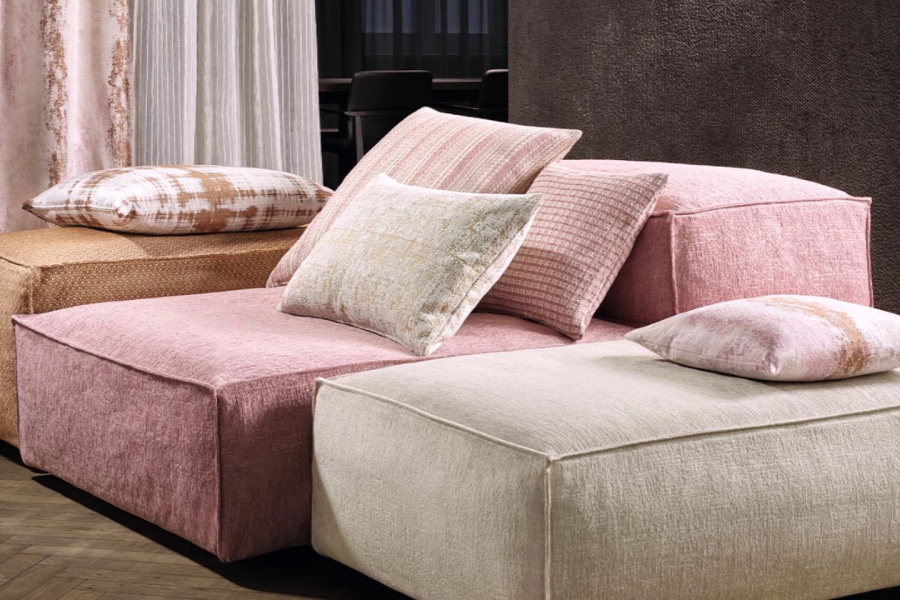
While chenille sofa fabric is the most commercially significant application of chenille in home textiles, the material's distinctive texture makes it widely used across other soft furnishing categories where tactile luxury is valued.
Chenille throws are among the most popular home textile impulse purchases because the pile surface delivers an immediately apparent tactile luxury at relatively accessible price points. Chenille throw blankets typically use cotton or acrylic chenille yarn in a loose open weave — creating a fabric that is visually textured, lightweight, and drapes elegantly over sofas or beds. Weight ranges for chenille throws are generally 800g–1,800g per throw (approximately 130 × 180 cm), with heavier throws providing better warmth and drape. The open weave construction common in chenille throws means they are not suitable for washing in hot water — chenille yarn is susceptible to pile compression and distortion when subjected to agitation and heat, which is why most chenille throws specify cool gentle washing or dry cleaning.
Decorative cushion covers in chenille fabric add texture and depth to a living room scheme without the cost of fully upholstering seating in the material. Chenille cushion covers benefit from the full range of pile effects — solid colour, multicolour jacquard patterns, embossed geometric patterns — because the cushion format allows more complex constructions that would be impractical for large-scale sofa upholstery. Cushion applications also tolerate lower Martindale ratings than sofa seating — a cushion cover rated at 15,000–20,000 rubs is entirely appropriate for decorative cushion use.
Heavier chenille fabrics (typically 400–600 gsm) make excellent curtain materials where thermal insulation, light blocking, and acoustic absorption are desired alongside decorative texture. The pile surface of chenille curtains provides meaningful noise absorption — particularly relevant in rooms with hard flooring and large windows where sound reverberation is a comfort issue. Chenille curtain fabrics are typically wider than upholstery fabrics — standard curtain widths of 140 cm and 280 cm are common — to minimize seam positions in finished curtains.
Polyester knitted fabrics are produced by interlocking loops of polyester yarn — a fundamentally different construction from woven fabrics, where yarns intersect at right angles. The loop structure of knitted fabric gives it inherent stretch and recovery properties that woven fabrics cannot match, making polyester knits the dominant material in fitted bedding, stretch upholstery covers, activewear-inspired home textiles, and any application where conformability to irregular shapes is needed.
Two fundamentally different knitting technologies produce polyester knitted fabrics for home textile applications, and their properties differ significantly:
The specific polyester fiber format used in knitted home textiles significantly affects the fabric's performance and feel:
Bedding is the largest single application of polyester knitted fabrics in the home textile market. Understanding the performance characteristics that matter most in sleep textiles helps buyers select polyester knit bedding that genuinely improves sleeping comfort rather than merely offering an attractive price point.
Thread count — the number of threads per square inch — is a meaningful quality indicator for woven cotton fabrics but is largely irrelevant as a quality measure for knitted polyester bedding. Knitted fabrics are defined by loop density (courses and wales per cm) rather than thread count, and manufacturers who apply thread count figures to knitted polyester sheets are typically using inflated or misleading metrics. For polyester knitted bedding, the more meaningful specifications are fabric weight (gsm), fiber fineness (denier), and pilling resistance rating.
Quality polyester knitted sheets for standard domestic bedding typically weigh 70–120 gsm. Below 70 gsm, the fabric is thin enough to feel insubstantial and may develop runs or holes after repeated washing. Above 120 gsm, the fabric becomes noticeably warmer and less breathable — still appropriate for winter bedding or flannel-effect products but potentially uncomfortable for year-round use in temperate climates.
The thermal performance of polyester knitted bedding depends significantly on fabric construction and any applied functional finishes. Standard polyester is hydrophobic — it does not absorb moisture — which means perspiration during sleep remains as a liquid film on the fiber surface rather than being absorbed into the fiber as it would be with cotton or linen. For some sleepers this creates a perception of dampness that reduces comfort. Manufacturers address this through several approaches:
Pilling — the formation of small fibre balls on the fabric surface caused by friction during use and washing — is the most common consumer complaint about polyester knitted bedding. Pilling occurs when loose fiber ends work out of the yarn structure and tangle with adjacent fibers. Polyester's inherent fiber strength means that once a pill forms, it persists on the surface (unlike cotton pills, which break off more readily due to weaker fiber). Pilling tendency is assessed by the Martindale or Pilling Box test (ISO 12945-2), rated on a scale of 1 (severe pilling) to 5 (no pilling). For bedding:
The best strategy for minimizing pilling in polyester knit bedding is to specify fabrics using fine microfiber yarn (0.5–0.9 denier), which has fewer fiber ends exposed at the surface compared to coarser yarn, and to wash at 40°C or below in a gentle cycle — hot, vigorous washing accelerates pilling regardless of fiber quality.
Beyond bedding, polyester knitted fabrics are the primary material for home textile products that must conform closely to irregular shapes — stretch sofa covers, chair slipcovers, fitted mattress toppers, and elasticated table covers. The loop-based construction of knitted fabric allows 20–50% two-way stretch (in quality interlock and jersey constructions), enabling a single cover size to fit a range of furniture dimensions while maintaining a smooth, wrinkle-free appearance.
For stretch covers to maintain a taut, fitted appearance over time, the fabric must exhibit good elastic recovery — the ability to return to its original dimensions after being stretched and released. Polyester filament yarns have excellent inherent elastic recovery due to their thermoplastic nature, but recovery can be significantly improved by incorporating elastane (Lycra/Spandex) content — even small additions of 2–5% elastane dramatically improve recovery from repeated stretch cycles. Polyester/elastane knit blends are therefore the material of choice for stretch furniture covers intended for repeated removal, washing, and refitting. Without elastane, pure polyester knits gradually lose recovery after many stretch-wash cycles, causing the cover to bag and sag rather than retaining the initial close fit.
Polyester knitted fabric for sofa and chair covers must be heavier than standard bedding fabric to provide adequate structure, resist snagging, and create a furniture-quality appearance. Recommended weight ranges for stretch furniture cover applications:
| Criteria | Chenille Sofa Fabric | Polyester Knitted Fabric |
|---|---|---|
| Primary use | Upholstery, cushions, throws, curtains | Bedding, stretch covers, fitted sheets |
| Texture / hand feel | Plush, velvety, directional pile | Smooth to soft depending on construction |
| Stretch | Low (woven structure) | High (20–50% two-way stretch) |
| Abrasion resistance | 25,000–50,000+ Martindale (quality grades) | Varies widely; typically 15,000–40,000 |
| Pilling tendency | Low–moderate (depends on pile construction) | Moderate (microfiber grades: low) |
| Colour fastness | Grade 4–6 (polyester pile best) | Grade 4–6 (solution-dyed best) |
| Washability | Gentle cold wash; pile-sensitive to heat | Machine washable 30–60°C |
| Breathability | Moderate | Low–moderate (varies by structure) |
| Cost | Medium–High | Low–Medium |
Correct care extends the service life of both chenille and polyester knitted home textiles significantly — and incorrect care is the most common cause of premature fabric deterioration.
Environmental and chemical safety certification has become increasingly important in home textile purchasing — both for consumer confidence and for regulatory compliance in export markets. Key certifications relevant to chenille sofa fabric and polyester knitted home textiles include:
Related Products

Contact us
Address
Hangfu Road 106#, Chongfu Town, Tongxiang City, Zhejiang, China
Phone
+86-15067379939
linachen@climbingtex.com / zac@climbingtex.com
lianniu@climbingtex.com
Fax/Tel
+86-573-88385698
products
QR CODE
 Home Textile Manufacturers
Sofa Fabric Factory
Home Textile Manufacturers
Sofa Fabric Factory
 English
 Español
 عربى
عربى