Mar 06, 2026
Polyester knit sofa fabrics are among the most practical and cost-effective upholstery choices available today, offering a compelling balance of durability, comfort, and aesthetic versatility. If you're selecting sofa fabric for high-traffic households, pet-friendly environments, or budget-conscious renovations, polyester knit deserves serious consideration — and in many scenarios, it outperforms natural fibers and woven synthetics alike.
This article breaks down everything you need to know: what makes polyester knit unique, how it compares to alternatives, what real-world performance looks like, and how to choose the right variant for your sofa project.
Content
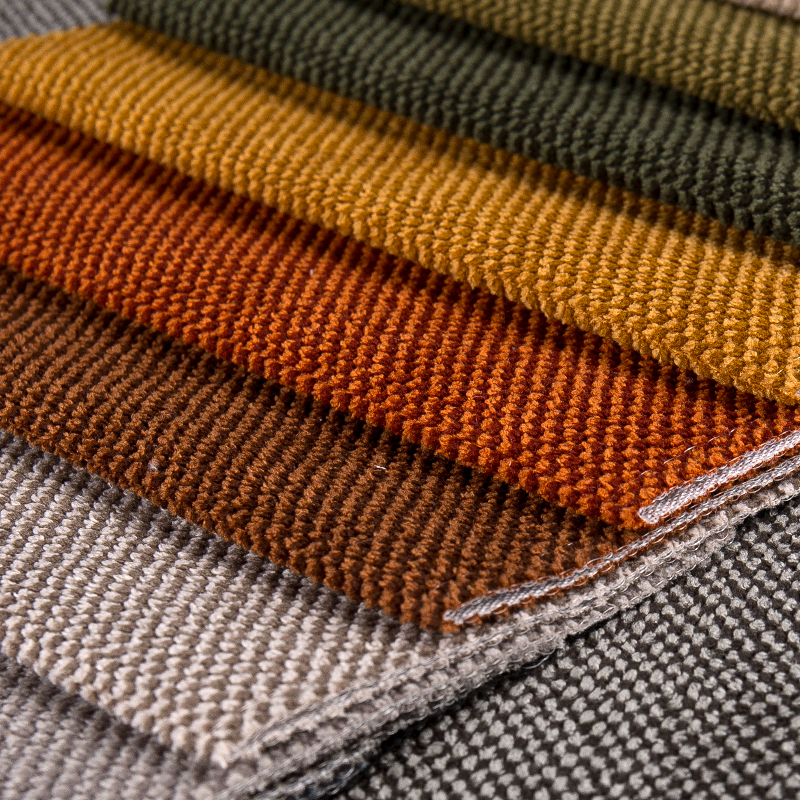
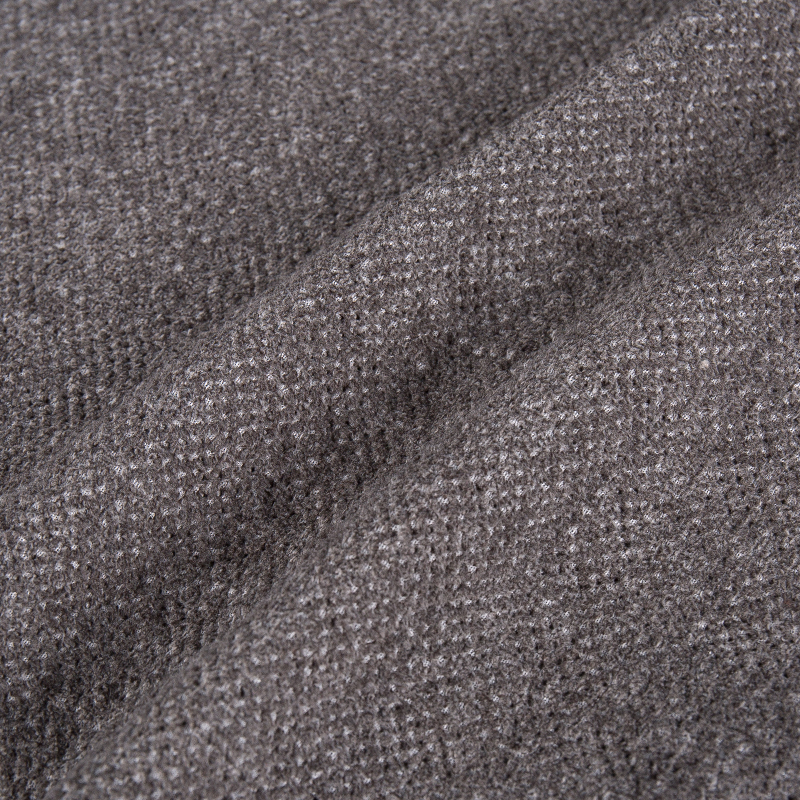
Polyester knit fabric is made by interlocking loops of polyester yarn — a construction method fundamentally different from woven fabrics, which interlace threads at right angles. This looping structure gives knit fabrics their signature stretch, recovery, and softness.
When used in sofa upholstery, polyester knit is typically backed with a foam or non-woven substrate to add body and prevent excessive stretch during use. Common knit structures include:
The polyester fiber itself is a synthetic derived from petroleum-based compounds (polyethylene terephthalate, or PET), which contributes to its resistance to moisture, UV degradation, and biological attack.
Understanding the technical properties of polyester knit fabric helps set realistic expectations and informs better purchasing decisions.
Polyester fibers have high tenacity — typically 4.0–6.0 grams per denier (gpd) — making them significantly stronger than cotton (3.0–4.9 gpd) and comparable to nylon in many upholstery applications. In terms of abrasion resistance, quality polyester upholstery knits regularly achieve 30,000–50,000 double rubs on the Martindale or Wyzenbeek test, which classifies them as "heavy duty" for residential use (the threshold is 15,000 double rubs).
The knit construction provides 20–40% mechanical stretch in the cross direction, making polyester knit exceptionally easy to upholster around curved or complex sofa forms. Importantly, high-quality polyester knit recovers close to its original dimensions after stretching — typically 95–98% recovery — so cushion covers don't sag or bag with normal use.
Polyester accepts disperse dyes under heat and pressure, which penetrate deep into the fiber structure rather than sitting on the surface. This process results in excellent colorfastness ratings — typically Grade 4–5 on the ISO 105-B02 scale (scale of 1–5). Fabrics rated Grade 4+ show minimal fading after 40+ hours of xenon arc lamp exposure, equivalent to years of indoor sunlight near windows.
Polyester is inherently hydrophobic, meaning liquid spills bead on the surface rather than immediately absorbing. Many polyester knit sofa fabrics are additionally treated with fluorocarbon-free water repellent (WR) or stain-guard finishes, achieving water spray ratings of 80–100 (ISO 4920 standard). This makes cleanup straightforward — most spills can be blotted away without leaving permanent stains.
The fabric market offers many alternatives. Here's a direct comparison across the most commonly considered options:
| Property | Polyester Knit | Cotton Woven | Linen Blend | Microfiber (Woven) | Leather |
|---|---|---|---|---|---|
| Abrasion Resistance | High (30K–50K rubs) | Moderate (10K–20K) | Moderate (15K–25K) | High (25K–50K) | Very High |
| Stain Resistance | High | Low | Low–Moderate | High | High |
| Stretchability | High (20–40%) | Low (<5%) | Low (<5%) | Low (<5%) | Low |
| Breathability | Moderate | High | High | Moderate | Low |
| Cost (per meter) | Low–Moderate ($3–$12) | Moderate ($8–$20) | High ($15–$35) | Moderate ($6–$18) | Very High ($30+) |
| Ease of Upholstering | Very Easy | Moderate | Moderate | Easy | Difficult |
Polyester knit's unique advantage is its combination of stretch, durability, and low cost — a trifecta that woven fabrics and leather cannot match simultaneously. The trade-off is breathability: polyester knit holds more heat than cotton or linen, which is worth considering for warm climates or users who tend to sit for extended periods.
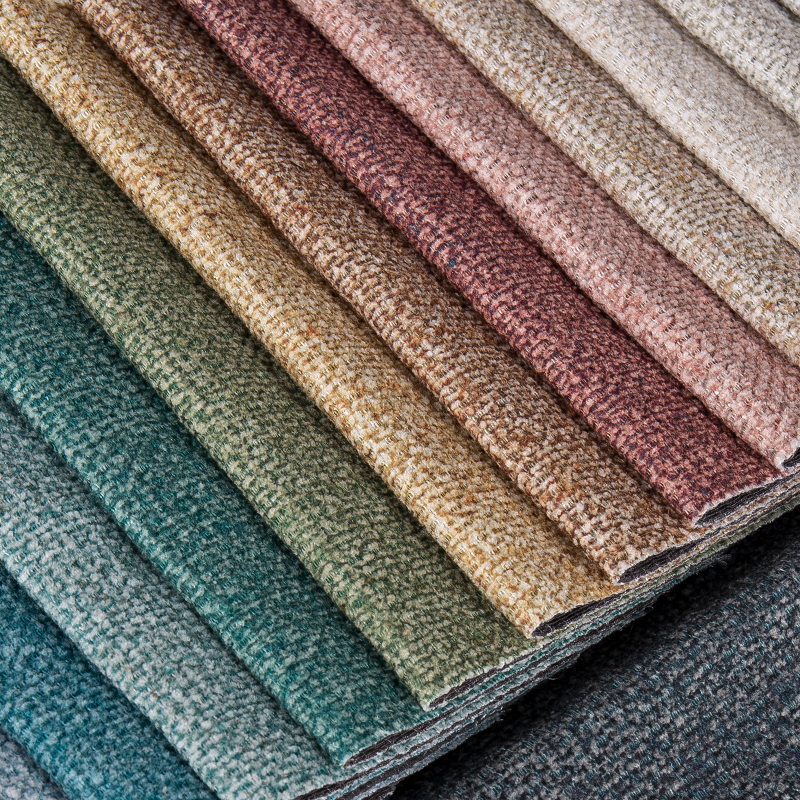
Not all polyester knit sofa fabrics are the same. Manufacturers differentiate products significantly based on pile type, weight, backing, and finishing.
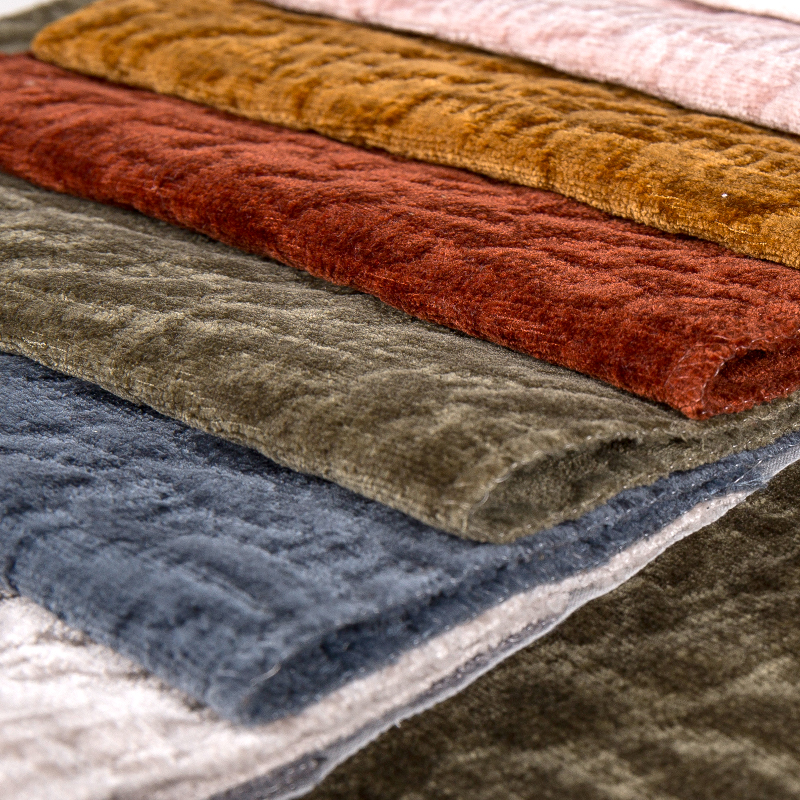
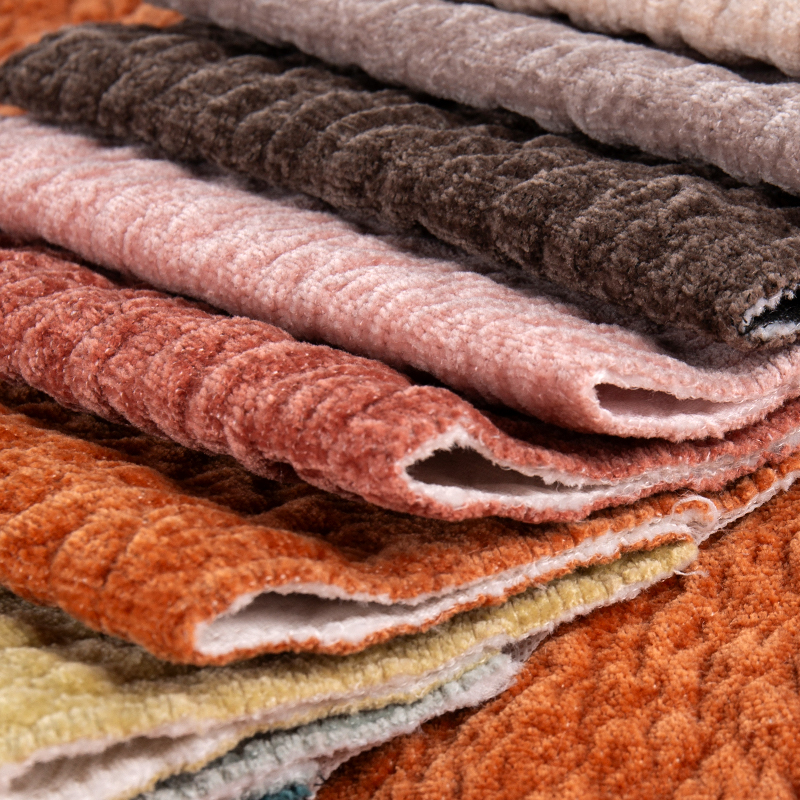
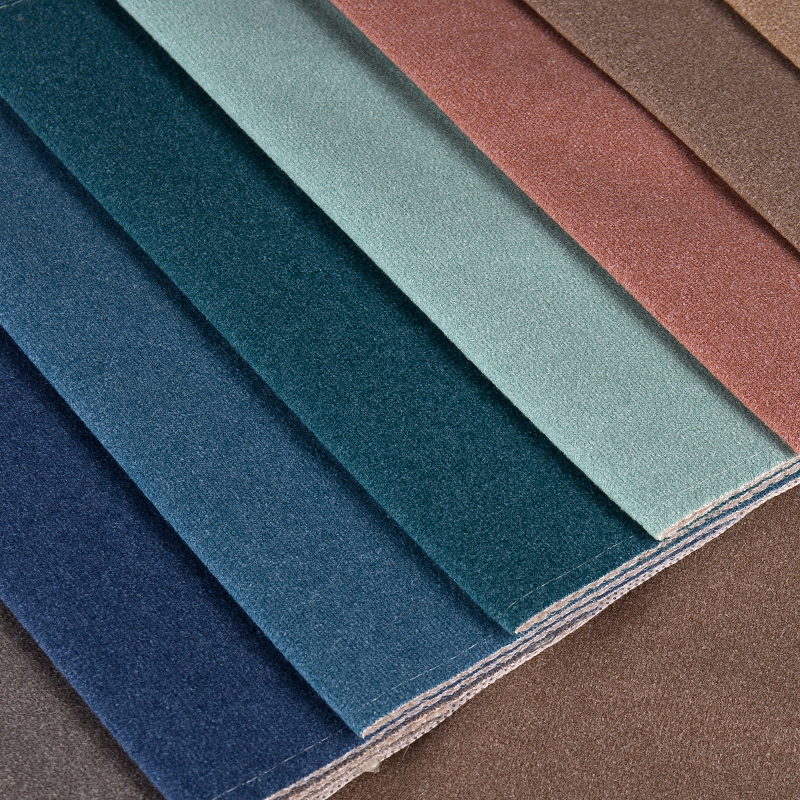
This is perhaps the most popular segment in the polyester knit sofa fabric market. Velboa features a cut pile of approximately 1–3 mm height on a knit base fabric. It mimics the luxurious appearance of velvet at a fraction of the cost, with fabric weights typically ranging from 220–350 gsm. Sofas upholstered in velboa feel soft to the touch and photograph beautifully, making them popular in mid-market furniture retail.
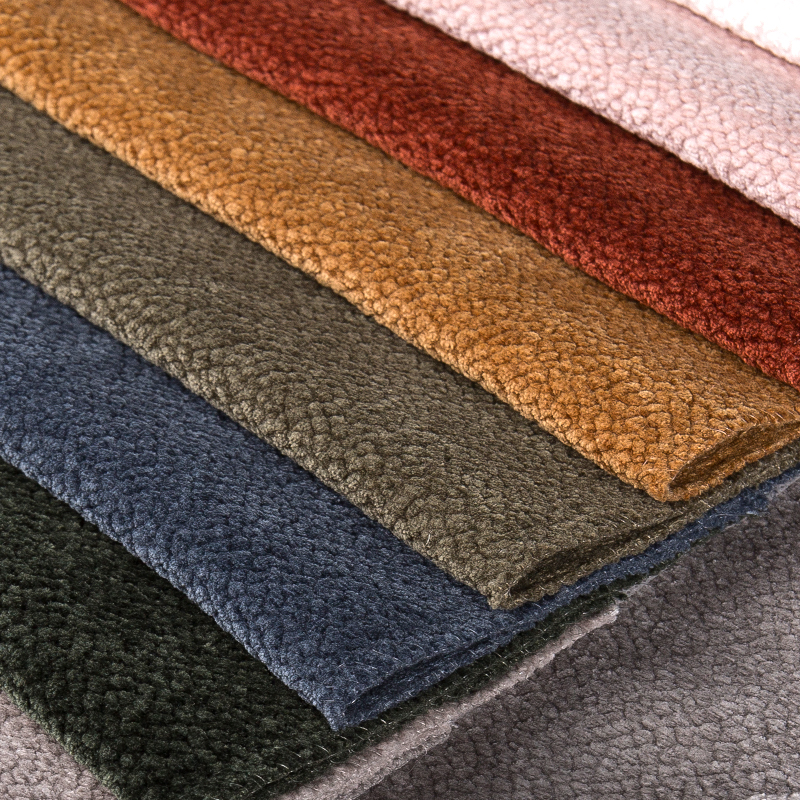
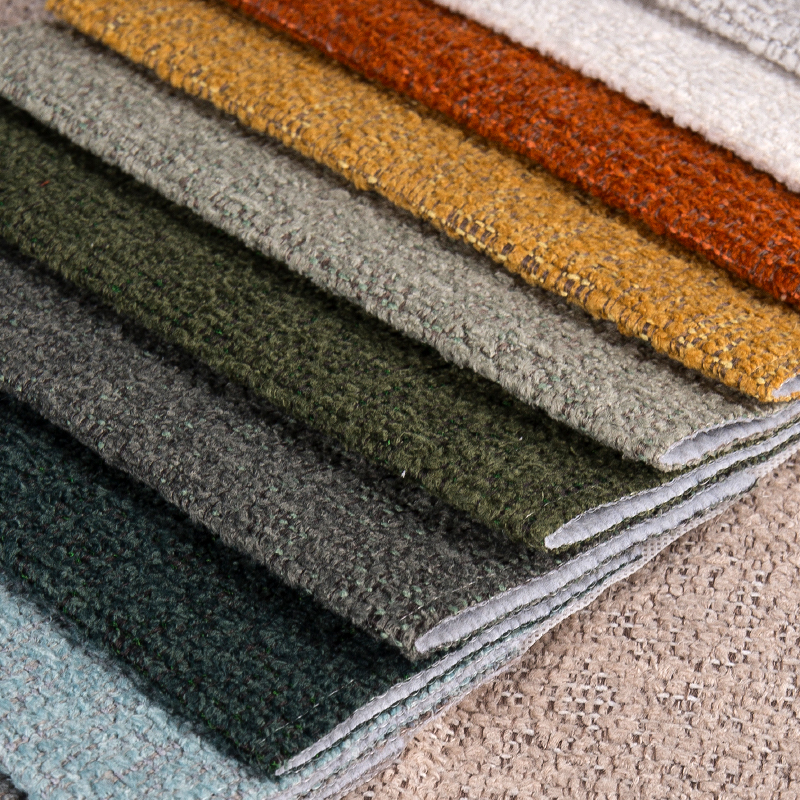
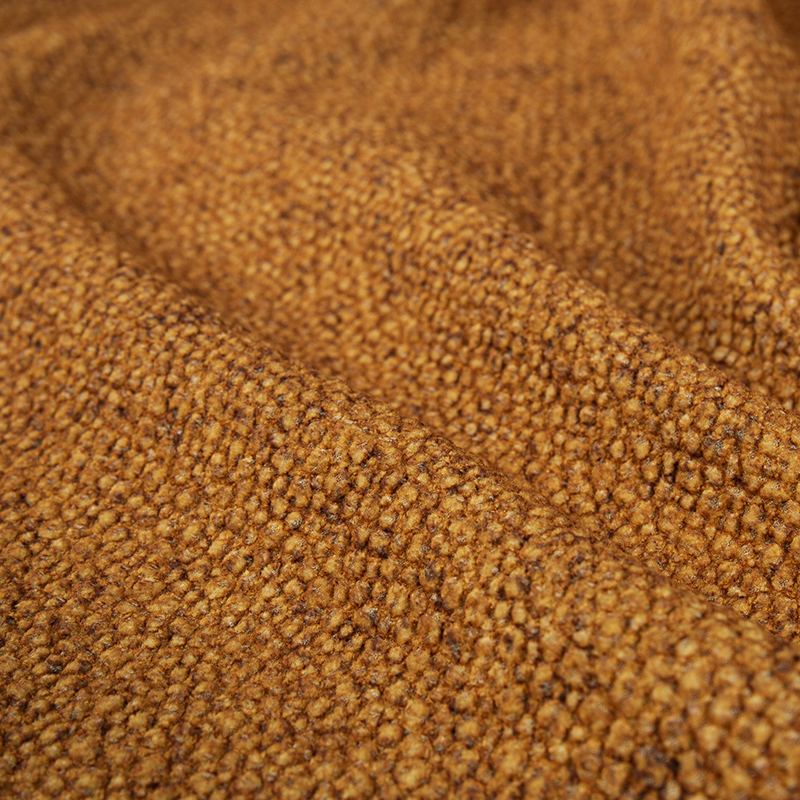
Inspired by the boucle trend that surged in interior design from 2020 onward, chunky polyester knit fabrics simulate the loopy, textured surface of traditional boucle wool at far lower price points. These fabrics typically weigh 400–600 gsm and use thick, crimped or loop yarns to create the dimensional texture. They're particularly popular in contemporary Scandinavian-influenced sofa designs.
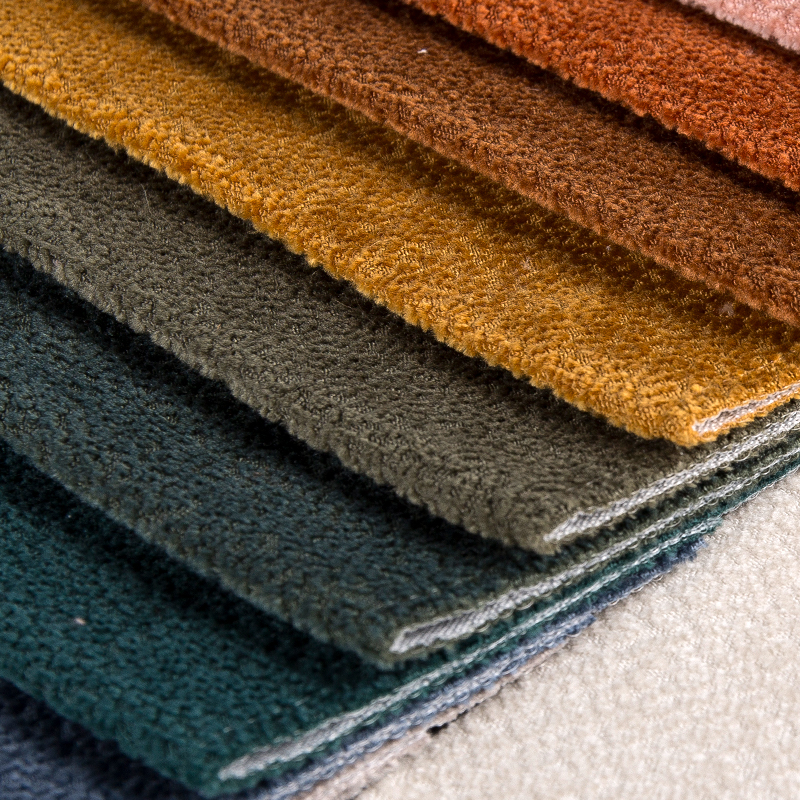
Ultrafine polyester microfibers (less than 0.5 denier per filament) can be knitted and then buffed or napped to create a suede-like surface. These fabrics offer exceptional softness and a dry, matte finish that many consumers find more elegant than shiny polyester. They're also highly resistant to pilling compared to thicker yarns.
Jacquard knitting machines can incorporate geometric, floral, or abstract patterns directly into the fabric structure during production, eliminating the need for printing and improving pattern durability. Jacquard polyester knit fabrics for sofas typically have repeat sizes of 5–30 cm and are commonly used for accent chairs and statement sofas.
Quality varies significantly across suppliers and price points. Use these practical checkpoints when assessing polyester knit sofa fabrics:
Polyester knit fabrics aren't limited to the sofa seat and back panels. Their stretch and softness make them ideal for several related applications in furniture manufacturing:
Maintaining polyester knit sofa fabric is straightforward compared to natural fiber alternatives, but a few practices significantly extend service life:
Vacuum with a soft brush attachment weekly to remove dust and loose debris. For polyester knit pile fabrics (velboa, velvet-style), always vacuum in the direction of the pile to prevent matting. Avoid stiff bristle brushes that can distort the pile direction permanently.
Blot (never rub) liquid spills immediately with a clean, dry cloth to absorb moisture before it spreads. For residual staining, use a mild soap-and-water solution (approximately 1 teaspoon dish soap per 250 ml water), apply with a soft cloth, and blot clean. Avoid alcohol-based cleaners on dark-colored polyester knit, as they can strip disperse dyes and cause localized fading.
Even quality polyester knit may develop minor surface pilling in high-friction zones (seat front edges, armrest tops) after 1–2 years of use. A fabric shaver or lint roller removes pills effectively without damaging the base fabric. Addressing pilling promptly prevents it from worsening.
While polyester knit has superior UV resistance to cotton or linen, prolonged direct sunlight (8+ hours daily) will eventually cause color shift in even the best-dyed fabrics. Position sofas away from south-facing windows in direct sun, or use UV-filtering window film to preserve fabric color over the long term.
Polyester's environmental footprint is a legitimate concern. Virgin polyester production is energy-intensive and relies on fossil fuel feedstocks. However, the sofa fabric industry has made measurable progress in recent years:
Polyester knit sofa fabric pricing varies based on construction, weight, finishing, and origin. The table below provides a general market reference for buyers sourcing from manufacturers or wholesale distributors.
| Fabric Type | Typical Weight (gsm) | Price Range (USD/m) | Key Differentiator |
|---|---|---|---|
| Velboa (standard) | 220–280 | $2.50–$5.00 | Entry-level, wide color range |
| Velboa (foam-backed) | 280–350 | $4.00–$8.00 | Better stability and drape |
| Microfiber suede knit | 200–280 | $5.00–$10.00 | Premium hand feel, matte finish |
| Chunky/boucle-style knit | 400–600 | $7.00–$14.00 | Trendy texture, heavier feel |
| Jacquard knit (patterned) | 300–450 | $8.00–$18.00 | Integrated pattern, design complexity |
| rPET recycled knit | 250–350 | $5.00–$12.00 | Eco-positioning, certification |
For a standard 3-seat sofa requiring approximately 10–14 linear meters of fabric (depending on sofa complexity and fabric width), total fabric costs at wholesale range from roughly $25–$200 depending on fabric tier — making polyester knit one of the most accessible upholstery choices across market segments.
Polyester knit is the right choice in these specific scenarios:
Those seeking maximum breathability for tropical climates, or buyers specifically prioritizing natural fiber credentials for environmental reasons, may prefer linen blends or certified organic cotton — but they will pay significantly more and sacrifice durability in the process.
Related Products

Contact us
Address
Hangfu Road 106#, Chongfu Town, Tongxiang City, Zhejiang, China
Phone
+86-15067379939
linachen@climbingtex.com / zac@climbingtex.com
lianniu@climbingtex.com
Fax/Tel
+86-573-88385698
products
QR CODE
 Home Textile Manufacturers
Sofa Fabric Factory
Home Textile Manufacturers
Sofa Fabric Factory
 English
 Español
 عربى
عربى