Nov 23, 2026
Content
Buyers tend to ask whether leather or polyurethane is better for a sofa as though the two were competing for the same job. They are not. Leather is a structural material built from collagen fibre and graded by the layer of hide it comes from. Polyurethane upholstery is a coated textile, engineered around a woven or knitted base cloth. Leather pays back over eight to fifteen years of wear and repair. Polyurethane pays back in colour consistency, moulded silhouettes and dependable order quantities across a three to six year replacement cycle. Choosing between them is really a decision about warranty length, retail positioning and after-sales load, not about which surface looks richer under showroom lighting.
The difference rarely shows up in the showroom. It shows up in the returns log. Leather abrades, darkens and can be recoloured; a polyurethane coating that begins to lift along a seam is a structural failure with no cosmetic fix. That is the moment a cheaper material becomes an expensive claim.
Leather runs through a short but unforgiving chain: hide selection, tanning, splitting into grain layers, then finishing. Yield is measured in square feet, so nesting and cutting waste go straight into cost. A full-grain hide keeps its natural surface; a split hide is often embossed to imitate grain it does not have, which is why two samples with the same hand feel can age in completely different ways.
Polyurethane starts somewhere else entirely. A base cloth, usually polyester woven or knitted, receives a polyurethane coating, then an embossing pattern, colour and top finish. The process is sound. The problem is that "PU" covers an enormous range: coating weight, base cloth structure, embossing depth and topcoat chemistry vary widely, and a decorative grade sold for occasional use should never be written into a contract sofa programme. That is the single most common sourcing error in this category.
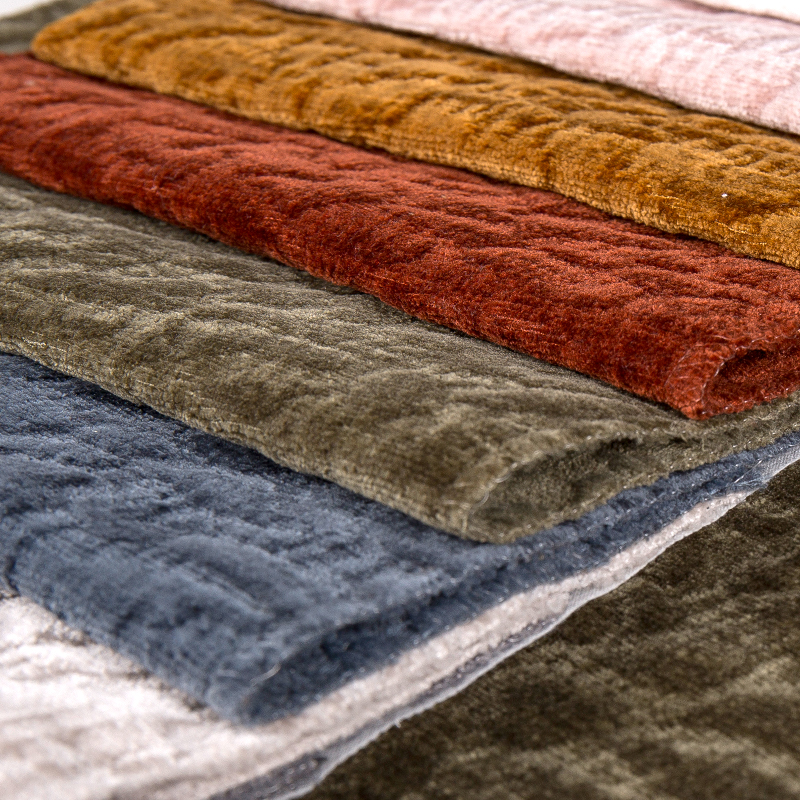
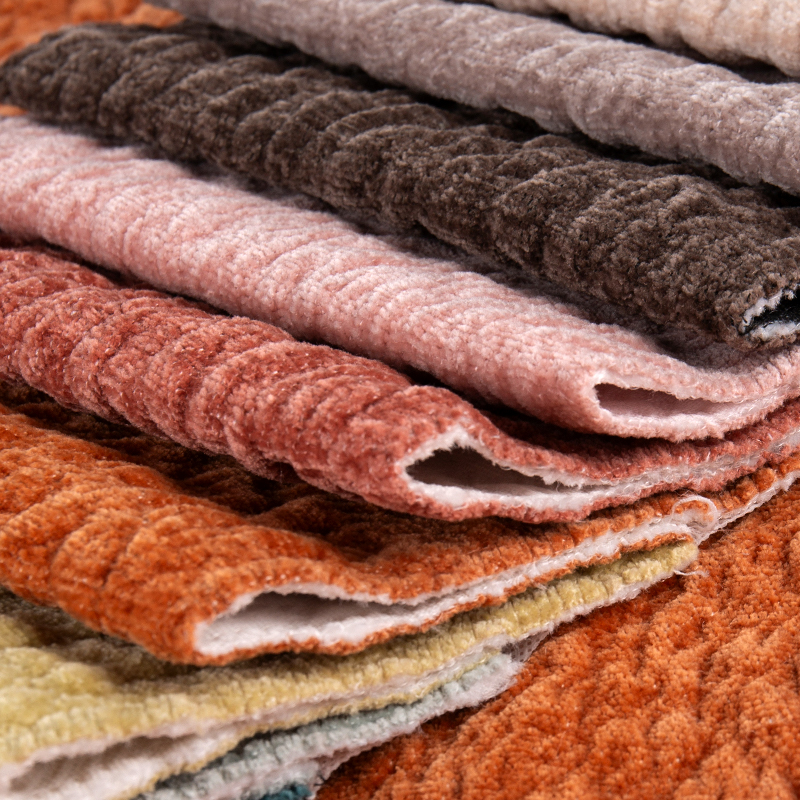
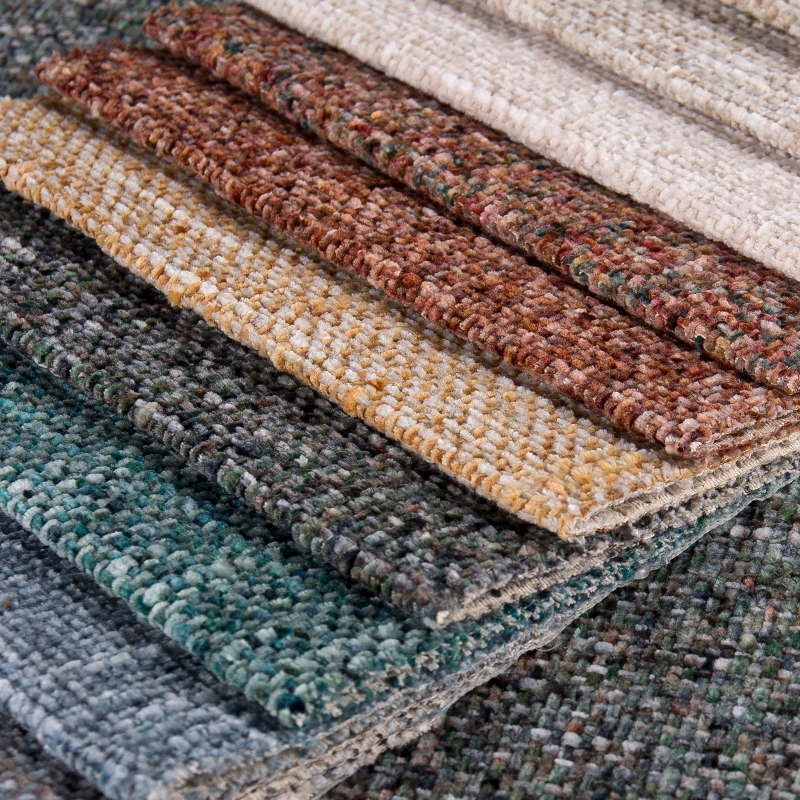
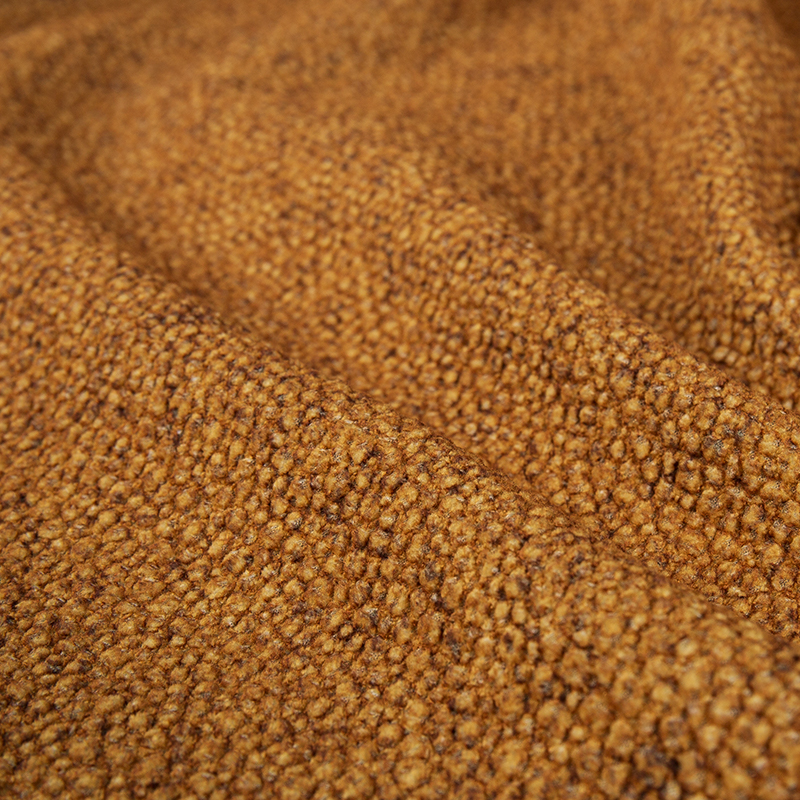
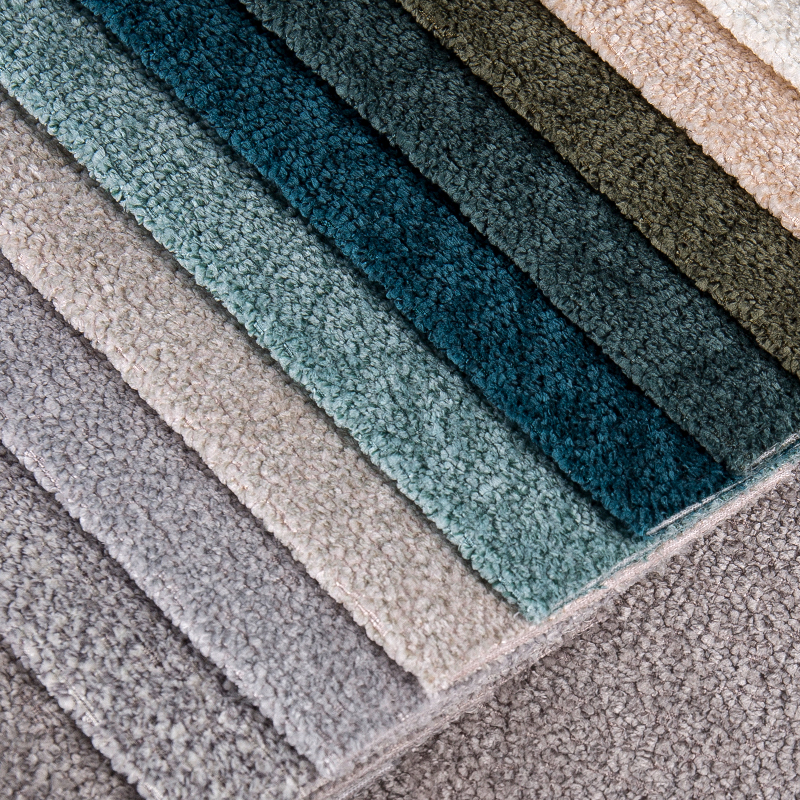
There is also a third route that sofa programmes increasingly take, and it sidesteps the coating question altogether: building the leather look into the textile rather than on top of it. A leather hand-feeling chenille sofa fabric carries that soft, close-grained surface on polyester chenille yarn while keeping the structure and colour stability of a woven textile. For buyers who want the visual cue of hide without inheriting coating-delamination risk, it is often the more defensible specification.
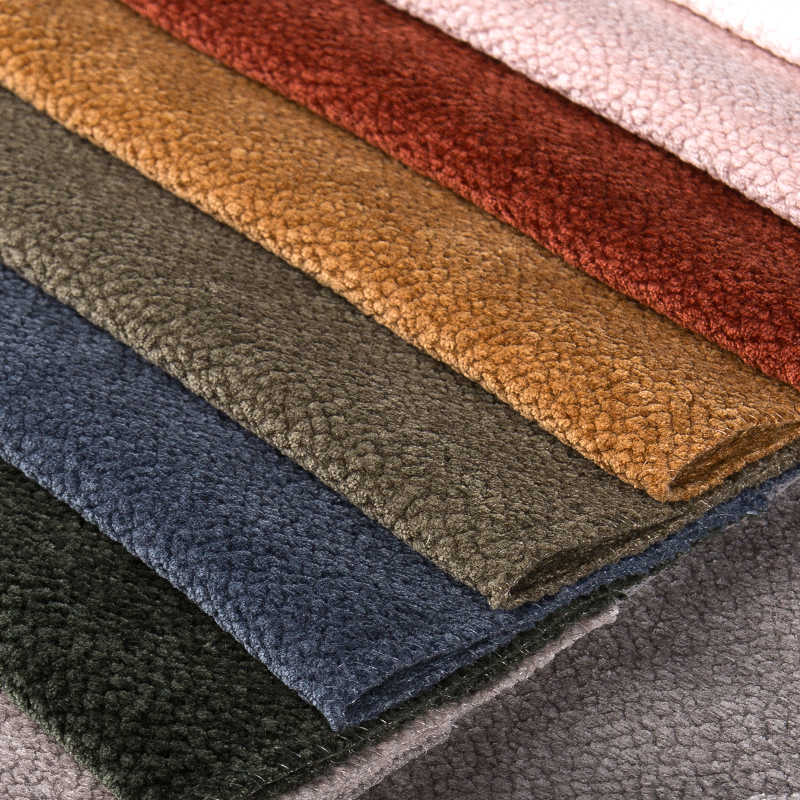 Leather-Hand-Feel Chenille Sofa Upholstery FabricA grainy, soft-touch polyester chenille for sofa upholstery, offering a leather-like visual cue without a coated surface; 140 cm wide at 520 g/sm.View Product →
Most specification failures come from comparing the two materials on price and abrasion cycles alone. The table below compares them on the variables that decide what the sofa looks like in year four.
Purchasing teams habitually compare unit price, Martindale cycles and colour count. Surface integrity after years of real use is the number that actually predicts whether a sofa comes back. Coatings fail in compression folds, not on flat panels, which is why a high rub count tells you very little about a PU that will crack along a seat cushion nose in year three.
Illustrative relative surface-integrity scores after five years of domestic use; not a substitute for laboratory data.
The pattern is consistent: leather degrades gradually and visibly, so expectations stay aligned with reality, while economy PU fails suddenly and in a way that reads as a manufacturing defect. That perception gap, not the material itself, is what generates disputes.
Material choice is rarely uniform across a portfolio. The split below reflects a typical upholstery programme structure rather than a market census, and it is useful mainly as a prompt: if your own mix looks nothing like this, ask why.
Illustrative distribution of upholstery materials across a typical multi-tier sofa range.
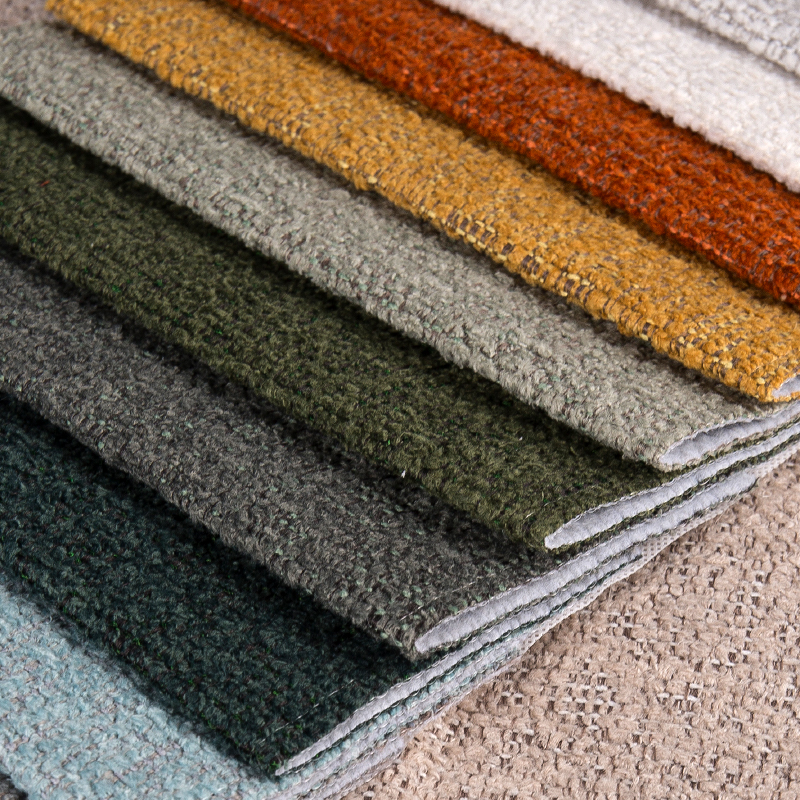
Leather usually anchors the top of the range, where a long warranty is credible. PU occupies fast-turnaround design programmes. Textiles carry the volume, and within that band the leather-look constructions sit closest to the leather proposition without inheriting its cost base or its hide-matching constraints.
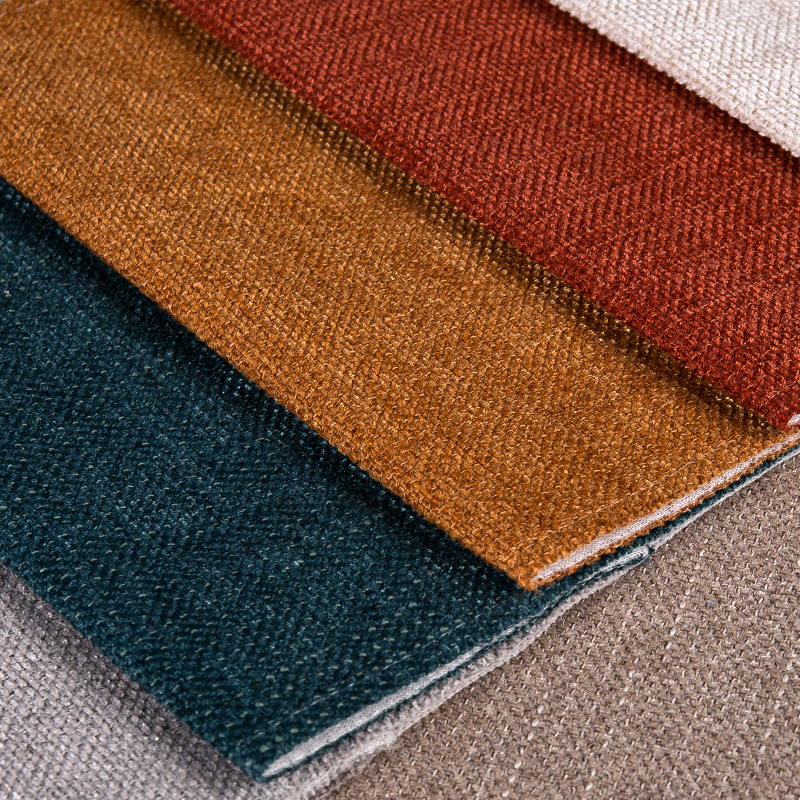
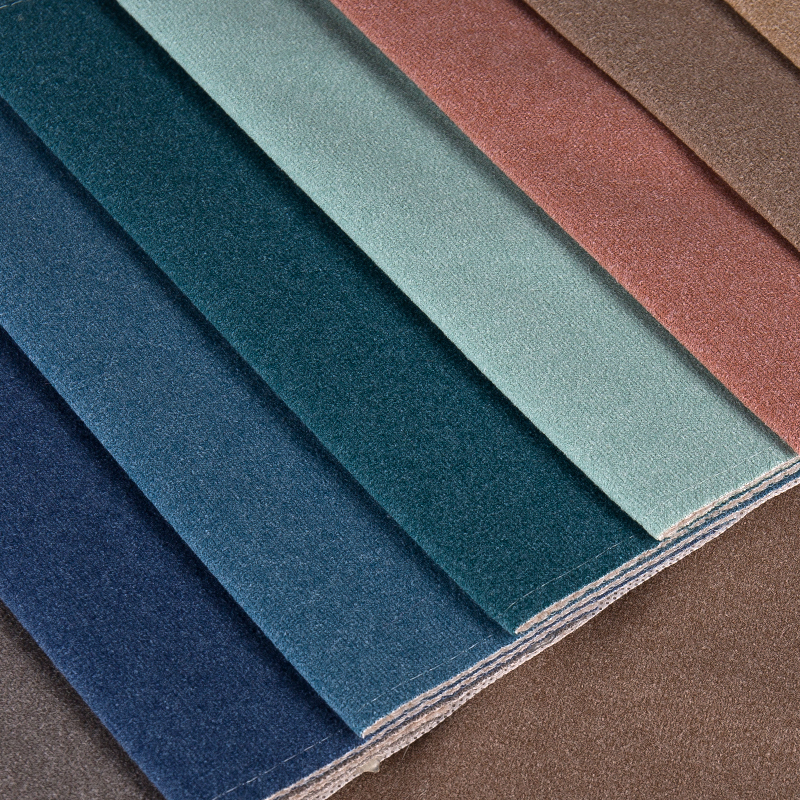
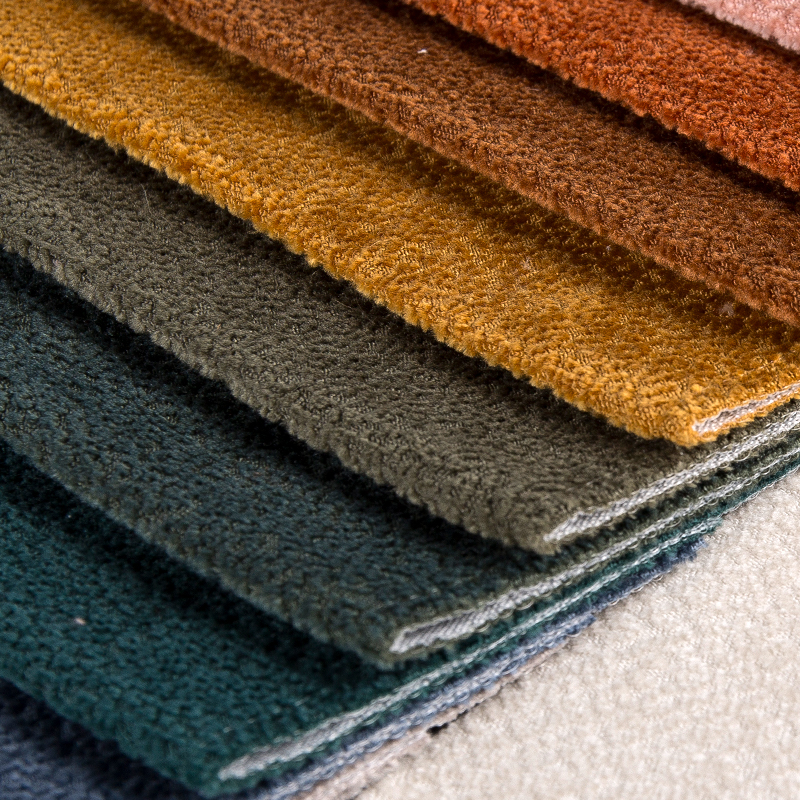
 Linen-Look Cut Velvet Sofa Upholstery FabricFor textile-led sofa programmes, this polyester cut-velvet-style fabric offers multi-color effect and a soft velvet feel as an affordable alternative to real cut velvet.View Product →
A three-year cover and a ten-year cover point to different answers. Write the warranty before the material, never after.
Households with pets, commercial lounges and adult living rooms place entirely different demands on a coating surface.
The care chemistry a material tolerates decides returns more often than colour notebooks do.
Tanning chemistry for leather, coating emissions and flame behaviour for PU. Request declarations before sampling.
Flex-fold, light and perspiration testing in combination reveal more than any single headline figure.
If the comparison is still open between coated and woven surfaces, the breakdown in fabric versus leather for upholstery covers the selection logic from the textile side in more detail.
Leather asks for gentle conditioning, stable indoor humidity and avoidance of direct heat; done well, it can be refreshed rather than replaced. Polyurethane asks for less: neutral pH cleaner, no solvents, no abrasive pads, and prompt wiping of anything oily. What it cannot survive is neglect at a fold line, because once the coating separates from the base cloth there is no realistic repair.
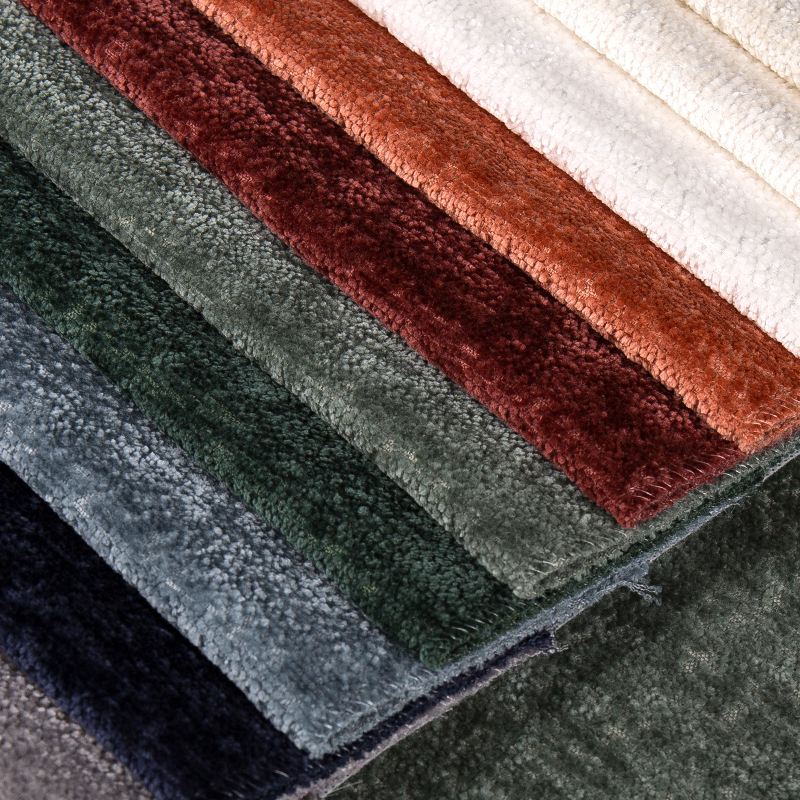
Compliance runs on separate tracks as well. Leather documentation centres on tanning agents, azo dyes and heavy metals; polyurethane documentation centres on coating chemistry, volatile emissions and flame performance. Bundling the two into one declaration package is a common shortcut that rarely survives an audit. Where the end use involves pets or heavy traffic, the practical wear questions are worth checking against the guidance on chenille performance in pet and high-traffic settings.
Leather and polyurethane are not rivals on a single axis. One is a fibre structure you repair; the other is a coating you replace. Get the warranty, the exposure profile and the cleaning regime aligned with the material, and either will perform as promised. Get them out of step, and the cheaper option becomes the one that costs a programme its reputation.
For most volume sofa ranges, the practical answer sits between the two extremes: a textile constructed to deliver the leather look, backed by documented flex and abrasion data, offers the visual proposition of hide with the consistency and supply predictability that a multi-container order demands.
Related Products

Contact us
Address
Hangfu Road 106#, Chongfu Town, Tongxiang City, Zhejiang, China
Phone
+86-15067379939
linachen@climbingtex.com / zac@climbingtex.com
lianniu@climbingtex.com
Fax/Tel
+86-573-88385698
products
QR CODE
 Home Textile Manufacturers
Sofa Fabric Factory
 English
 Español
 عربى